
Huangguoshu Waterfall is one of the largest waterfalls in China. It attracts thousands of visitors daily and is known for its impressive cascade and unique rock formations.
It is a large scenic area that usually requires two days to fully explore. However, since we only had one day, we focused on the three key viewpoints most visitors cover: Huangguoshu Waterfall itself, Doupotang Waterfall, the upstream waterfall, and the Tianxingqiao Scenic Area.
Huángguǒshù Waterfall
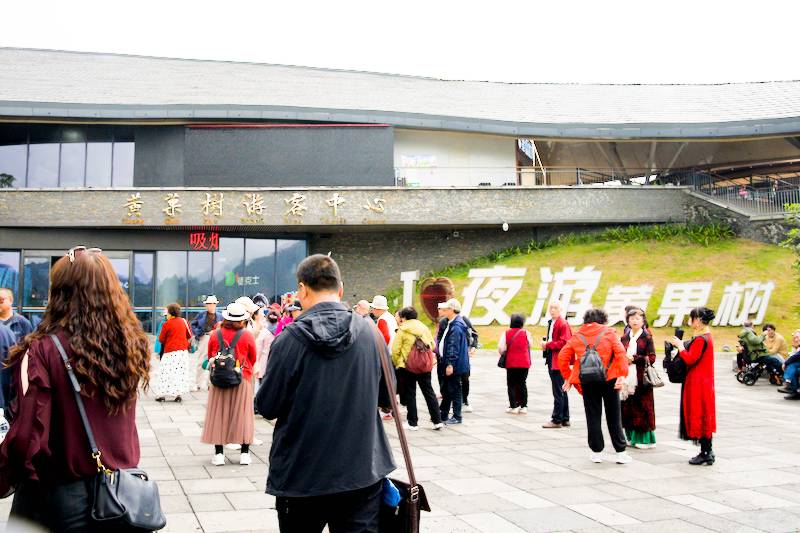
Like many major scenic areas in Guizhou, access to the scenic area is managed through an internal sightseeing bus system. After arriving, we took the internal sightseeing buses to enter the park and travel between different areas. This helps to control traffic and manage the large number of visitors, which can be quite significant.
We arrived at Huangguoshu Waterfall early, hoping to beat the crowds and avoid the queue. Our first stop was the main Huangguoshu Waterfall itself. At about 77.8 meters high and 101 meters wide, it is the largest waterfall in China.
After getting off the internal sightseeing bus, we took a short walk and then descended two flights of elevators to reach the base of Huangguoshu Waterfall. From there, we stepped onto a well-maintained stone-paved platform that runs along the river.
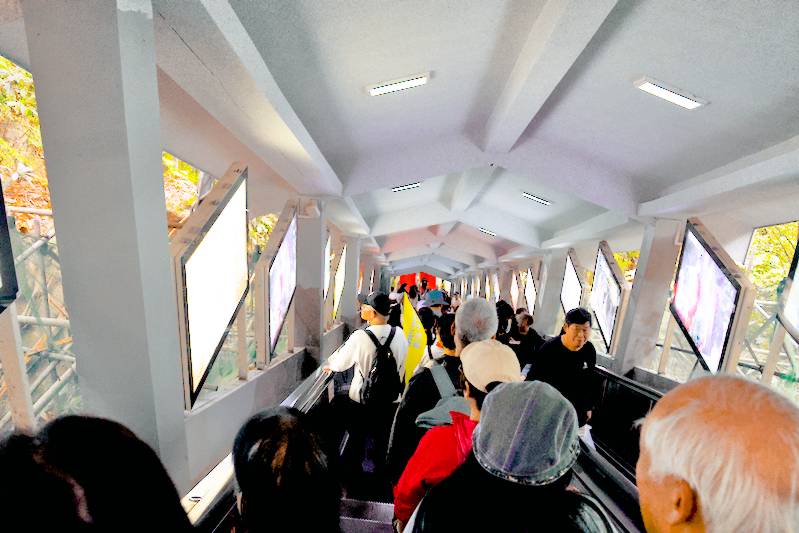
The viewing platform stretches a few hundred meters from the elevator to the far end. The path begins with a side view and gradually opens up to a full frontal view of the waterfall, allowing us to appreciate its scale and power from different angles.
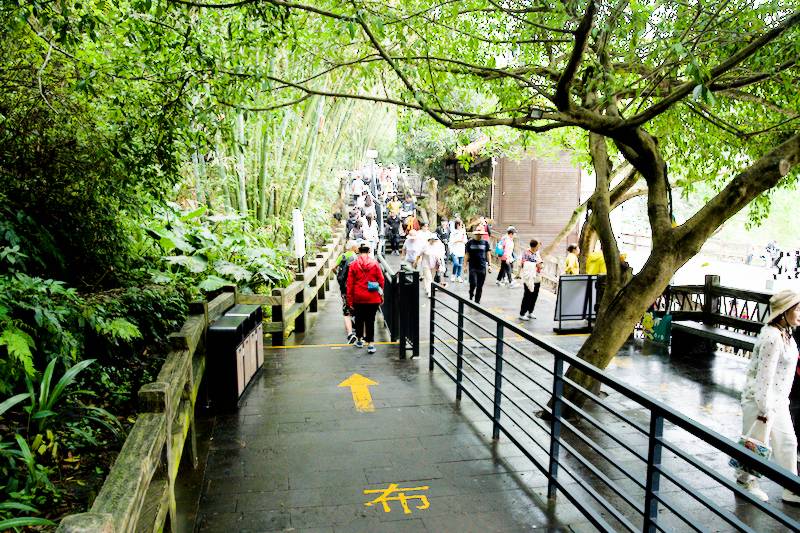
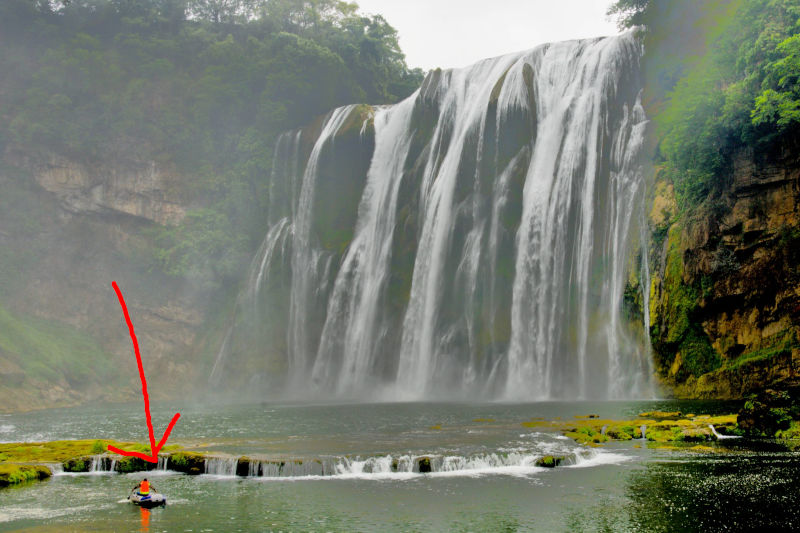
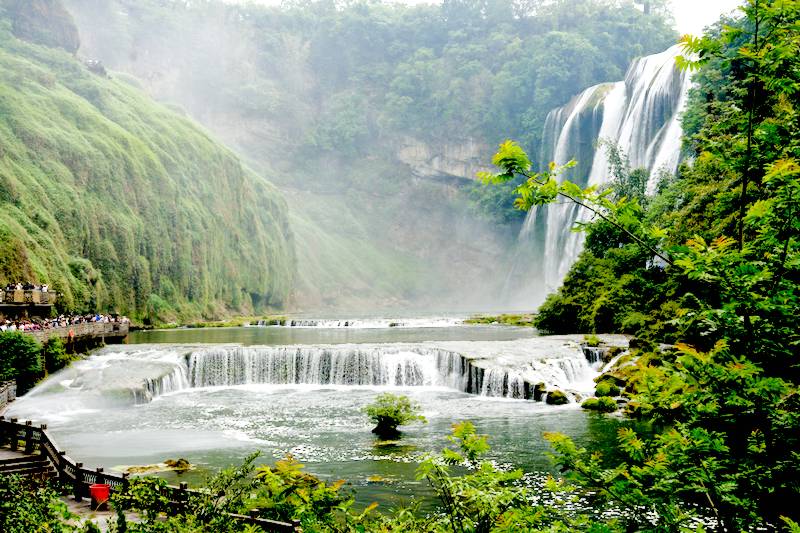
My brother visited this place decades ago and told us that there were no proper viewing platforms back then. He could get much closer, even walking right down to the river. Today, with the rapid growth of tourism, platforms and walkways have been constructed to manage the crowds and ensure safety.
There is a one-way bridge across the river from the viewing platform. We later learned that it leads further in, behind the cascading water, to the famous Water Curtain Cave (水帘洞).
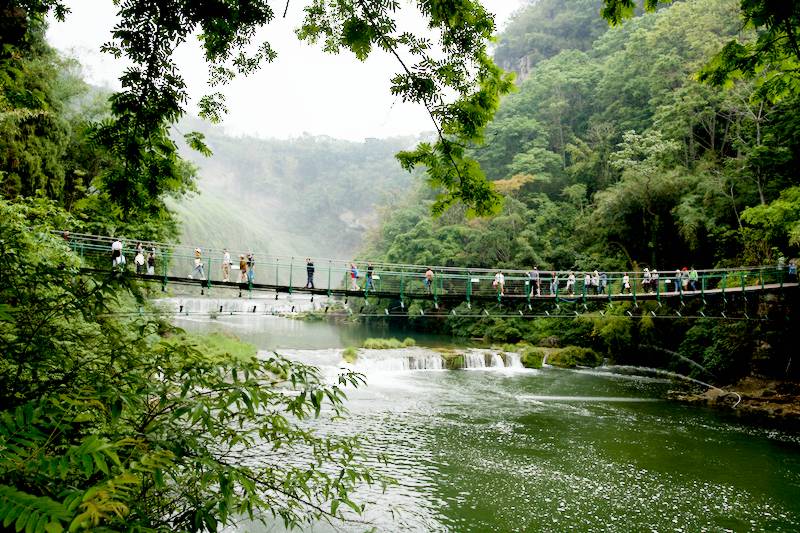
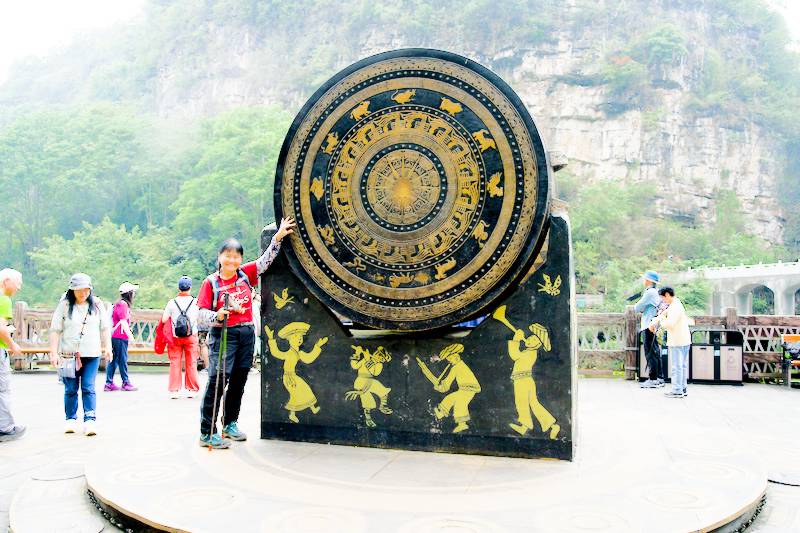
It was about time for lunch after enjoying the magnificent water tumbling down from Huangguoshu Waterfall, so we took the elevator back up to the internal sightseeing bus station.
Along the way, we walked through an area lined with vendors selling the actual “Huangguo” (yellow fruit) that gave Huangguoshu Waterfall its name. The fruit looks like an orange and is often made into fresh juice.

Tianxingqiao Scenic Area 天星桥风景区
After lunch, we took the internal sightseeing bus again to Tianxingqiao Scenic Area. Unlike the main waterfall area, this section is known for its unique limestone formations, streams, and ponds.
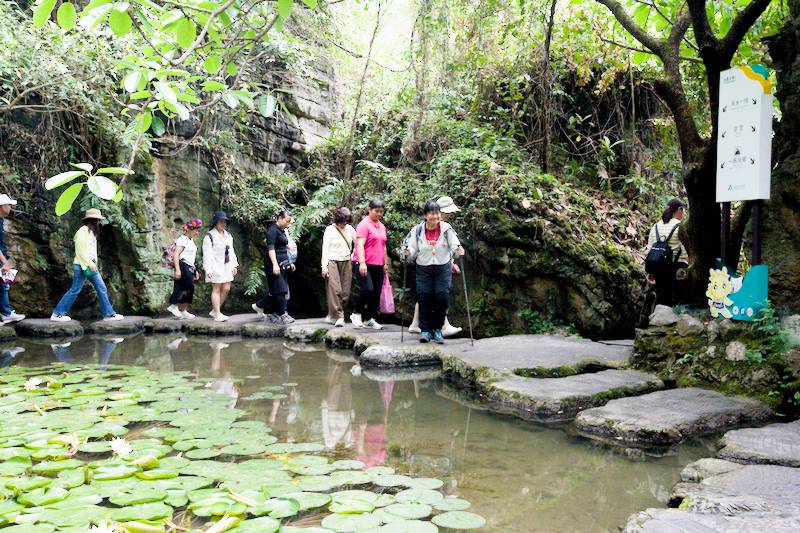
We followed the path across the shallow water known as the “Shuisheng Bu 数生步” (Stepping Stone Path). There are 365 stones in total, each carefully flattened and engraved with a day of the year. We started from the first stone marked as January 1 and followed the sequence all the way to the last day of the year. The stones wind through the landscape in different directions, guiding us past a variety of interesting rock formations, each named based on what it resembles.
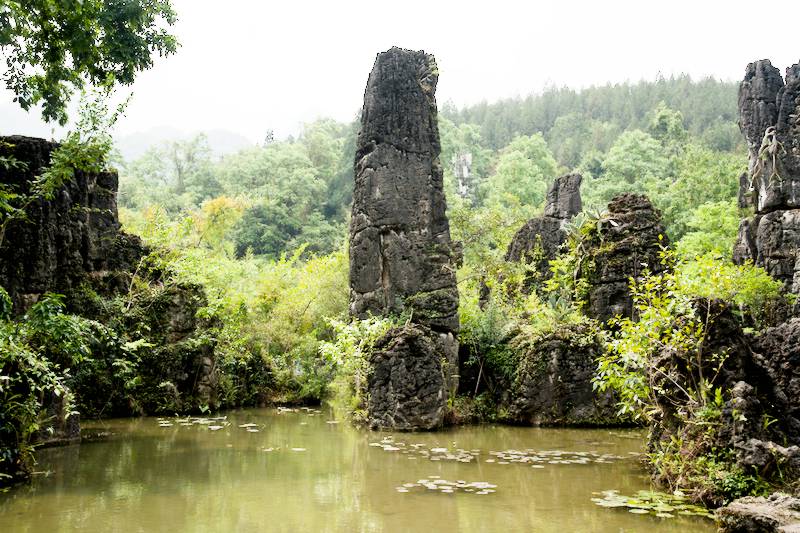
For example, “Tianshui Yixian” (天水一线, Sky and Water in One Line) refers to a narrow gorge where the path passes through, creating the visual effect of the sky and water forming a single line between the cliffs.
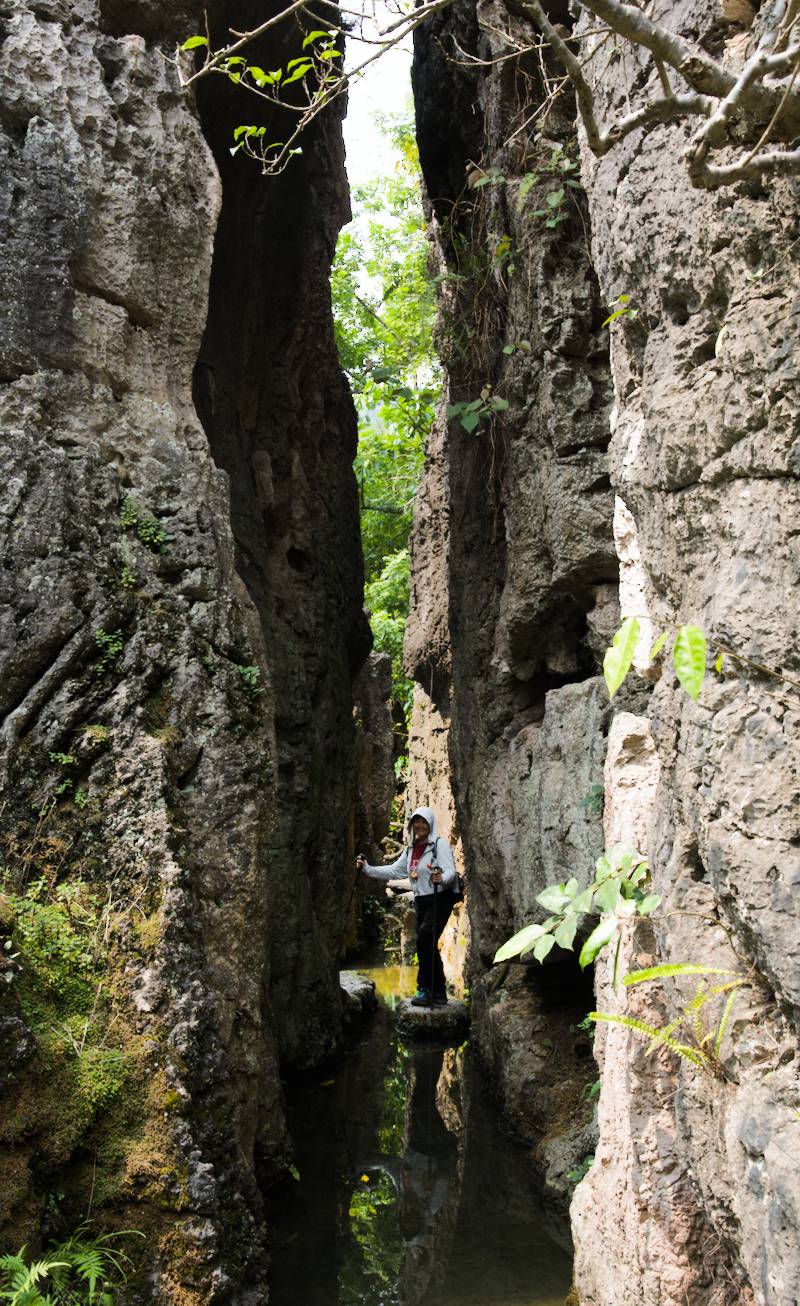
Another is “Ceshen Yan” (侧身岩, Sideways Body Rock), a very tight gap between two rock faces where you have to turn your body sideways to squeeze through.
It turned out to be a fun and slightly anticipatory walk, as everyone looked forward to stepping on their “birthday stones.” The rocks themselves are naturally formed, but they have not been left completely untouched. They were carefully shaped and flattened on top, creating a clever blend of natural landscape and a playful experience.
陡坡塘瀑布 Dǒupōtáng Waterfall
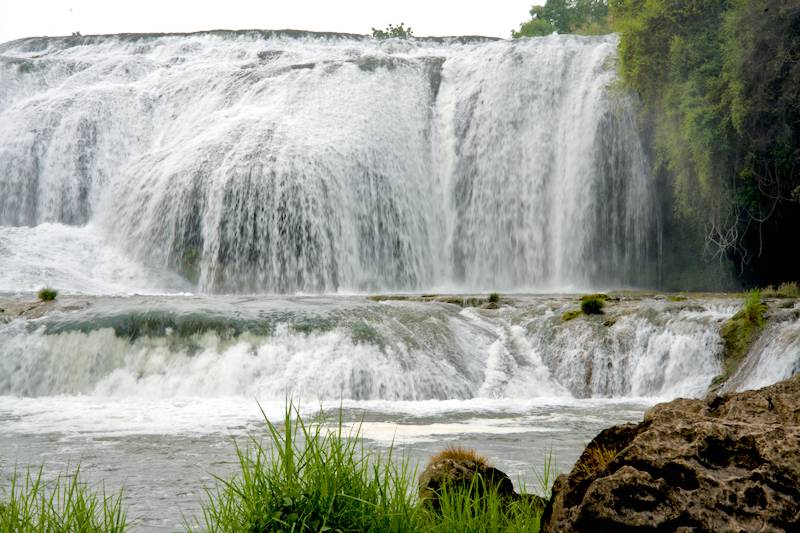
The last stop is to take the internal sightseeing bus upstream to Doupotang Waterfall. The viewing area is well built, though it would be even better if it extended closer for a closer view of the flowing water curtain.
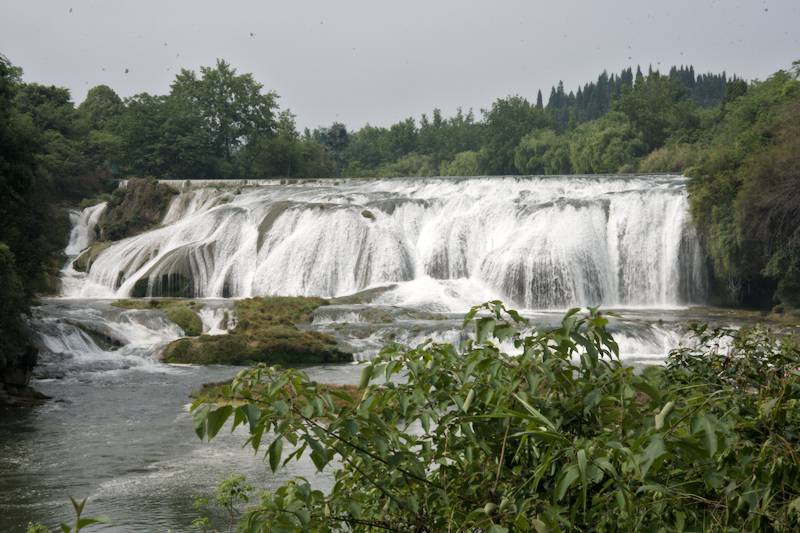
Although it is not as tall as Huangguoshu Waterfall, it is actually the widest waterfall in the entire Huangguoshu Waterfall Group. For comparison, the main Huangguoshu Waterfall is about 101 meters wide, while Doupotang is slightly wider at the top (105 meters), although much shorter in height.
What makes it truly special is the intricate crisscross pattern formed by the gentle flow of water over numerous rocks. The streams spread out like a thin sheet of fabric, almost as if a soft breeze were blowing across it. With sunlight reflecting off the surface, it creates the effect of a semi-transparent curtain of glass.
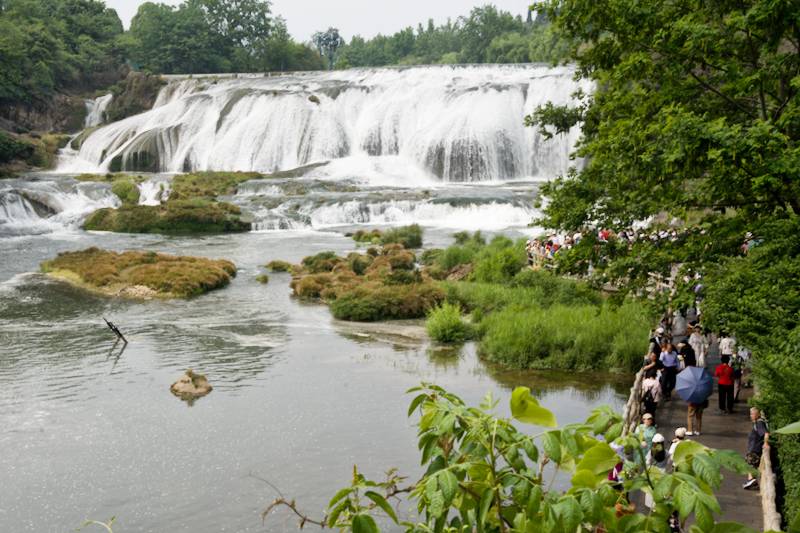
As the water flows and splashes, tiny droplets form and catch the light, resembling strings of moving pearls. The overall scene feels soft, graceful, and almost mesmerizing. It is a striking contrast to the powerful and grand presence of Huangguoshu Waterfall just downstream.
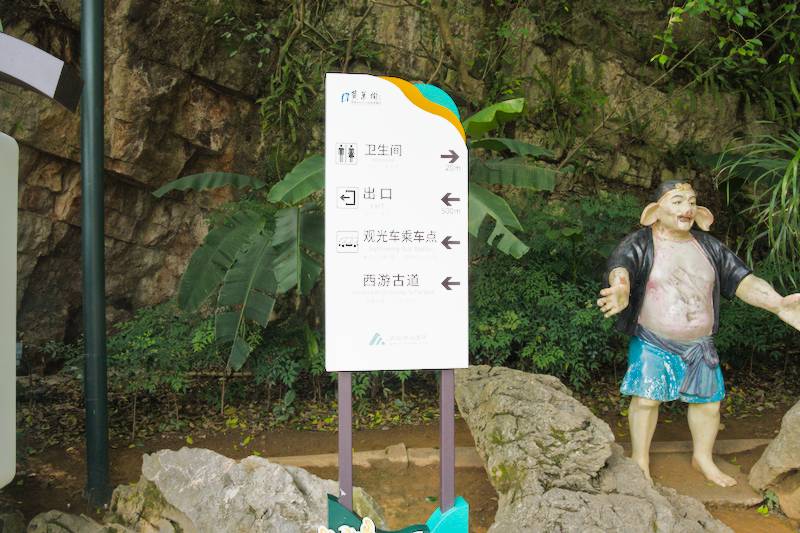
After we visited the waterfalls, we returned to the bus station via another route, passing by statues that depict scenes from *Journey to the West*. These are inspired by the ending credits of the 1983 TV series, including the famous scene where Tang Sanzang and his disciples cross the waterfall.
Overall, it was a great outing to this area as we got to see two of the most significant waterfalls in Guizhou. We also really enjoyed walking through the Shushengbu area, not only searching for the “birthday stone,” but also discovering many uniquely shaped rock formations along the way.
Huangguoshu Waterfall Travel Guide FAQ:
Below are the essential questions answered to plan your trip to this spectacular waterfall in Guizhou.
Where is Huangguoshu Waterfall located? The waterfall is located in Zhenning Buyei and Miao Autonomous County (镇宁布依族苗族自治县), Anshun City (安顺市), Guizhou Province (贵州省) in southwest China, about 128 kilometers southwest of the provincial capital Guiyang (贵阳).
Do I need to buy tickets in advance? Yes, it is strongly recommended to book tickets online in advance through the official WeChat mini program or major travel platforms like Trip.com.
How long should I spend at Huangguoshu Waterfall? A full visit usually takes one full day. If you only want to see the main highlights, you can finish in about 4 to 5 hours. However, to properly enjoy all three areas, including Doupotang, Tianxingqiao, and the main waterfall, you should plan for 6 hours.
Do I need a separate reservation for the Water Curtain Cave? Yes. The Water Curtain Cave behind the main waterfall requires a separate free time-slot reservation that is linked to your entry ticket. These slots are limited and can be fully booked quickly, especially during peak periods, so it is best to reserve them early.
How big is the main waterfall? The main Huangguoshu Waterfall is about 77.8 meters high and 101 meters wide, making it one of the largest and most famous waterfall systems in China.
How do I get to Huangguoshu from Guiyang? The most convenient option is to take a high-speed train from Guiyang North or Guiyang East Station to Anshun West Station, which takes around 30 to 40 minutes, followed by a tourist bus or taxi for another 40 to 50 minutes to the scenic area.
How do I get around inside the scenic area? The park is large and divided into multiple zones, so you must use the internal sightseeing bus. The bus connects the main sections, and walking between them is not practical.
What are the three main attractions? The three main areas are Doupotang Waterfall, which is a wide and gentle waterfall often associated with the ending credits of the 1986 TV series Journey to the West; Tianxingqiao Scenic Area, which features karst landscapes, caves, streams, and the famous “Birthday Stones” walking path; and the main Huangguoshu Waterfall, the iconic 77.8-meter waterfall with the Water Curtain Cave behind it.
What are the Birthday Stones at Tianxingqiao? The Birthday Stones are a themed walking path where 365 stones are marked with dates from January 1 to December 31. You can find and photograph your birthday stone. The stones themselves are natural, while the date markings and pathway concept were created as part of the scenic design.
What is the Water Curtain Cave? The Water Curtain Cave is a 134-meter-long natural cave that runs behind the main waterfall. You can walk through it wearing a raincoat and can view the waterfall through openings in the rock face. It is one-way only and requires a separate timed reservation.
Is there a lot of walking? Yes, a full visit involves significant walking, including stairs, stone paths, and uneven terrain, so comfortable non-slip shoes are essential.
Is there an elevator to help with walking? Yes, at the main waterfall, there is a sightseeing elevator for to descend and ascend between viewing levels.
What is the best time of year to visit? The best time is from June to October during the rainy season, when water flow is strongest and most impressive. Winter offers fewer crowds and clearer conditions, but significantly reduced water volume.
Will I get wet? Yes, especially inside the Water Curtain Cave, where a raincoat is essential.
What should I bring? It is recommended to bring a lightweight raincoat, comfortable non-slip walking shoes, drinking water, light snacks, a valid ID or passport for ticket verification, and a power bank for your phone or camera.
Can I bring a stroller or wheelchair? It is not recommended due to stairs, uneven stone paths, narrow cave sections, and steep terrain. Do I need a guide? No, a guide is not necessary as the routes are well-marked and the internal shuttle system is straightforward.
During our stay in Guizhou, China, we also visited one of the most unique mountains, Fanjingshan, and you can read the full story here. If you enjoy ancient Chinese architecture and also appreciate a touch of contemporary luxury, then Wujiangzhai is likely the ideal place for you.
🎥 Watch our Video at Huangguoshu Waterfall
We’ve put together a video from this trip, which you can watch on YouTube by clicking the image below.

Huangguoshu Waterfall looks absolutely breathtaking! The powerful cascade, lush green surroundings, and scenic viewpoints make it a fantastic destination for nature lovers and adventure enthusiasts. This guide is very helpful for anyone planning to visit and explore the area. For Indian travellers planning other trips across India, arranging reliable transportation in advance can make sightseeing much more convenient. Exploring Best Airport Services can be a useful starting point for finding convenient cab booking options for your next journey. Thanks for sharing this wonderful travel guide!
Regards,
Deeba
Best Airport Services
http://www.yanseva.com