
Have you ever considered visiting Guizhou, China? We’ve just returned from a 6D5N Guizhou Itinerary, and honestly, Guizhou is so vast that we only managed to explore a small part of it. Even so, this itinerary focused on some of the very best places the province has to offer.
Join us in this video as we explore some of the most beautiful and unforgettable places to visit in Guizhou, China.
Day 1: Arrival in Guizhou & Wūjiāngzhài Resort
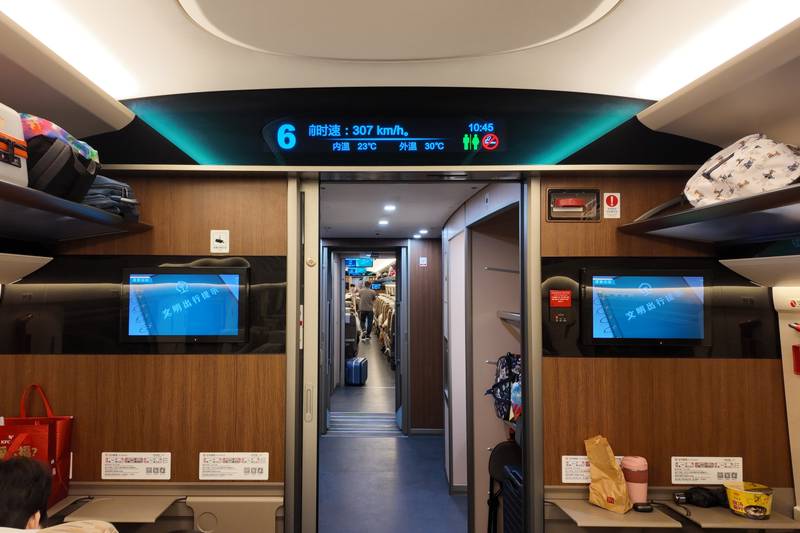
We joined a tour organized by the Hong Kong-based tour company Miramar Travel 美丽华旅游. Our 6D5N Guizhou Itinerary began with a five-hour high-speed train ride from Hong Kong to Guizhou, followed by another two-hour bus ride to Wūjiāngzhài International Tourist Resort (乌江寨国际旅游度假区). By the time we arrived, it was already around 4 PM.
Wūjiāngzhài International Tourist Resort (乌江寨国际旅游度假区)
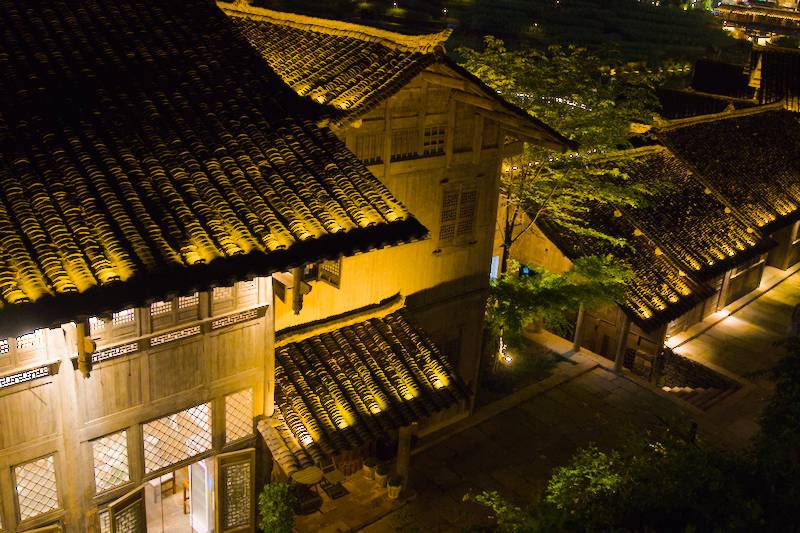
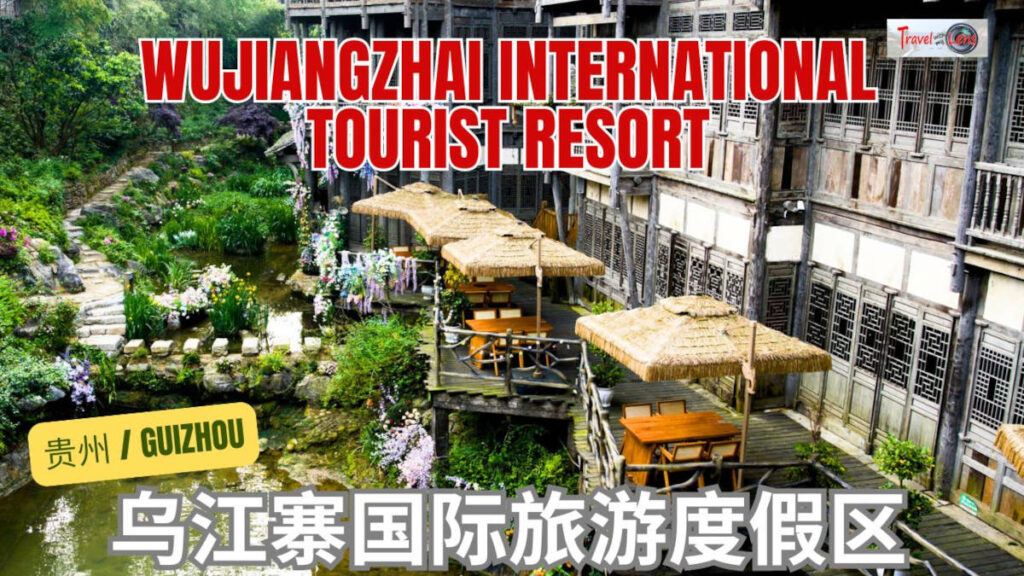
So what can you expect to see here? This place was once a remote village that was difficult to access. Now it has been beautifully transformed into a tourist destination filled with traditional-style houses and scenic surroundings.
We checked into our hotel, Huilongwan Hotel (廻龙湾), which was just a short walk from the village. After settling in, we headed to the open square by the river, where a variety of performances were taking place throughout the evening.
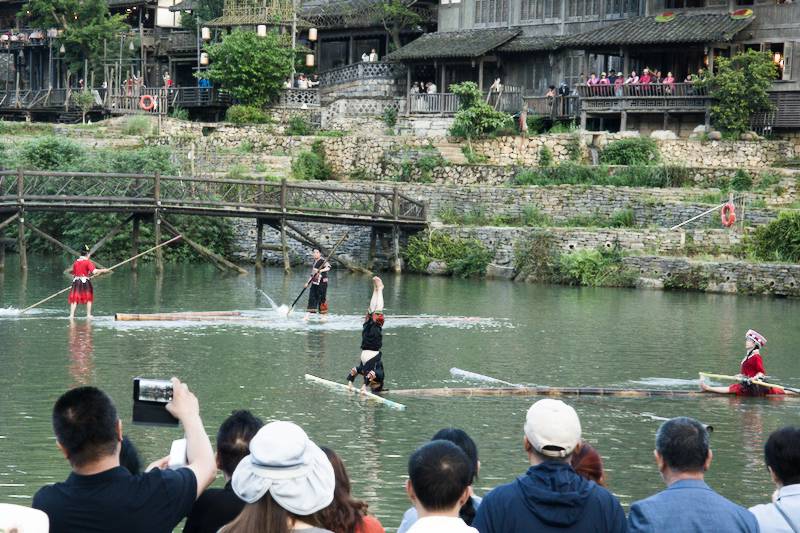
The first show we watched was the bamboo rafting performance, where dancers performed gracefully on rafts drifting along the river.
As night fell, the drone show began, accompanied by a colorful fountain performance that lit up the riverside.
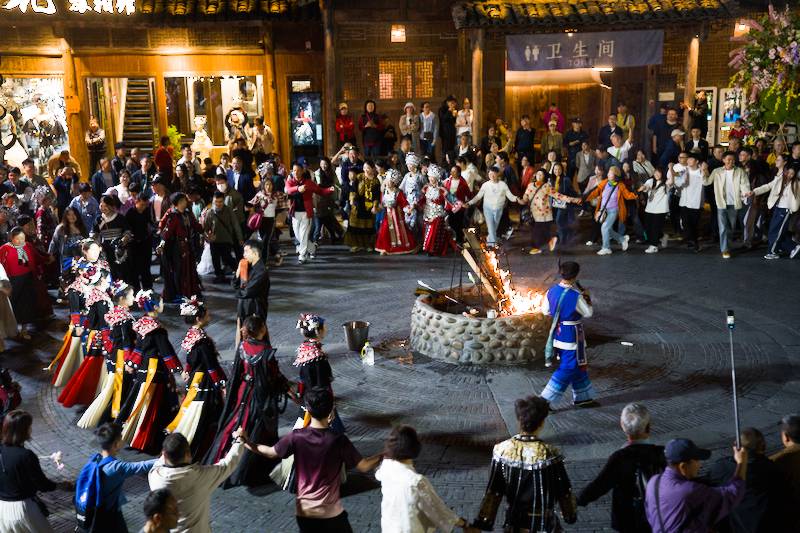
Before calling it a night, we also caught the bonfire dance show. Performers dressed in traditional costumes invited visitors to join in, turning the whole area into a lively and cheerful celebration.
The evening activities ended around 9 PM. After a long day of traveling, it felt great to return to a comfortable room and finally get some proper rest.
Day 2: Wūjiāngzhài & Tongren Ancient City
Since we were staying at a hotel within the Wūjiāngzhài International Tourist Resort compound, we had the luxury of waking up a little later that morning. After enjoying a sumptuous buffet breakfast, we took a relaxing stroll through the village.
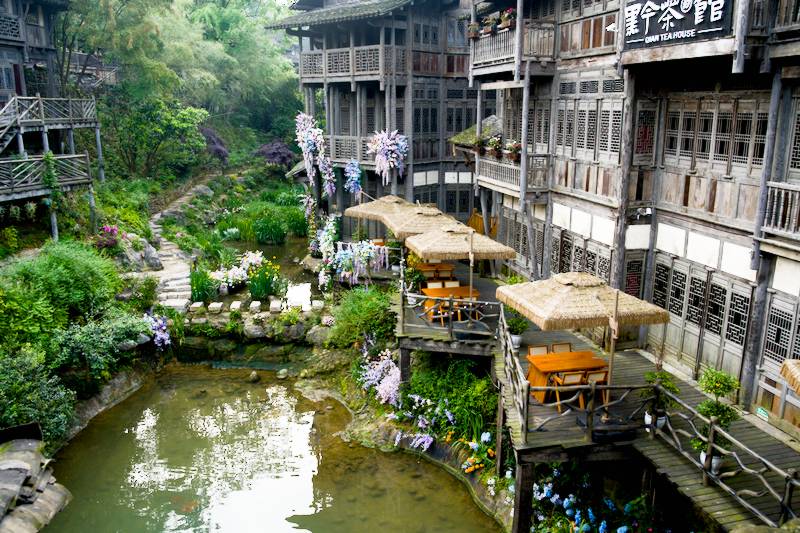
The village is thoughtfully designed and preserves the charm of the original setting. There are many small lanes to explore, lined with eateries offering a variety of local specialties that feel authentic to the region.
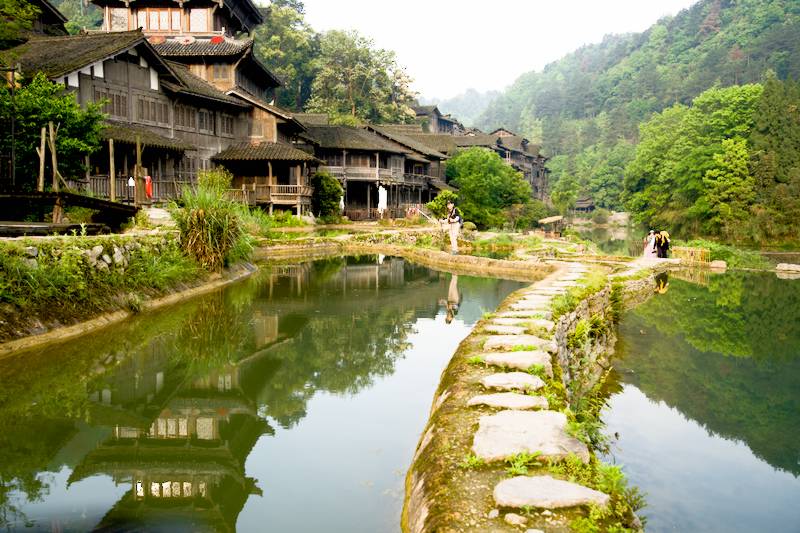
We walked down to the river and crossed over to the other side. It was a great spot for taking photos, with scenic views all around.
Our video at Wujiangzhai⛰️
Our story at Wujiangzhai: 📖
Tongren ancient city. 铜仁古城
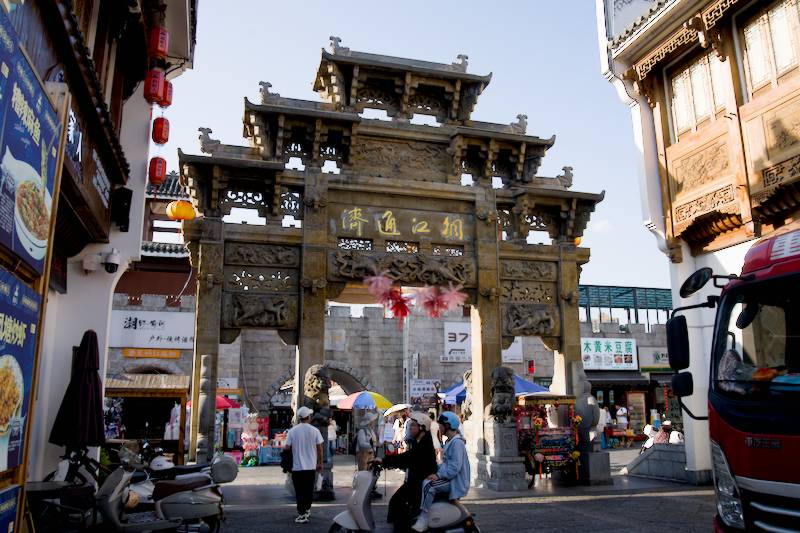
After that, we left Wūjiāngzhài International Tourist Resort and headed toward Tongren Ancient City (铜仁古城).
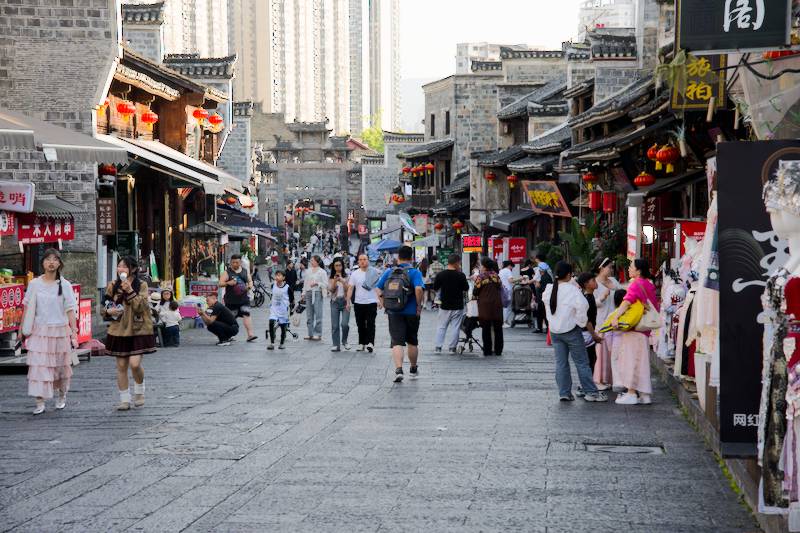
Tongren Ancient City is a restored historical area. Many of the buildings date back to the Ming and Qing dynasties, and today they have been converted into retail shops, mostly catering to tourists.
A leisurely walk through a few rows of shops, with the occasional stop to sample local snacks, takes about an hour.
One of the dishes we tried was 铜仁米豆腐 (Tongren rice tofu), a soft rice-based cake shaped like tofu and served with seaweed, peanuts, and a mildly spicy sauce.
That is all for today. We had a good rest because tomorrow we would be heading to another incredible place, Fanjingshan.
Day 3: Hiking Fanjingshan & Red Clouds Golden Summit
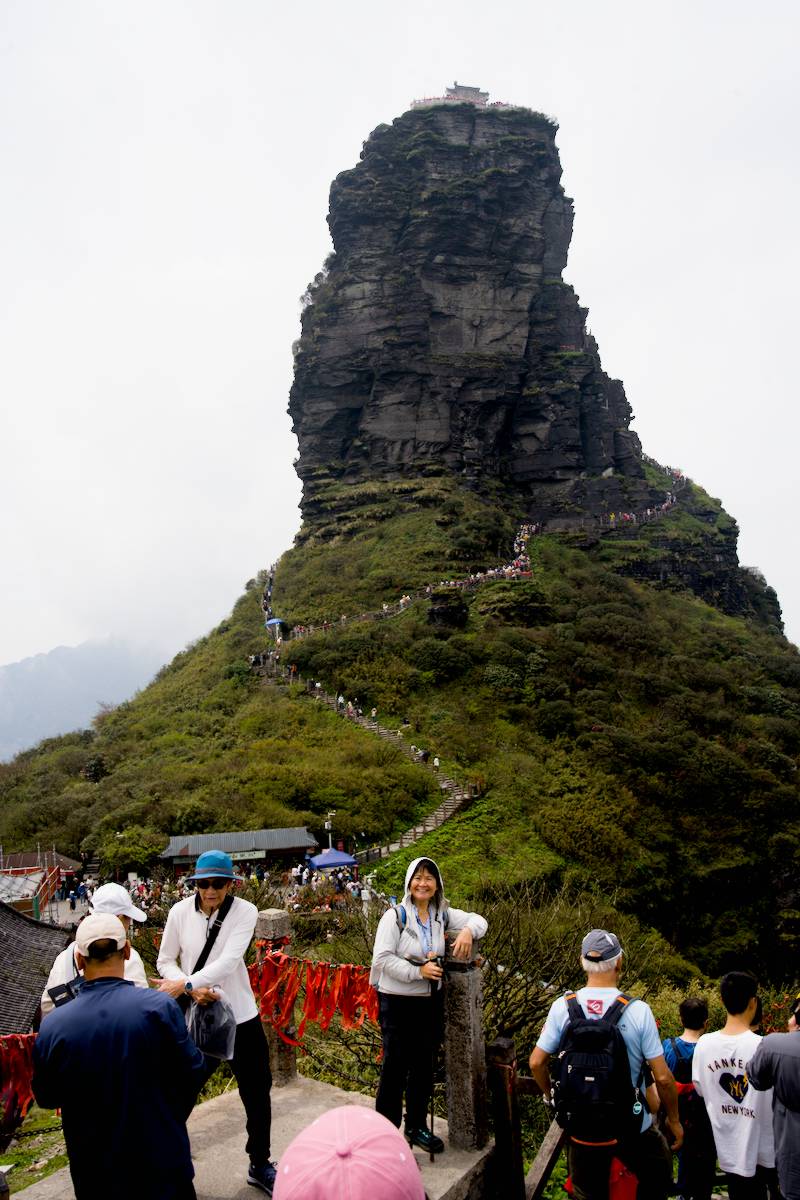
Fanjingshan 梵净山
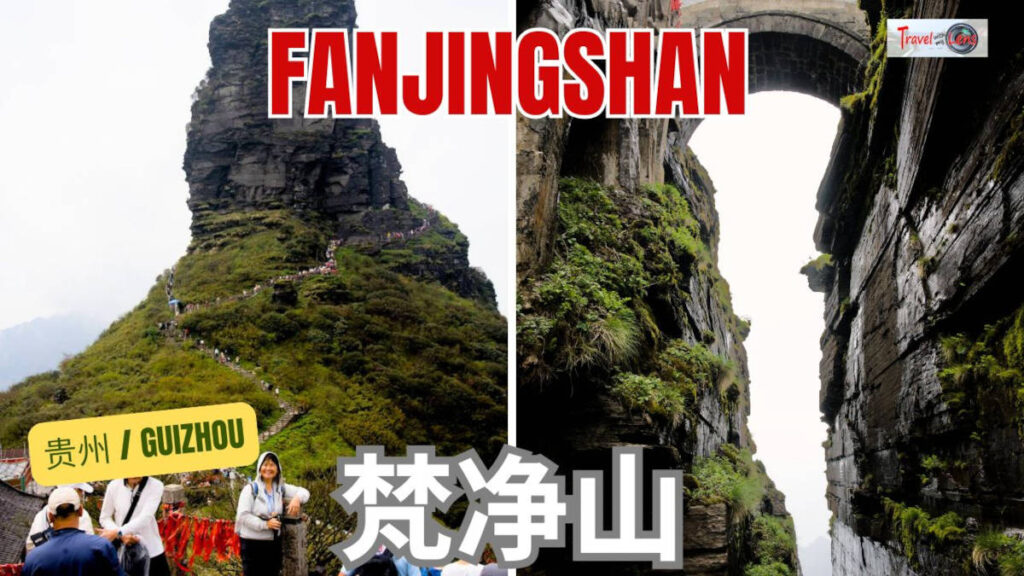
Today was a big day because we were heading to Fanjingshan, a UNESCO World Heritage Site since 2018. The mountain’s most iconic landmark is the Red Clouds Golden Summit (红云金顶), which is often featured in travel articles and videos about the must-visit places in Guizhou.
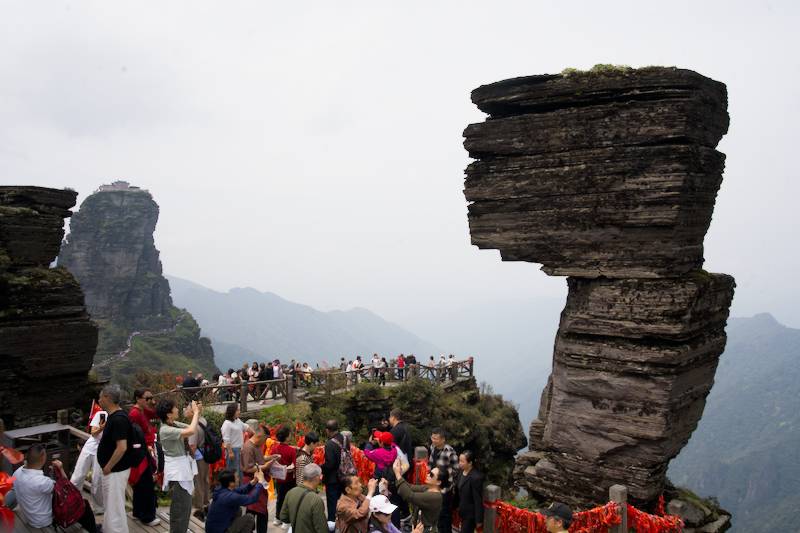
Our hike began with a walk to the famous Mushroom Rock, which took about 40 minutes at a moderate pace. The trail was a well-maintained wooden boardwalk with even steps and handrails on both sides. It zigzagged its way up the mountain, with plenty of resting spots along the route, many of which also doubled as viewpoints.
This unusual Mushroom rock formation was created through differential erosion. The lower section is made from a softer material than the upper layer, so over time, rain and wind wore away the bottom more quickly, leaving behind its distinctive mushroom shape.
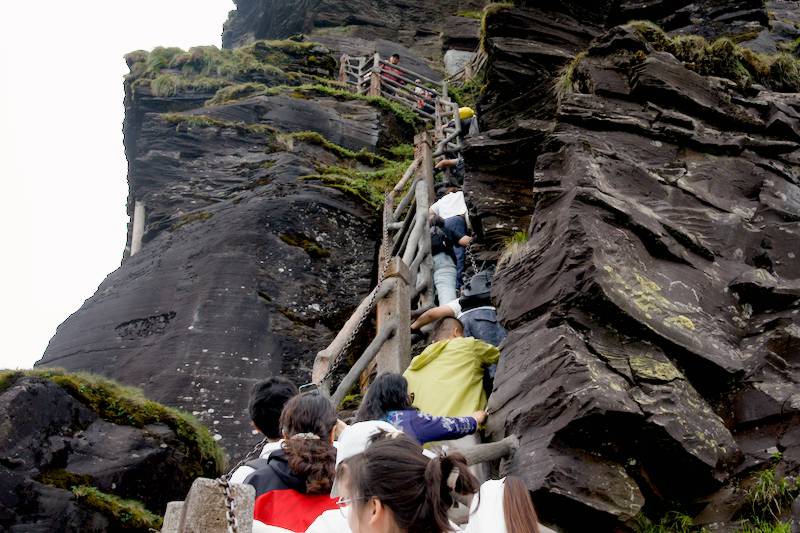
From there, we continued toward the Red Clouds Golden Summit along a downhill cement path. As we climbed higher, the trail gradually became narrower and steeper, especially after a fork where the route turned into a one-way path going uphill.
At one point, we even had to stop briefly while staff managed the flow of hikers because of the steep terrain ahead. From there onward, the climb became much more challenging, with some sections reaching an incline of around 70 to 80 degrees. Stainless steel chains were installed along the route to help hikers pull themselves up. The steps were extremely narrow, sometimes only wide enough for half a foot, and in certain sections, parts of the cliff jutted into the pathway, forcing us to bend slightly as we climbed.
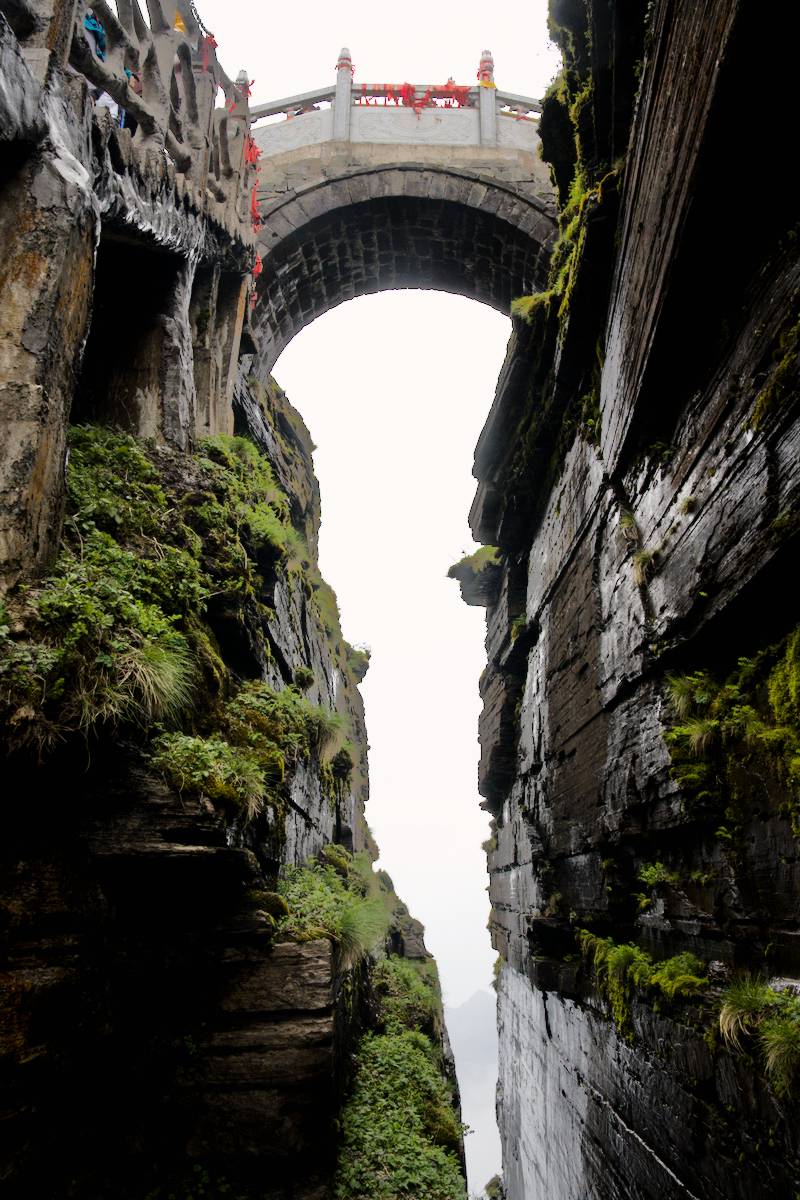
Eventually, we reached the summit by passing through the famous split rock section, where two towering peaks stand side by side, separated by a narrow gap only a few feet wide.
At the top, there is a temple dedicated to Shakyamuni Buddha on one peak. We then crossed a concrete bridge to the other peak, where another temple is dedicated to Maitreya, the future Buddha.
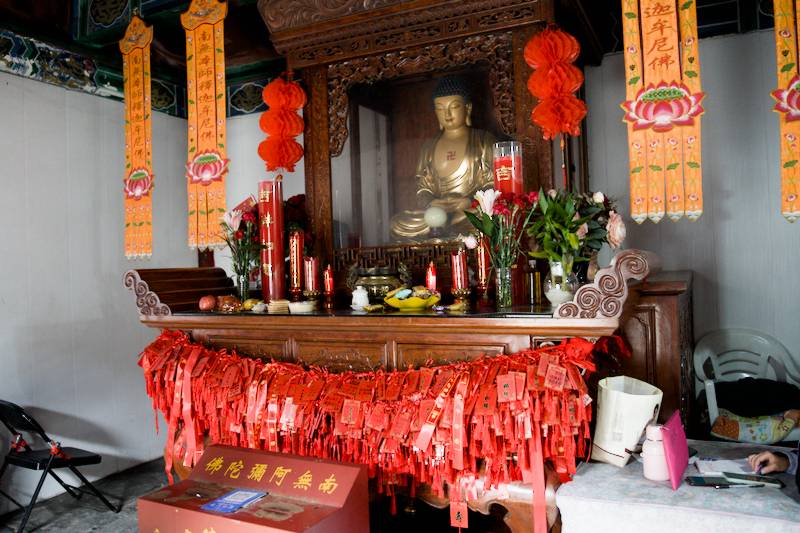
After a late lunch at the base of the mountain, we traveled back to Guiyang, a journey that took about three and a half hours, before settling in for the night.
Our video at Fanjingshan ⛰️
Our story at Fanjingshan: 📖
Day 4: Jiaxiu Pavilion, Qingyan & Dragon Palace
Jiaxiu Pavilion 甲秀楼
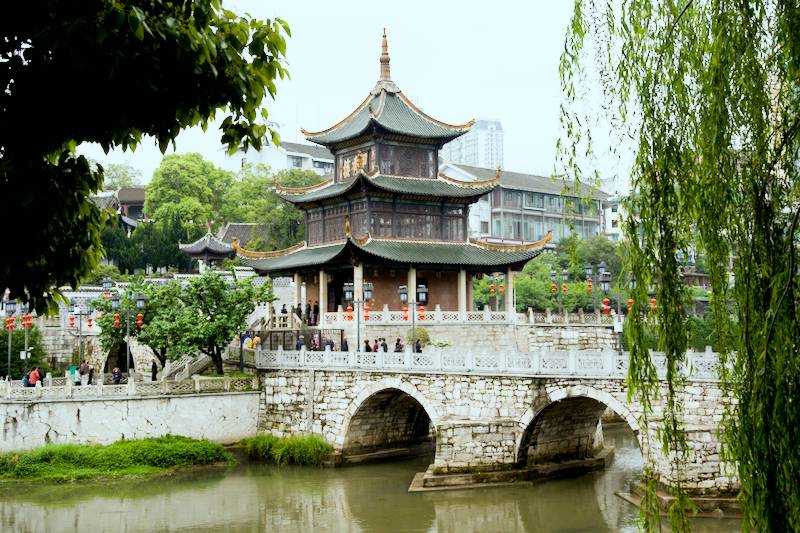
On Day 4 of our 6D5N Guizhou itinerary, we continued with a morning visit to Jiaxiu Pavilion, one of the most iconic landmarks in Guiyang. This unique architectural structure stands on a massive rock right in the middle of the Nanming River (南明河). Originally built in 1598 during the Ming Dynasty, the pavilion has gone through several rounds of restoration and rebuilding over the centuries.
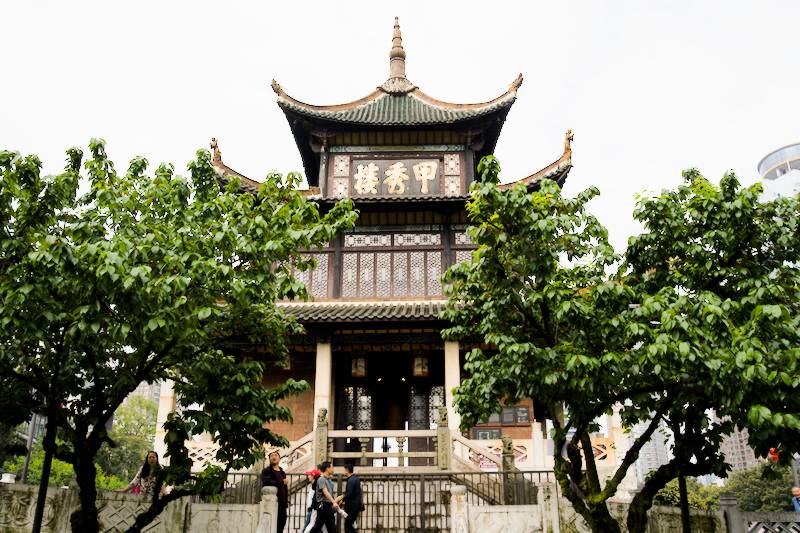
After that, our next stop was Qingyan Ancient Town (青岩古镇).
Qingyan Ancient Town (青岩古镇)
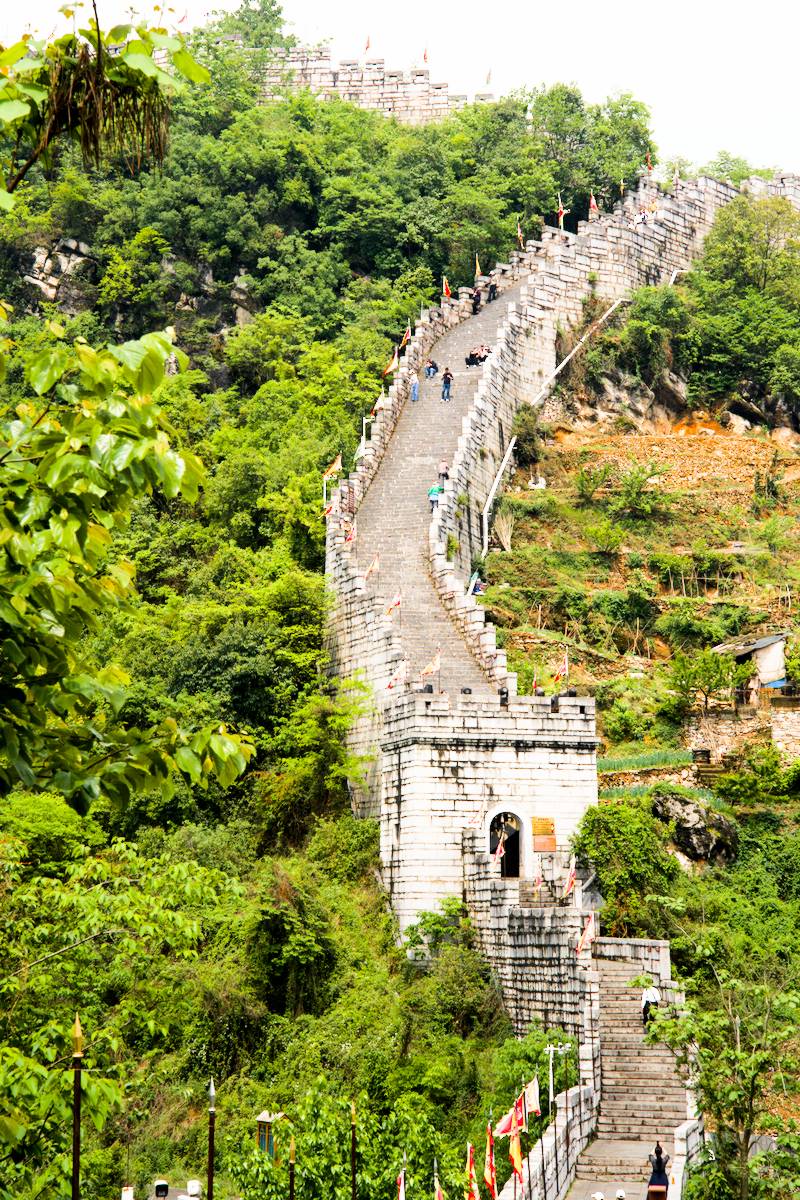
Qingyan Ancient Town is one of the best-known historical towns in Guizhou, located about 29 kilometers south of Guiyang. It has a history dating back more than 600 years to the Ming Dynasty and was originally built as a military fortress to help defend the region.
We briefly walked up to the fortress area, but since the full route takes about an hour to complete and we were short on time, we decided to snap a few photos before heading back down to the main streets.
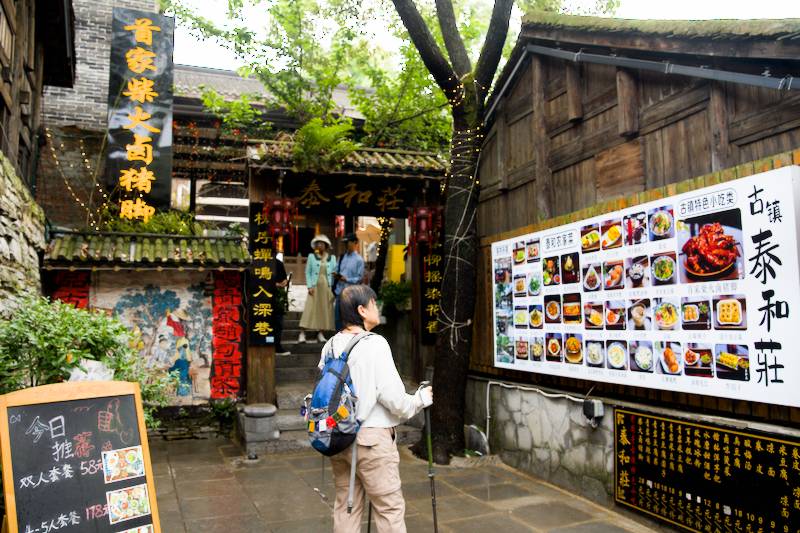
The heart of the town was lively and full of energy, lined with restaurants, shops selling local specialties, souvenirs, and traditional handicrafts. Most of the businesses operated out of beautifully preserved historic buildings that had been carefully refurbished while still retaining the architectural charm of centuries past.
Along the way, we spotted all kinds of interesting local products, including Chinese herbs, different varieties of spicy sauces, cured meats, and local snacks. Some shops were also making handicrafts right in front of visitors, including traditional woodwork, which added even more character to the town.
From there, we continued our journey to Dragon Palace Scenic Area, which took about one and a half hours by road.
Dragon Palace 龙宫 scenic Area
This place is not actually a palace, but a network of lakes connected by caves, allowing visitors to travel from one section to another by boat.
We first walked a few hundred meters along a scenic riverside path before arriving at the impressive Dragon Gate Waterfall. Unlike most waterfalls that cascade down from a mountain, this one bursts straight out from the mouth of a cave, making it a truly unusual sight and something we had never seen before.
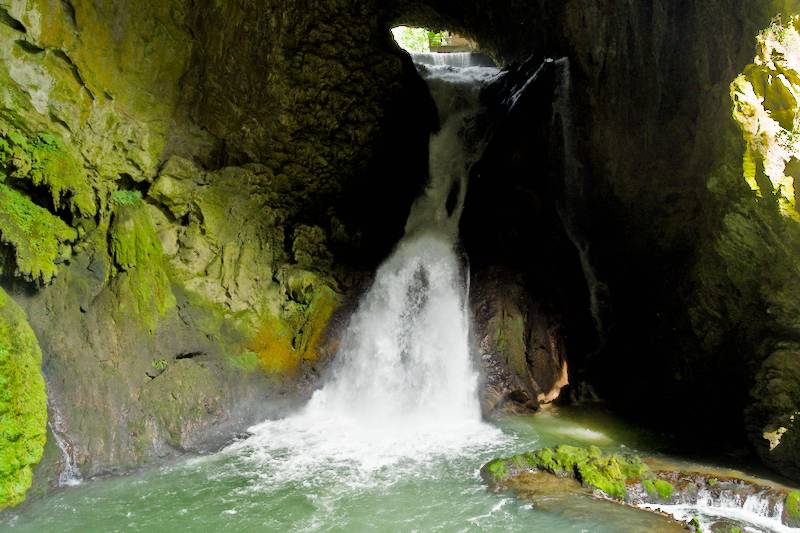
Next, we took an elevator up to the mountaintop. From there, we arrived at the pier by Tianchi, also known as the Heavenly Pool, an emerald green lake formed within a giant sinkhole. Here, we boarded a small wooden boat rowed by a boatman.
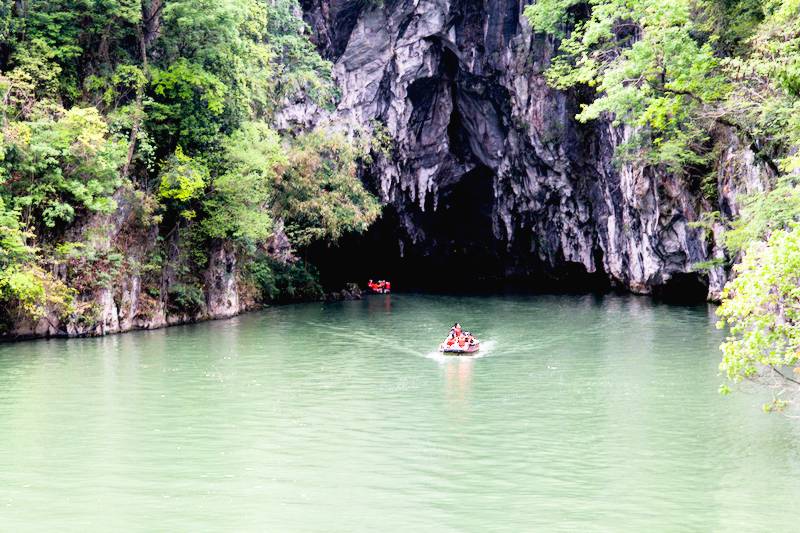
The boat slowly glided through a narrow opening into a massive underground cave filled with water, forming a deep subterranean lake that reaches depths of up to 30 meters in some areas. As we moved deeper inside, we were surrounded by stunning stalactites and stalagmites illuminated by colorful lights, making the rock formations easy to admire even within the darkness of the cave.
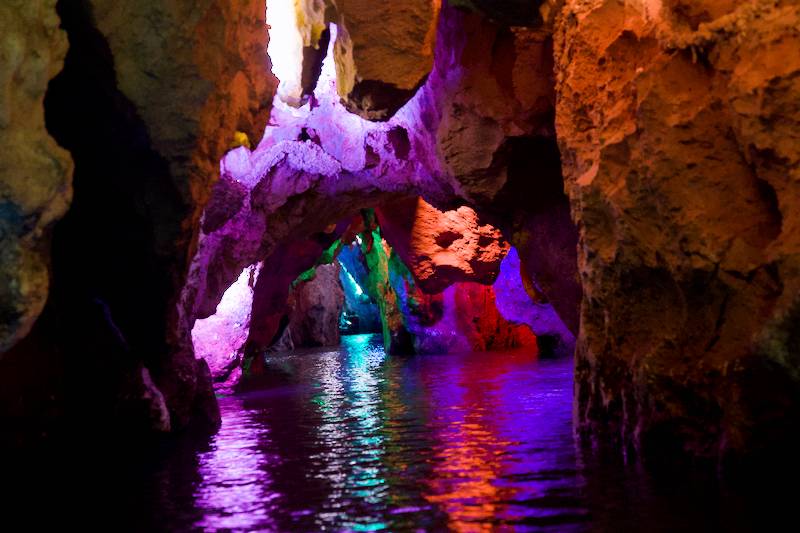
At the end of the lake, we got off the boat and took a short walk to another pier, where we boarded a second boat to continue the journey.
After completing the route, we returned by boat to the original pier, then headed back to the internal sightseeing bus before continuing to Anshun for dinner.
Our video at Dragon Palace⛰️
Our story at Dragon Palace: 📖
Day 5: Huangguoshu Waterfall & Tianxingqiao
黄果树大瀑布 Huángguǒshù Waterfall
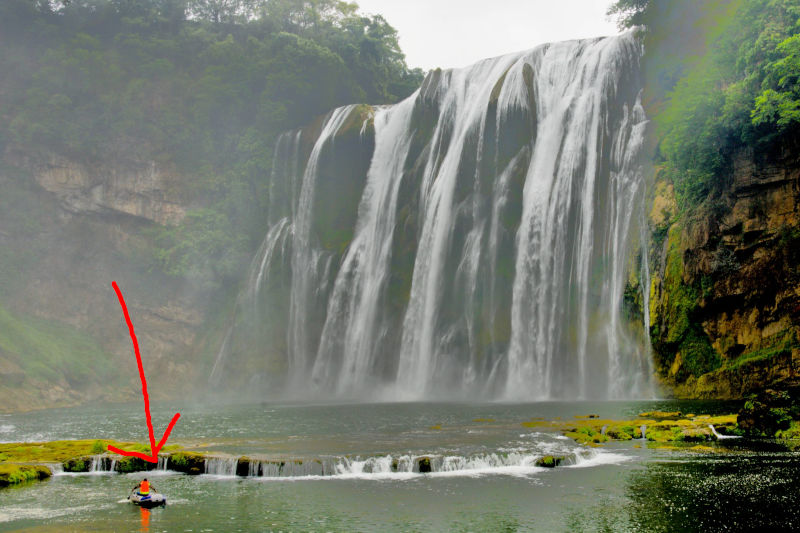
Day 5 was dedicated to one of the most spectacular waterfalls in China, Huangguoshu Waterfall.
The waterfall stands about 77.8 meters tall and 101 meters wide. To get there, we first took an elevator, followed by a descent to a well-maintained stone-paved viewing area beside the river at the base of the falls.
The viewing path stretches for more than 100 meters, beginning from a side angle before gradually opening up to a full frontal view of the waterfall. This allows visitors to appreciate its sheer scale and power from different perspectives, both up close and from a distance, all within a safe and comfortable walkway.
Doupotang Waterfall (陡坡塘瀑布)
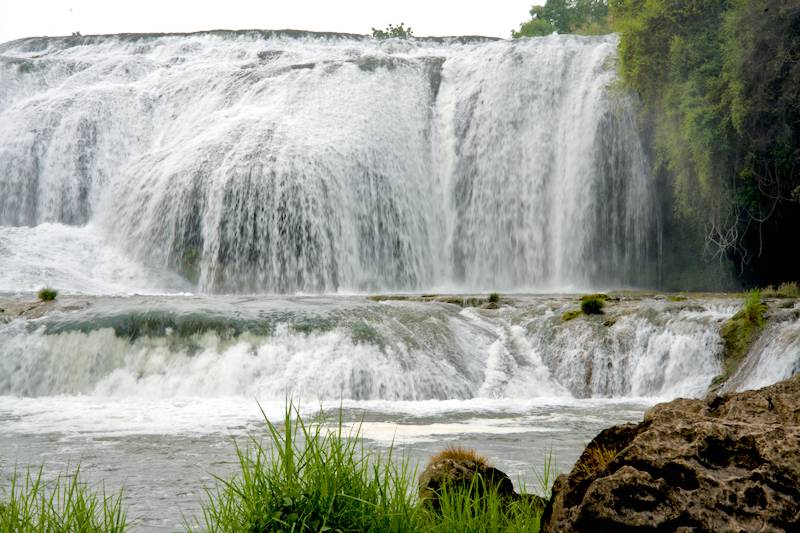
Next, we took the internal sightseeing bus upstream to Doupotang Waterfall.
Although it is not as tall as Huangguoshu, its beauty comes from the intricate crisscross patterns created by the gentle flow of water spreading across countless rocks. The water fans out like a thin sheet of fabric, almost as if a soft breeze were rippling across its surface. Under the sunlight, it looked almost like a semi-transparent curtain of glass.
As the water flowed and splashed over the rocks, countless tiny droplets caught the light like strings of moving pearls. The whole scene felt soft, graceful, and almost hypnotic.
Tianxingqiao Scenic Area (天星桥风景区)
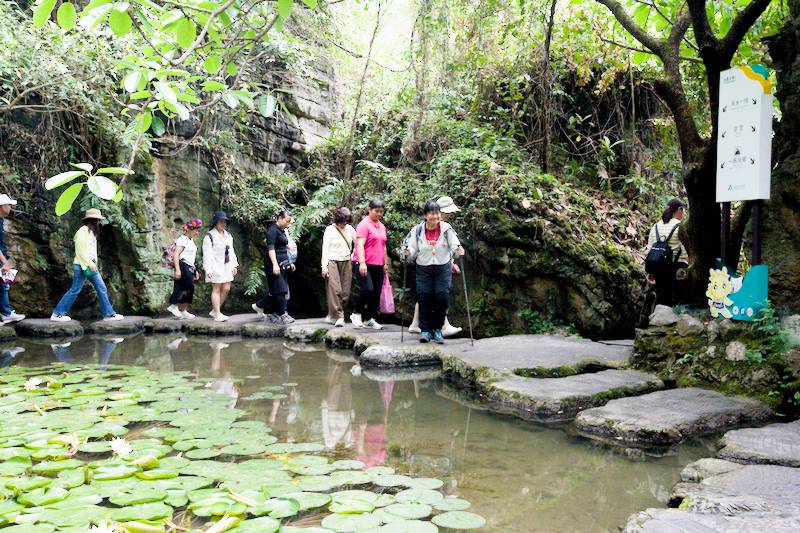
The third stop was Tianxingqiao Scenic Area, a scenic area famous for its limestone rock formations, streams, and natural ponds.
One of the highlights here was walking across the shallow water on the famous “Shuisheng Bu” stepping stone path. There are 365 stones in total, each flattened and engraved with one day of the year. We started from the stone marked January 1 and followed the sequence all the way through to the final day of the year.
The path twists through the landscape in different directions, leading visitors past a variety of fascinating rock formations, each named according to what it resembles.
One example is “Tianshui Yixian” (天水一线), which means “Sky and Water in One Line.” It is a narrow gorge where the cliffs create the illusion of the sky and water merging into a single line. Another memorable spot is “Ceshen Yan” (侧身岩), or “Sideways Body Rock,” a very narrow gap between rock walls where visitors have to turn sideways just to squeeze through.
It took quite a while to explore all three scenic areas, and by the time we returned to Anshun, it was already around 4 PM.
Our video at Huangguoshu⛰️
Our story at Huangguoshu: 📖
安顺古城(Anshun Ancient City)
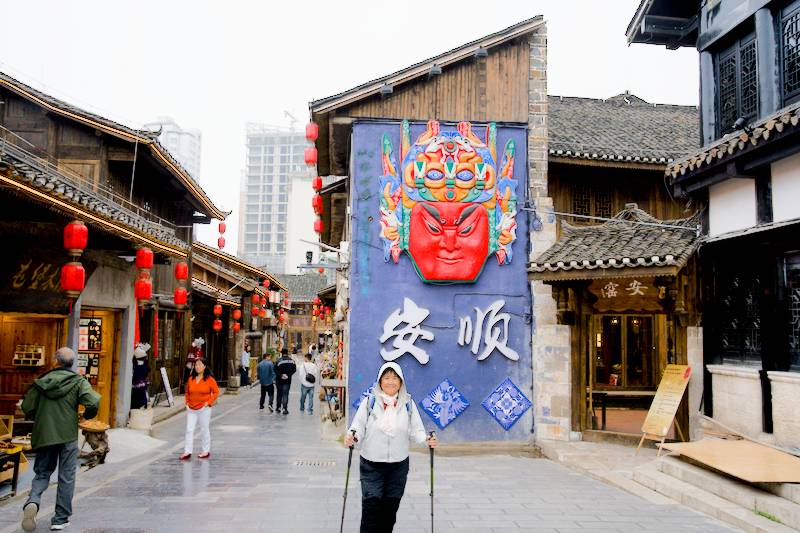
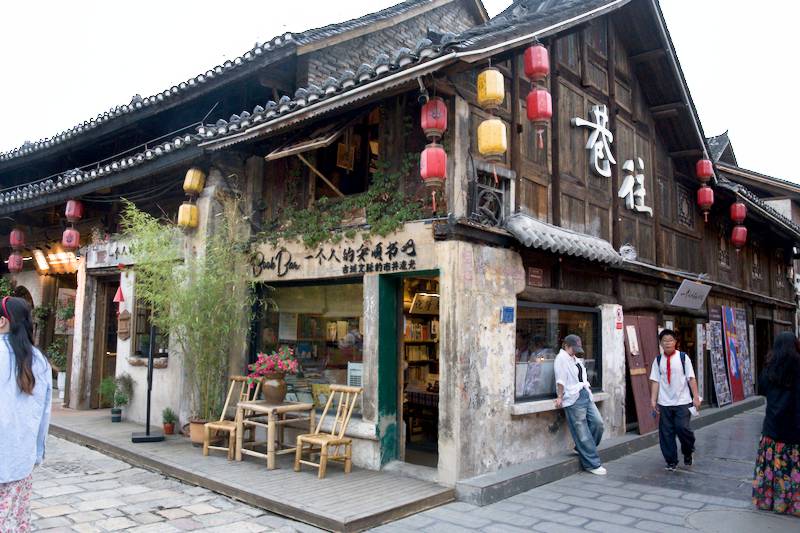
Our last stop in Guizhou was Anshun Ancient City. This area consists of several rows of old buildings that have been carefully preserved and refurbished into various shops.
We visited in the evening, enjoying the cool climate of Anshun, which sits at an altitude of over a thousand meters. As night fell, the streets gradually lit up, with colorful lanterns hanging above, creating a warm and inviting atmosphere. Walking along, we explored the many local food options, including noodles, snacks, sweets, and small bites. There were also charming cafes, a few more modern eateries, and shops selling handicrafts.
Day 6: Returning to Hong Kong
Today was the day wehigh-speed train home. By the time we arrived in Hong Kong, it was already around dinner time.
That wrapped up our entire 6D5N Guizhou Itinerary. Along the way, we also made separate videos covering Dragon Palace Scenic Area, Fanjingshan, and Wūjiāngzhài International Tourist Resort in more detail. If you would like to learn more about these places, feel free to check out the links and join us on the journey.
🎥 Watch our Video: 6D5N Guizhou Itinerary
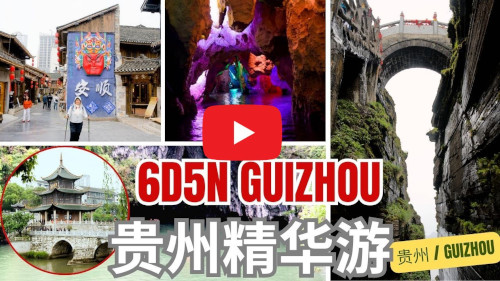
We’ve put together a video from this trip, which you can watch on YouTube by clicking the image below.
Your perspective is refreshing