
If Northern Xinjiang in China has always been on your travel wish list, then this article is for you.
This is not just another travel brochure about Northern Xinjiang. It is our personal experience from a two-week journey organized by Yat Travel China, filled with real moments, fun, and beautiful photographs captured along the way.
Throughout this article, we share detailed firsthand information from our daily itinerary, including the places we visited, the landscapes we experienced, and the unforgettable moments we encountered during the trip.

We hope you will enjoy the beautiful images and follow along on our journey through the breathtaking landscapes of Northern Xinjiang.
This is a long article, so I have added “return to content table” links at the end of each day. You can click them to return to the “14 Days Northern Xinjiang Itinerary” section below. This will make navigation easier.
Day 1
Our Northern Xinjiang itinerary began in Urumqi, the capital of Xinjiang. We traveled from Kuala Lumpur to Urumqi via Beijing, and the journey, including the transit flight, took quite a long time. By the time we finally arrived, it was already late afternoon.
1. Hetian Second Street 和田二街
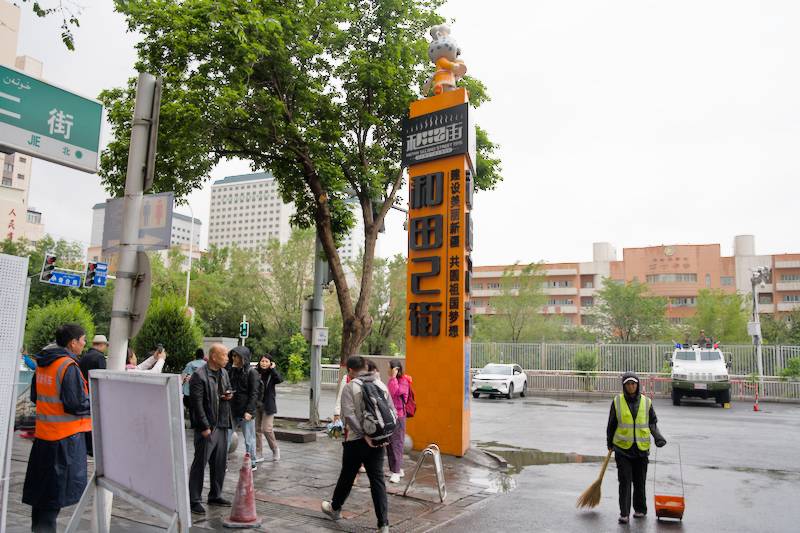
After checking into the hotel and taking a short rest, our tour leader James 小刚suggested that we visit Hetian Second Street 和田二街, one of the most popular street food areas in Urumqi.
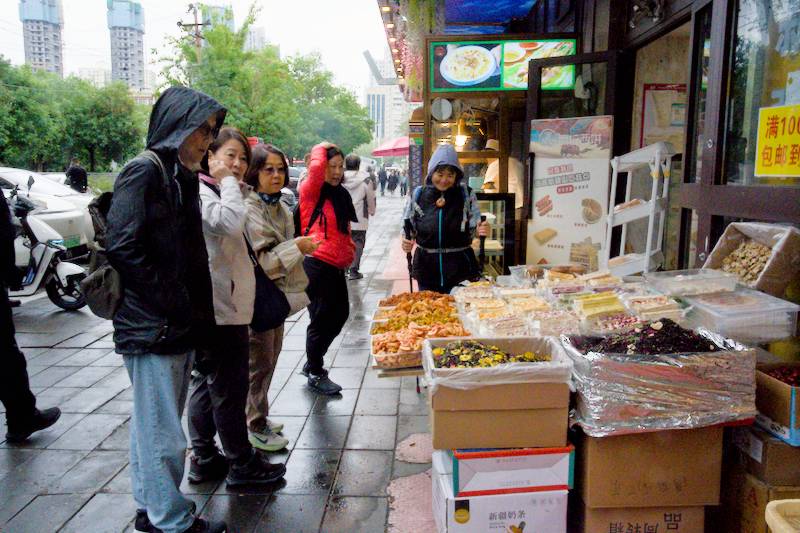
The street is approximately a 15-minute walk from our hotel and is well-known for its local cuisine, small eateries, and handicraft shops. It is a lively market atmosphere, with vendors displaying their specialties right outside their shops.
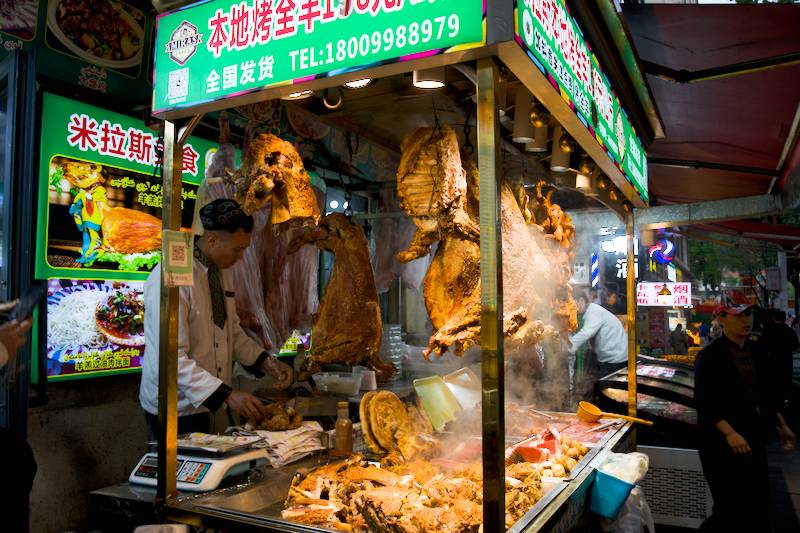
We tried the local barbecue lamb at 米拉斯本地烤全羊, a restaurant famous for roast whole lamb served together with fig pilaf 抓饭. We also tried some BBQ lamb skewers and freshly baked 烤包子, which were delicious and full of flavor.
There were also many shops selling dried fruits and nuts. As we walked along the street, we picked up a few fridge magnets as souvenirs, which cost only RMB5 each.
Since many of the stalls were selling similar items, we did not stay too long. After filling our stomachs and picking up a few souvenirs, we headed back to the hotel for an early rest after a long day of transit flights from Beijing
Day 2
2. Xinjiang Autonomous Region Museum 新疆维吾尔自治区博物馆
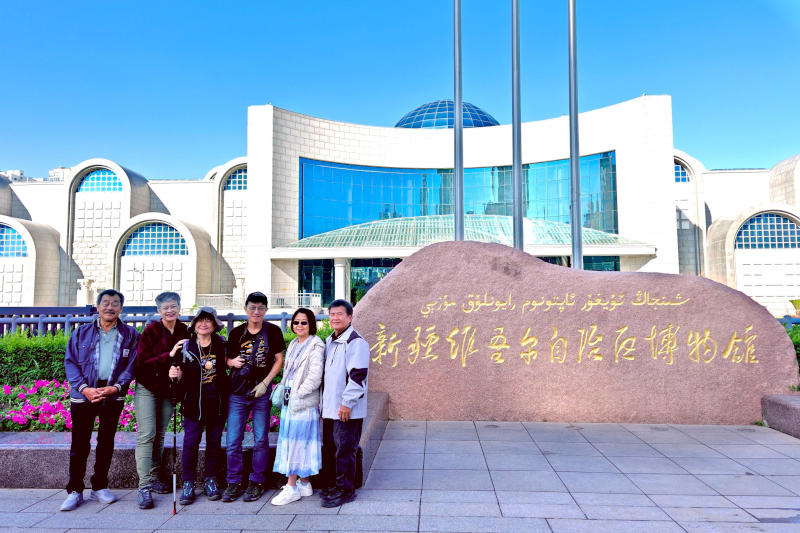
The next morning, we visited the Xinjiang Autonomous Region Museum to better understand the history and culture of Xinjiang before continuing our journey through the province.
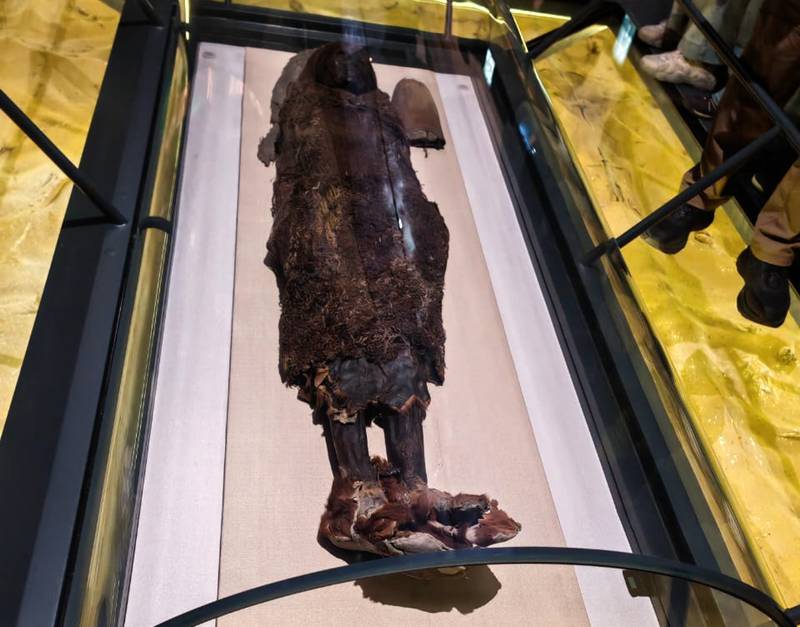
The most famous exhibit here is the legendary Loulan Beauty (楼兰美女干尸), a remarkably well-preserved mummy discovered in 1980 near Loulan in the Xinjiang region. Besides her, there are several other mummies on display, including some exhibited together as couples. Since the museum was extremely crowded, making it difficult to record videos, I only managed to take a few photographs
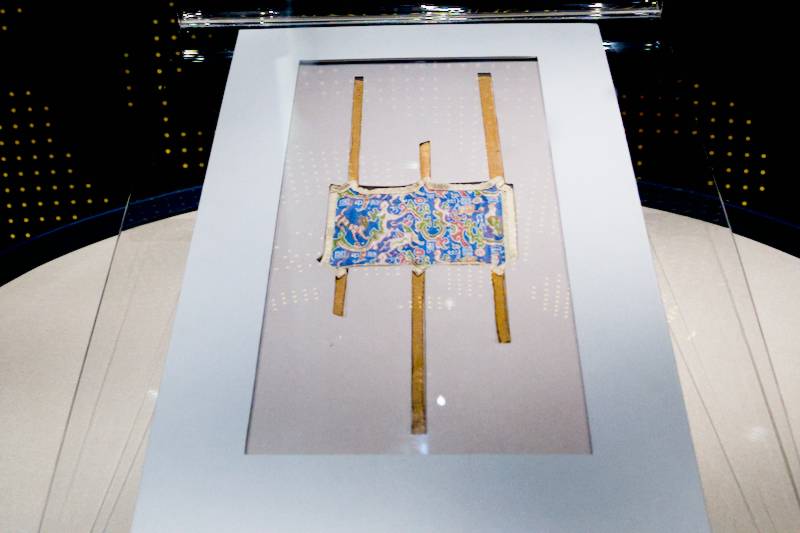
Another must-see artifact is the famous “Five Stars Rise in the East” brocade armguard (五星出东方利中国锦护臂). It was discovered in 1995 deep within the Taklamakan Desert in Xinjiang and is considered one of the most remarkable archaeological finds in the region.
The brocade is surprisingly small, roughly the size of an adult palm or a large smartphone. Despite its compact size, the craftsmanship is astonishing. The textile contains around 220 warp threads per square centimeter and uses five colors: blue, green, red, yellow, and white. These colors represent the Five Elements, or Wu Xing 五行, in ancient Chinese philosophy.
Even more incredible is how the colors have remained so vibrant for nearly 2,000 years, preserved by the extremely dry climate of the Taklamakan Desert.
After leaving the museum, it was already around 12:30 PM, so we headed for lunch. We enjoyed a typical Xinjiang meal that included the famous 抓饭 pilaf before continuing our long journey toward a county called Fuhai.
3. Sea Devil City 海上魔鬼城
Along the journey, we stopped several times for restroom breaks and short shopping visits at the highway rest areas. By around 8:00 PM, we finally arrived at Sea Devil City 海上魔鬼城.
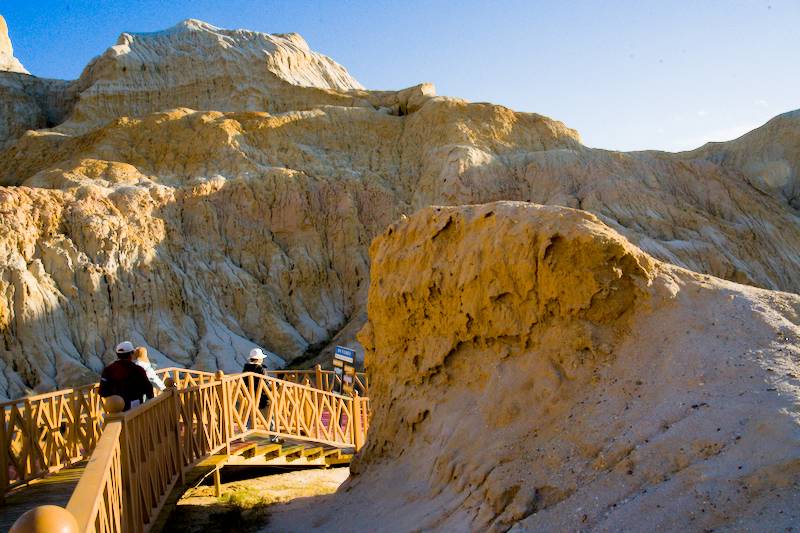
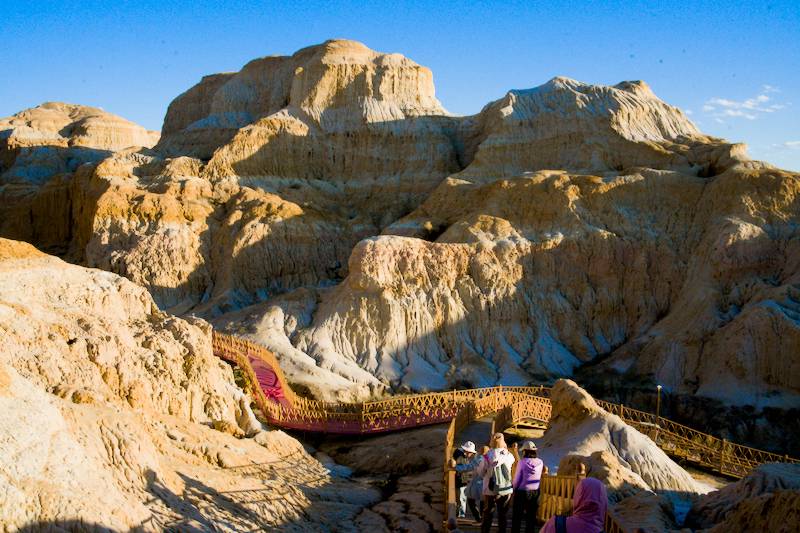
Sea Devil City is well known for its dramatic Yadan rock formations located beside Jili Lake. After getting our tickets, we walked along a wooden boardwalk built through the middle of these magnificent formations before slowly making our way down toward the lakeside.
The scenery was truly spectacular. The massive rock formations, naturally shaped by wind erosion over thousands of years, created a surreal landscape that felt almost otherworldly, especially in the evening light.
This place is called Devil City because strong winds blowing through the desert create eerie sounds among the unusual rock formations, almost like ghosts and demons wailing in the distance. These haunting sounds once frightened ancient nomads traveling through the area. The word “Sea” was added because the site sits beside the lake, where the rock formations appear to rise from the water like a mysterious city floating on the lake.
Day 3
4. Ulungur Lake 乌伦古湖
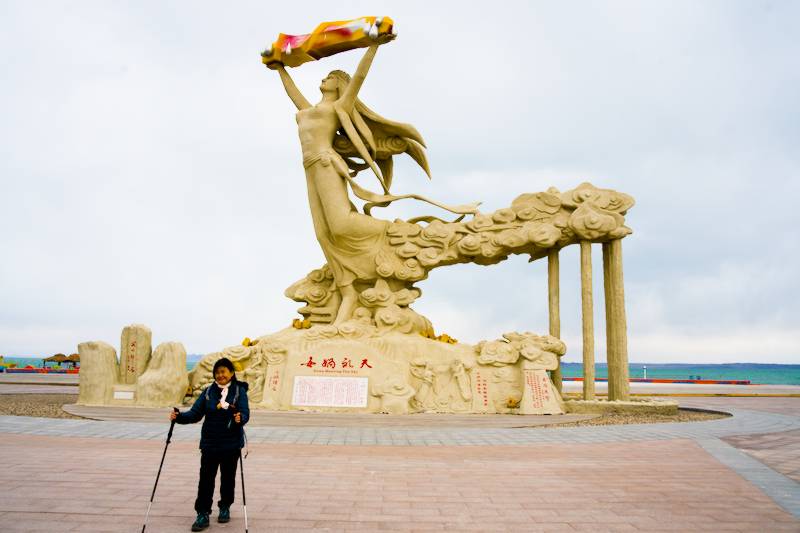
On day 3, we stopped at the Ulungur Lake Scenic Area in Fuhai County. One of the highlights here is the massive statue of Nüwa (女娲), the goddess of creation in Chinese mythology.
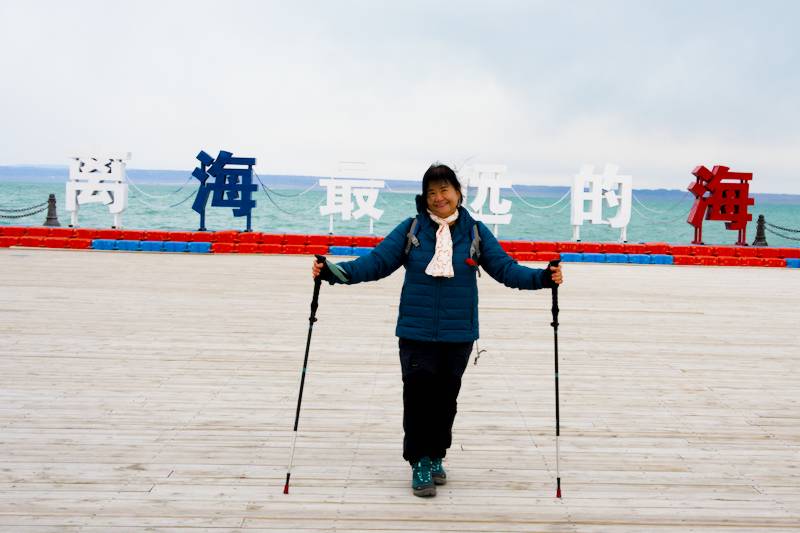
There is also an interesting signboard that reads “The Sea Furthest from the Sea” (离海最远的海). Although Ulungur is actually a lake, it is so vast and located thousands of kilometers away from any real ocean that it gives the feeling of standing beside an actual sea.
It was incredibly windy during our visit, and the powerful gusts created waves crashing toward the shore. The atmosphere truly felt more like the seaside than a lake.
Since the journey was quite long, we stopped at Burqin 布尔津 for lunch. and also made several restroom breaks along the way. From that point onward, the scenery became increasingly beautiful as we gradually gained elevation. The landscape transformed into rolling grasslands, unusual rock formations, pine forests, and hills lightly covered with snow from the snowfall the previous day.
5. Hemu Village 禾木村
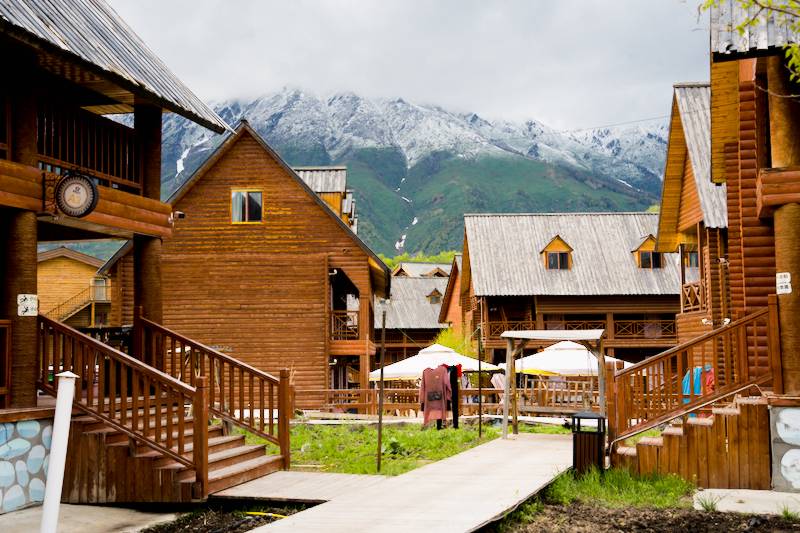
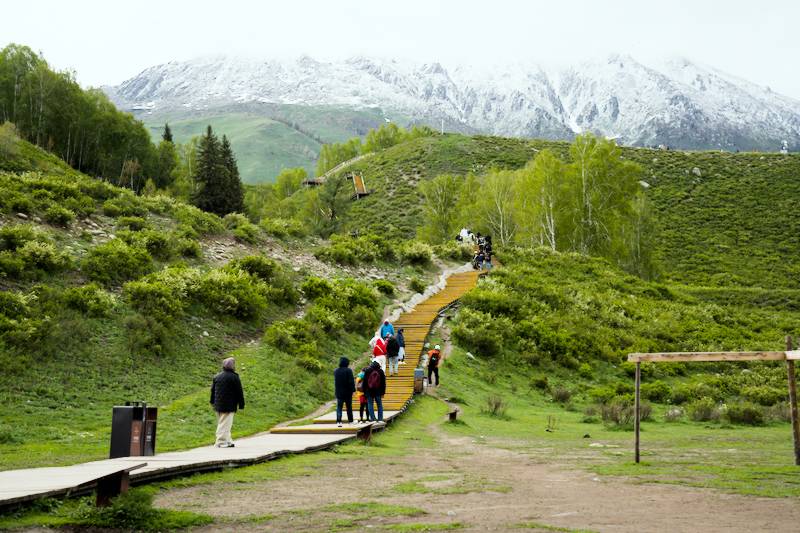
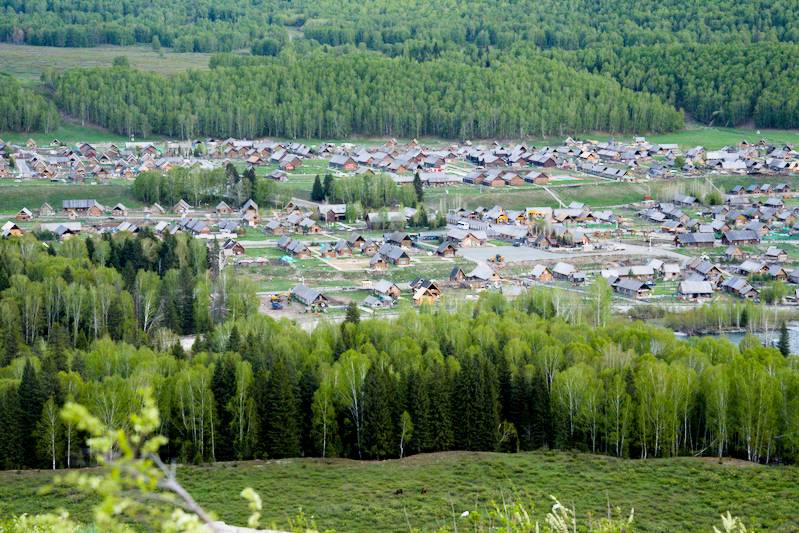
By late afternoon, we finally arrived at our hotel inside Hemu Village of Northern Xinjiang. After checking in, we took a stroll toward the beautiful viewpoint overlooking the village. The path to the top took about 15 minutes using wooden stairways and boardwalks, which were quite comfortable and easy to walk on.
At the top was a flat open area with a panoramic view over the entire village. The scenery was absolutely stunning. Traditional wooden houses spread across the valley, surrounded by mountains partially covered with mist and clouds. The cool air and peaceful atmosphere made the place feel almost dreamlike.
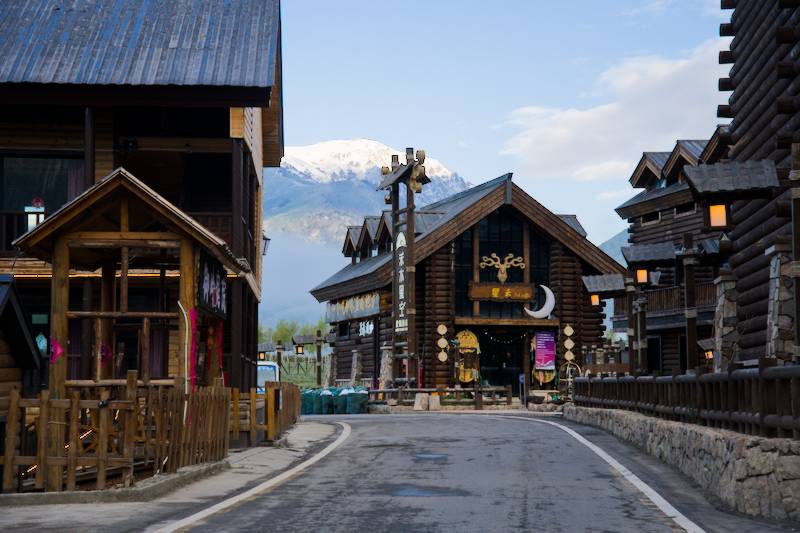
The only downside was that Hemu Village now feels heavily commercialized. Most of the buildings (or likely were newly built with traditional designs) have been converted into shops, cafes, restaurants, and guesthouses designed in traditional style. We hardly saw any actual village residents living their daily lives there.
The experience felt more like staying in a scenic resort rather than a real village. So if you are hoping to experience authentic village life, understand the local way of living, or interact deeply with villagers and their traditions, you may feel disappointed.
Day 4
6. Kanas Scenic Area 喀纳斯景区 - Fish Viewing Pavilion 观鱼台
Today we traveled from Hemu to the Kanas Scenic Area. The scenery along the winding mountain roads kept us completely occupied throughout the journey.
The landscape was absolutely breathtaking. Endless grasslands stretched across the valleys, while layers of mountains rose one behind another, covered with forests and snow-capped peaks in the Altai Mountains. Along the way, we saw sheep and horses wandering freely across the open fields. Occasionally, the road followed rivers flowing through the valleys, with cascading white water rushing over the rocks like snow.
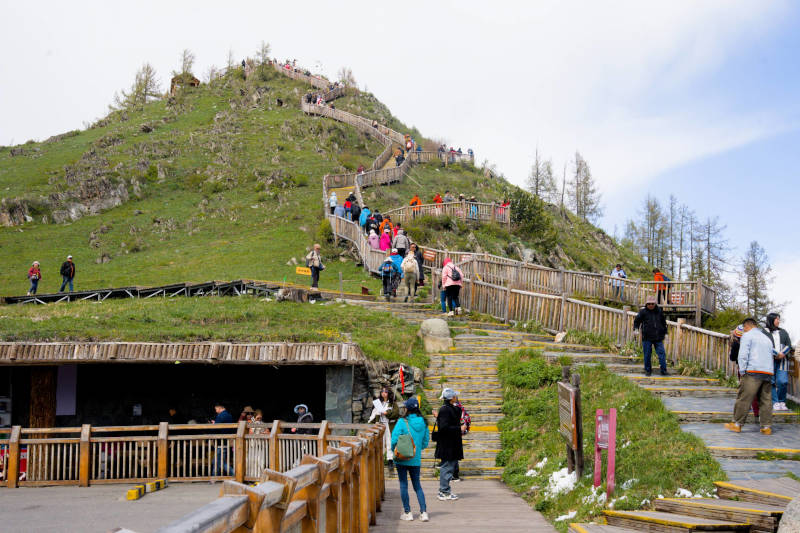
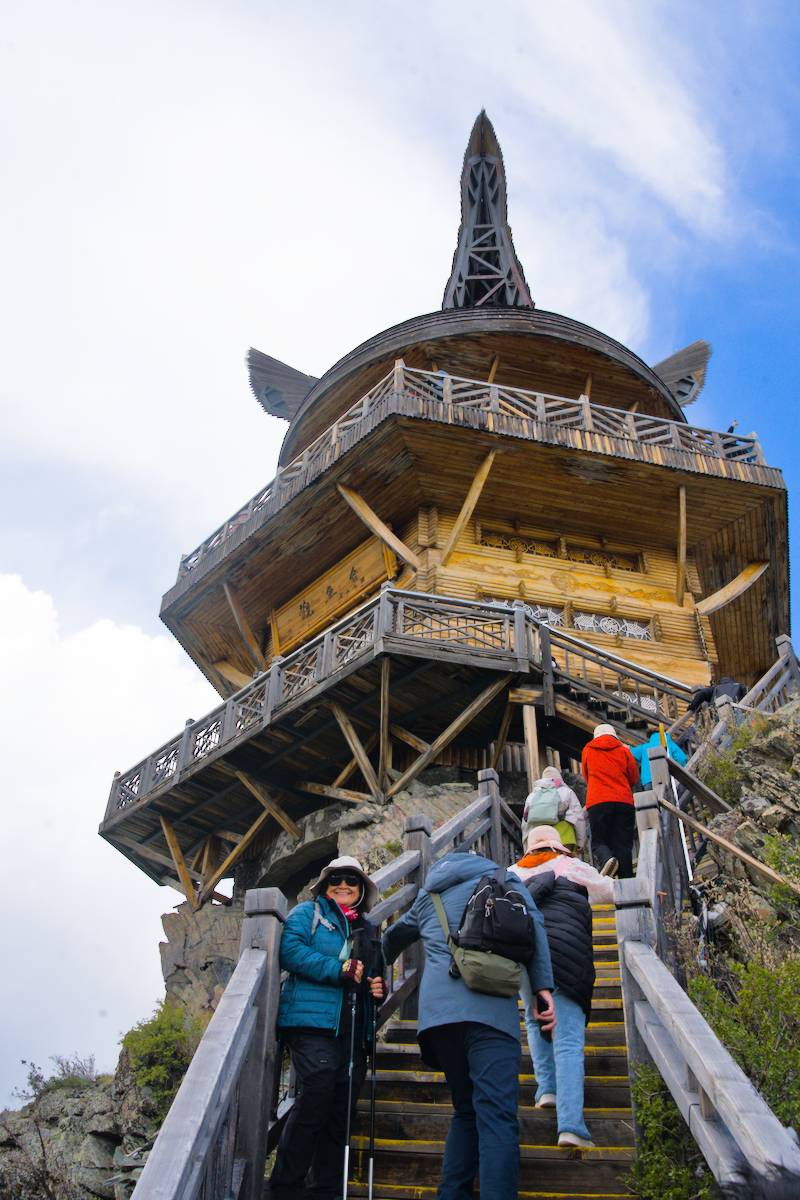
By the time we arrived at the Kanas Scenic Area, we hiked up to the Fish Viewing Pavilion 观鱼台. The climb to the pavilion involves more than 1,000 steps of wooden and cement stairways leading uphill. It took us around 30 to 45 minutes.
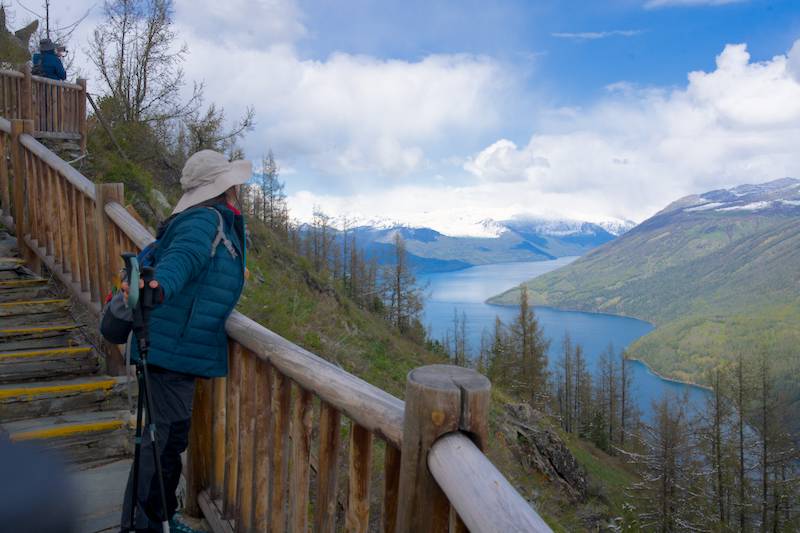
At the top is a magnificent 360-degree panoramic view of the entire Kanas Scenic Area and the beautiful Kanas Lake. The scenery from above was truly spectacular and definitely worth the climb.
Day 5
7. Kanas Scenic Area 喀纳斯景区 - Harbor and Three Bays
Today we returned to the Kanas Scenic Area again.
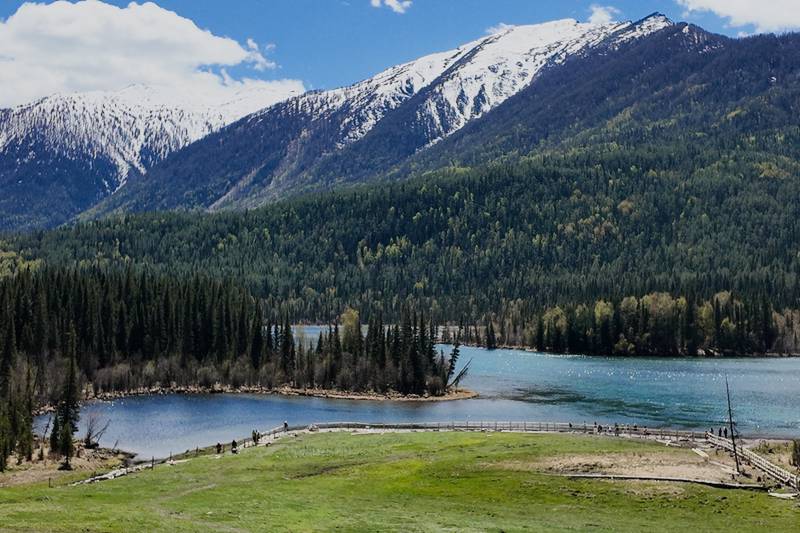
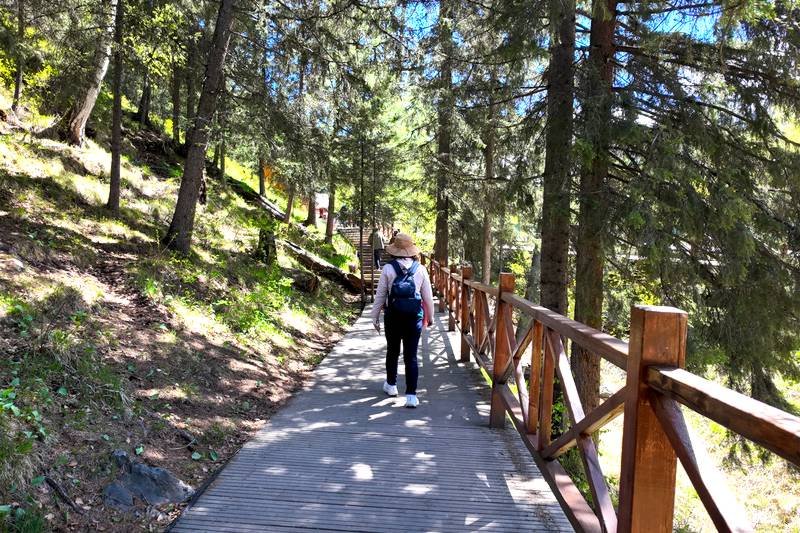
We first stopped by the harbor area and walked along the wooden boardwalk by the lake. The lake water was crystal clear, reflecting the blue sky, snow-capped mountains, and rows of pine trees surrounding the area.
We had lunch at Kanas Village, which has now largely transformed into a tourist dining area. Most of the buildings still retain their traditional wooden log house design, making the village look very charming and beautiful.
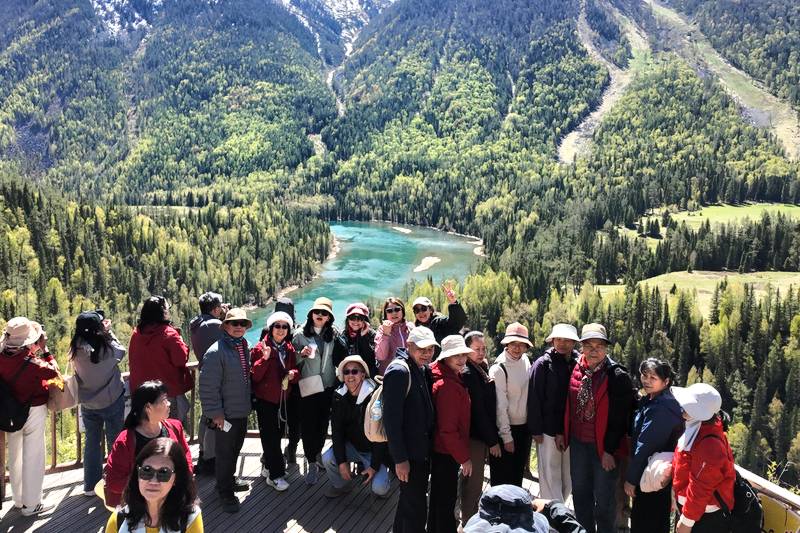
After lunch, we continued our visit to the Three Famous Bays: Fairy Bay, Moon Bay, and Crouching Dragon Bay. All three scenic spots are located about one to two kilometers apart, so we took the shuttle bus to save time and managed to visit all of them in the afternoon.
I found Fairy Bay to be the most beautiful and atmospheric. However, Moon Bay offers the best panoramic viewpoint for those who enjoy photography and want more dramatic landscape shots.
8. Five Color Beach 五彩滩
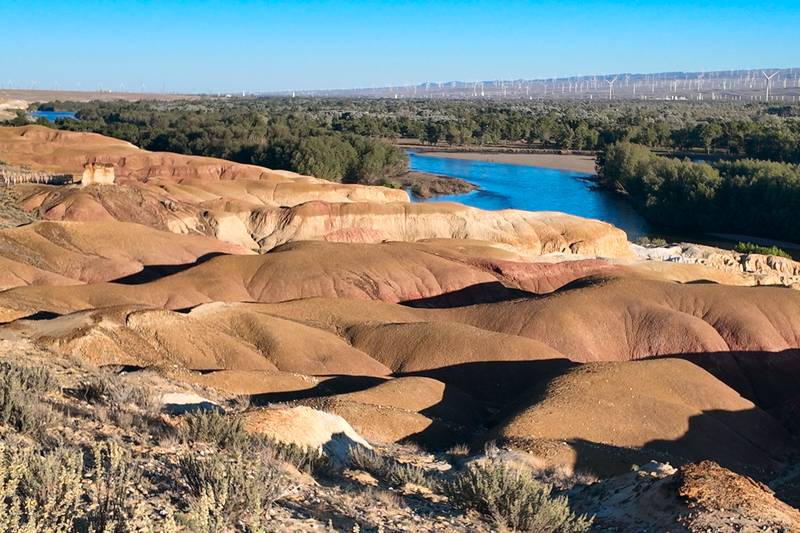
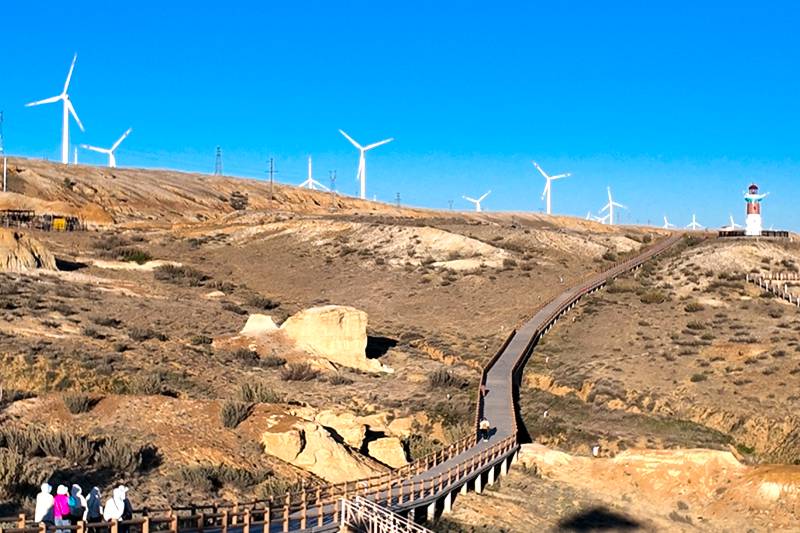
In the afternoon, we visited another famous attraction, Five Color Beach (五彩滩). This place is known for its colorful rock formations along the riverbank. Due to the different minerals found within the rocks, the landscape displays layers of striking colors under the sunlight.
Another thing that immediately caught our attention was the enormous number of wind turbines spread across the landscape. The giant white windmills stretched from near the highway all the way toward the horizon. According to our guide, Xinjiang has one of the largest wind power generation regions in Asia.
9. Burqin Bridge 布尔津塔桥
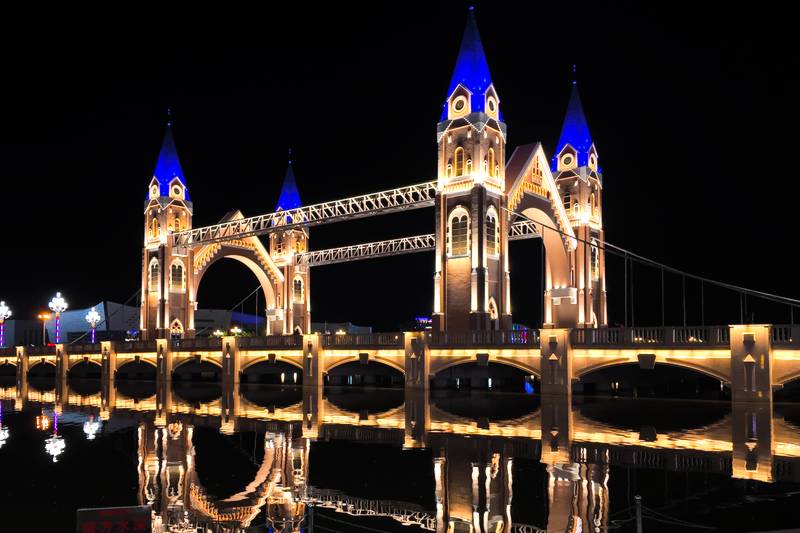
By evening, we arrived in Burqin for dinner. The famous Burqin Bridge 布尔津塔桥 was located within walking distance from our hotel.
We walked to the bridge to take some night photographs. The illuminated bridge reflecting on the river created a very beautiful scene, with Gothic and European-style architectural elements that feel quite unexpected in this part of Xinjiang. These design features were deliberately chosen to create a romantic, fairy tale atmosphere, making the bridge a striking landmark in Burqin County.
Day 6
10. Prairie Stone City 草原石城景区
After breakfast, we drove about one and a half hours to Prairie Stone City 草原石城景区 in Jimunai 吉木乃.
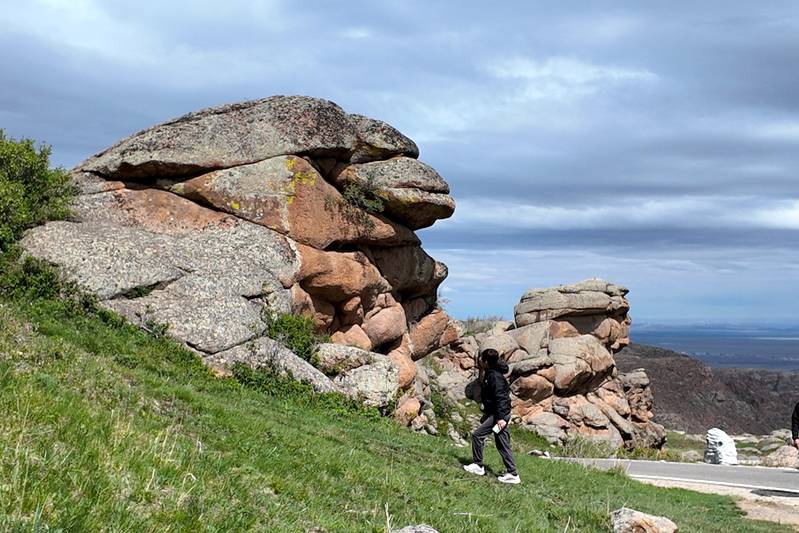
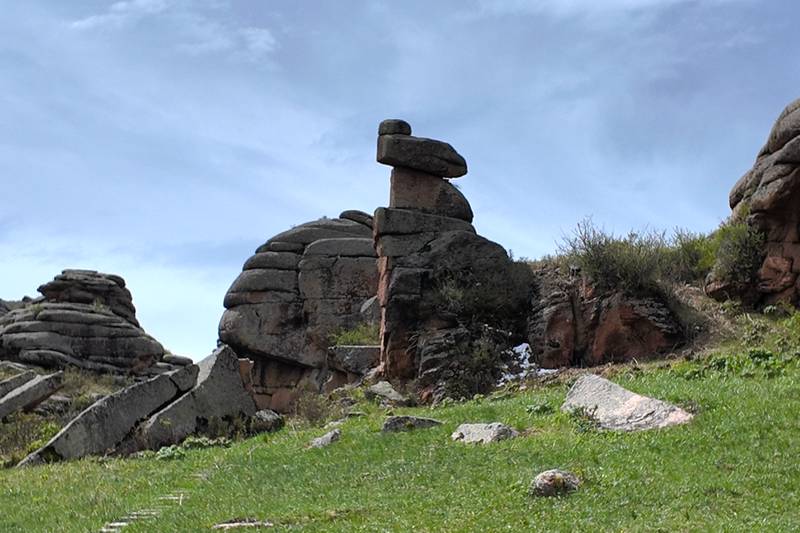
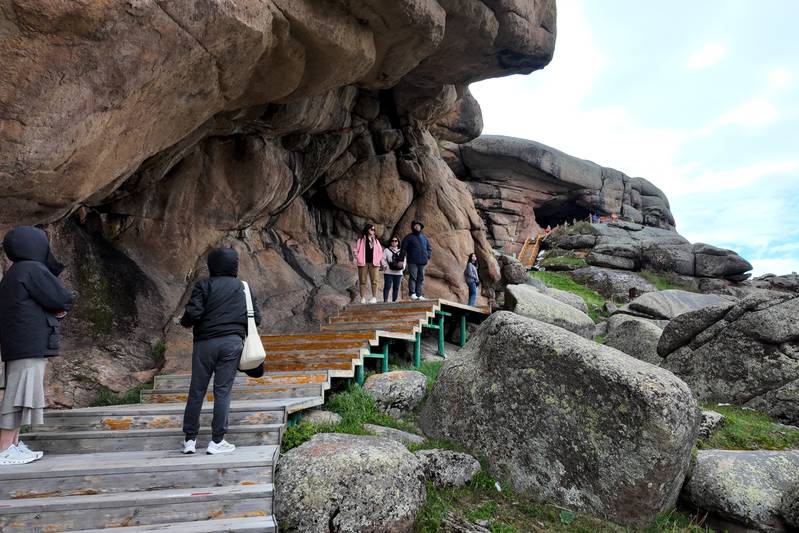
Although it is called a “Stone City,” nobody actually lives there. Instead, it is a vast Yadan landscape filled with countless naturally shaped rock formations. Many of the rocks resemble animals, human figures, or other objects, depending on your imagination.
Yadan landscape is a wind -geological formation found in desert regions, created when strong winds carve soft sediment into long ridges, deep gullies, and unusual sculpted shapes. The term comes from the Uyghur language, meaning “steep bank” or “cliff.”
Among all the stops, the most striking was Tongtian Cave (通天洞). We walked about 100 meters uphill along a wooden boardwalk to reach a small cave site. Archaeological excavations have been carried out here, with findings suggesting human activity in Xinjiang dating back as early as 45,000 years ago during the Paleolithic period (Old Stone Age).
11. Wurhe Ghost City 乌尔禾魔鬼城
We stopped at the Uyghur Village for lunch. The restaurant is a traditional family home that has now been converted, with a beautiful courtyard and traditional decorations. We enjoyed several local specialties, including roast whole lamb, roast chicken, and freshly baked 烤包子.
In the afternoon, we arrived at Wurhe Ghost City 乌尔禾魔鬼城.
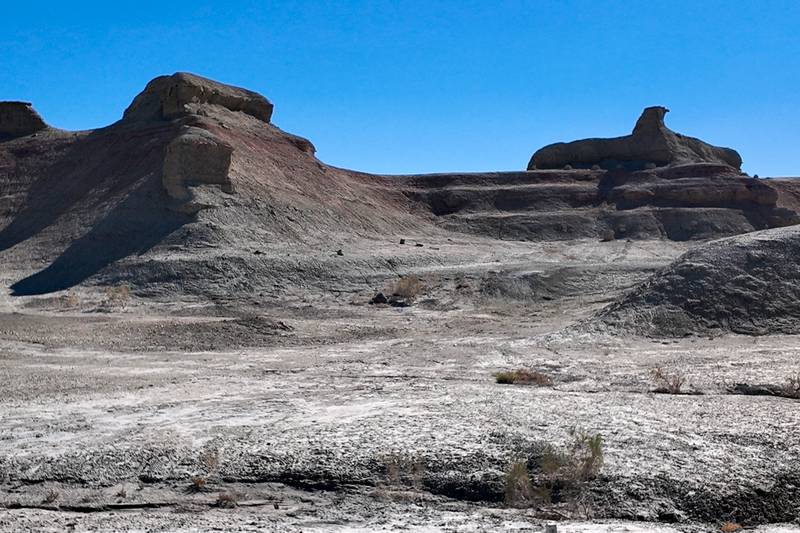
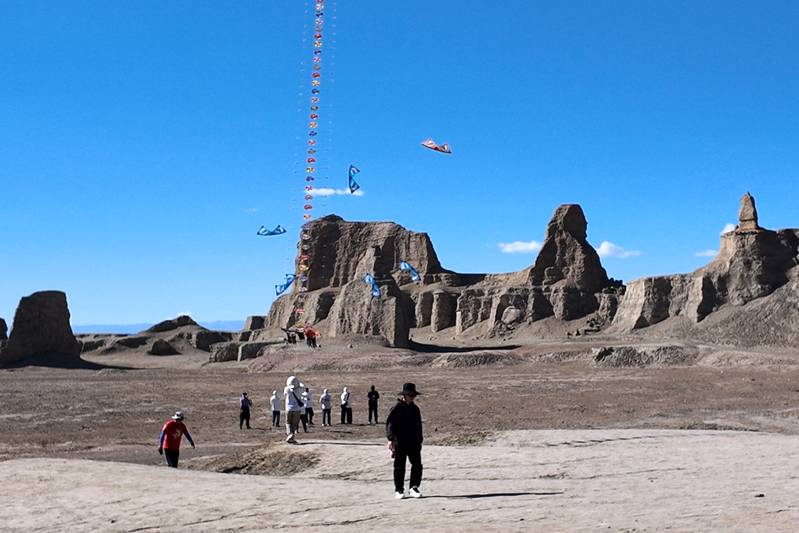
The place gets its name from this enormous Yadan landscape. According to local stories, strong winds passing through the rock formations create strange echoing sounds that resemble ghostly cries, which once made travelers feel uneasy and afraid.
Just like the Stone City we visited earlier, many of the rock formations resemble different objects and figures depending on the viewing angle. Northern Xinjiang’s scenery is highly diverse. The atmosphere here felt very different from the morning visit. The weather was dry, sunny, and much hotter compared to the lightly snowy scenery we experienced before.
We explored several viewing areas, and the final stop was the most famous one, as it has been used as a filming location for several well-known movies, including Crouching Tiger, Hidden Dragon 卧虎藏龙.
By evening, we continued driving to the small town of Wurhe for dinner before staying overnight.
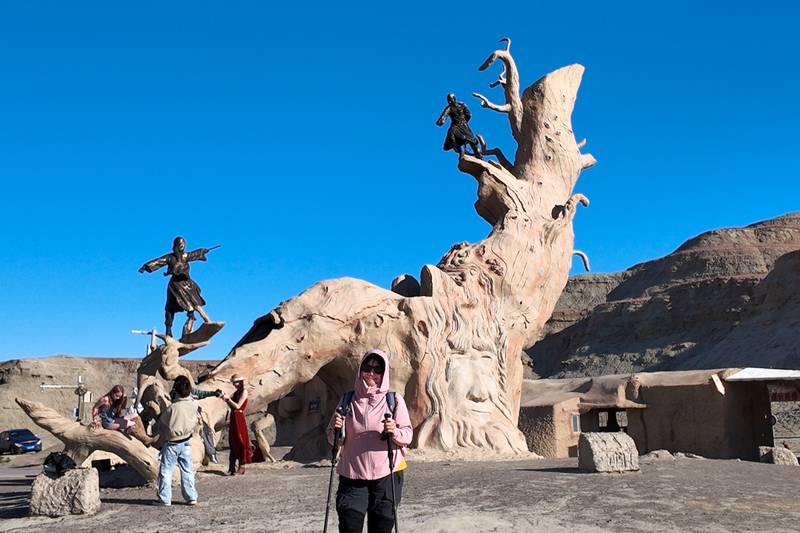
Day 7
12. Dushanzi Grand Canyon 独山子大峡谷
Today we took a long drive from Wurhe to Dushanzi Grand Canyon 独山子大峡谷, near Kuitun 奎屯.
The best way to experience the canyon is to walk across the glass bridge. It is not actually very high, so the more thrilling option is the hanging bridge, which has no handrails, only thick ropes on both sides, and wooden planks spaced apart as the walking surface.
There are also live performances where performers cross the canyon on a tightrope, high above the ground.
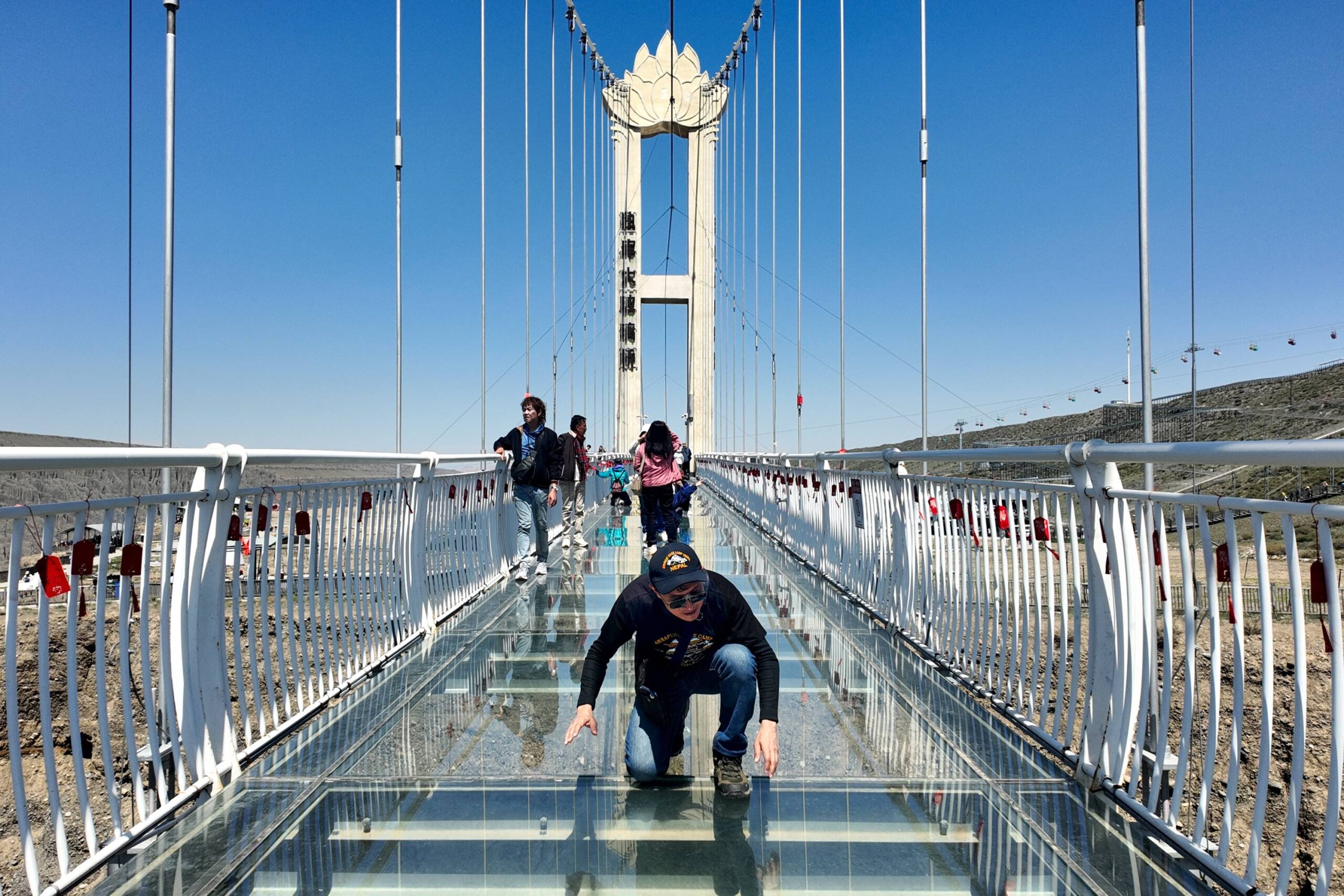
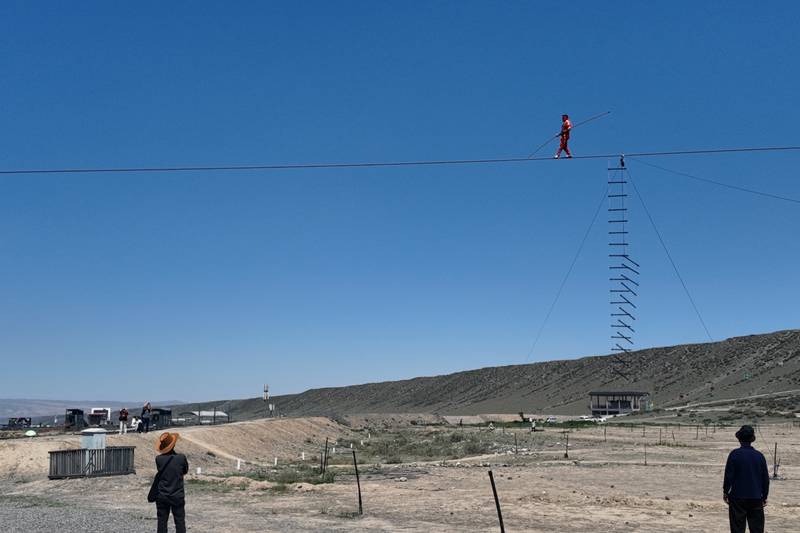
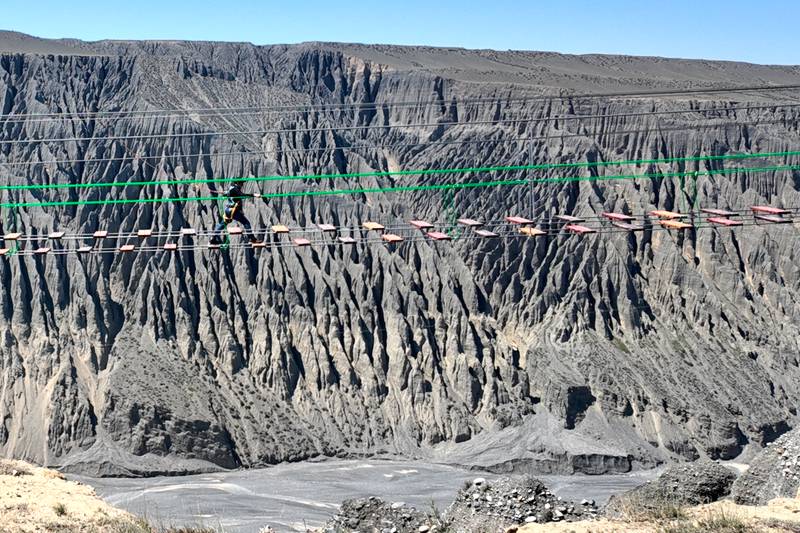
Tonight we are staying in the town of Jinghe 精河. See you tomorrow.
Day 8
13. Sayram Lake 赛里木湖
Today we traveled by coach to Sayram Lake 赛里木湖, a stunning freshwater lake located at an altitude of around 2,000 meters.
Since the lake is huge, we stopped at a few of the best viewpoints to take photographs, videos, and short walks along the shoreline. The crystal clear turquoise water reflected the deep blue sky beautifully, while rows of pine trees lined the shore with snow-capped mountains rising in the distance
The atmosphere at the lake was peaceful and serene. The water was calm with only gentle waves touching the shore, making it a perfect place for relaxing walks and photography.
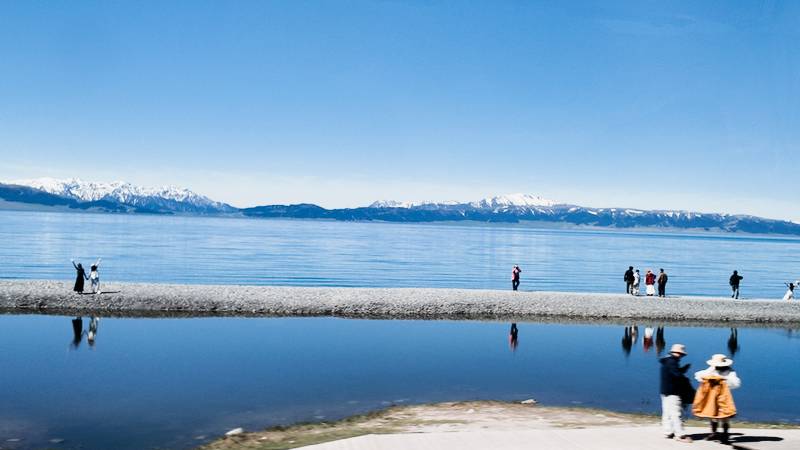
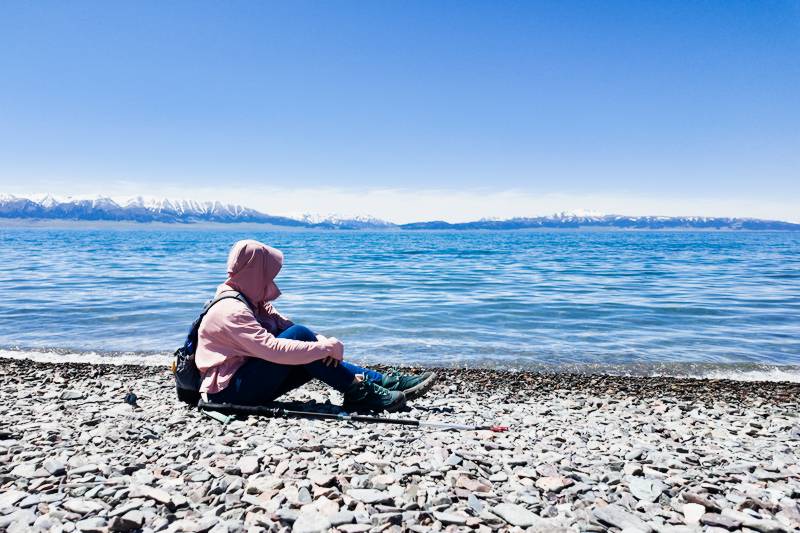
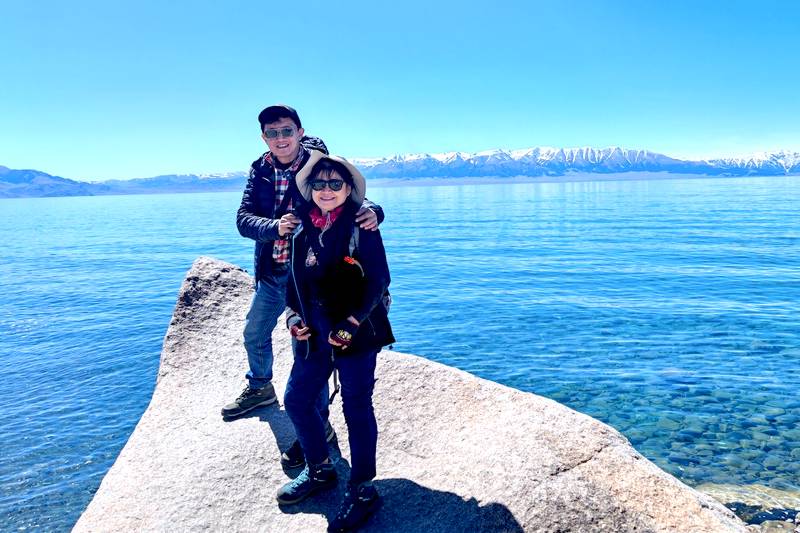
Sayram Lake 赛里木湖
14. Guozigou Bridge 果子沟大桥
After visiting Sayram Lake, we continued our journey across the famous Guozigou Bridge (果子沟大桥), one of the highest bridges in China and truly an impressive piece of engineering.
Not only was the bridge itself magnificent, but the surrounding scenery was equally spectacular, with mountain slopes covered by endless rows of pine trees. Since stopping on the bridge is not allowed, we could only take photographs and videos from inside the slowly moving coach as we crossed it.
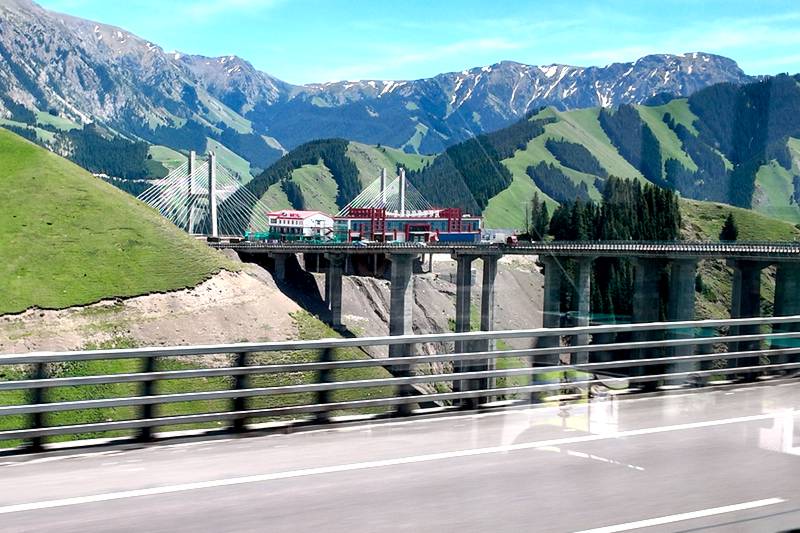
15. Six Star Street Scenic Area 六星街景区
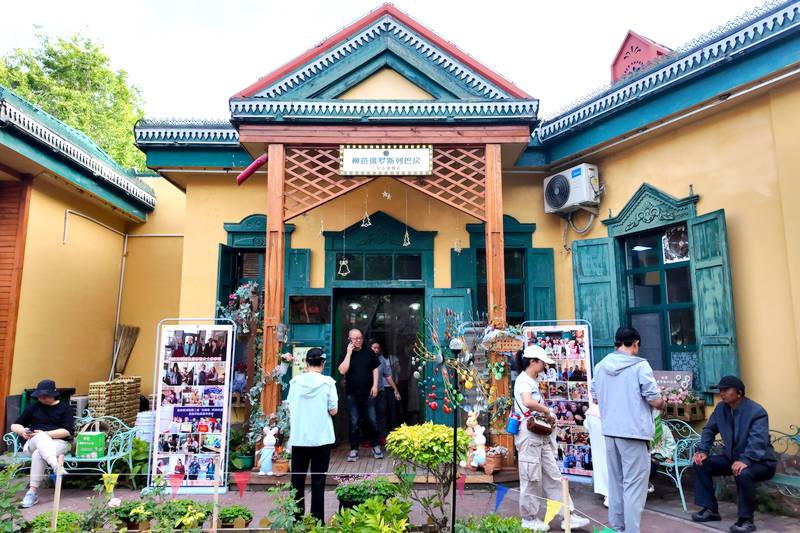
In the evening, we arrived at Yining Old Town (伊宁老城街区), also known as Six Star Street Scenic Area (六星街景区).
This area is famous for its preserved old buildings with Russian architectural influences, many of which have now been converted into eateries, cafes, and souvenir shops for visitors. One unique feature of the town is its road layout, where six roads connect to a single central point.
We spent the evening enjoying several authentic local specialties, including Gulandanmu handmade ice cream, Russian Leba bread, local beef noodles, and a traditional fermented honey drink called Kavas.

Day 9
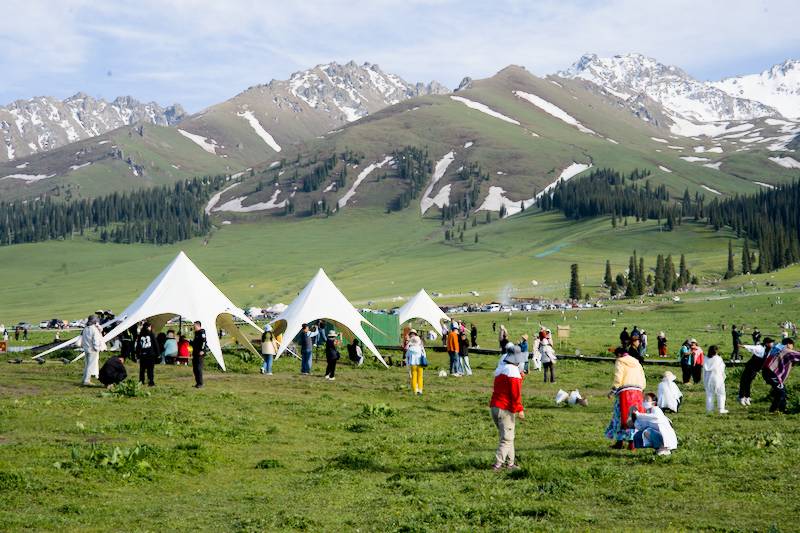
16. Narat Grassland 那拉提草原
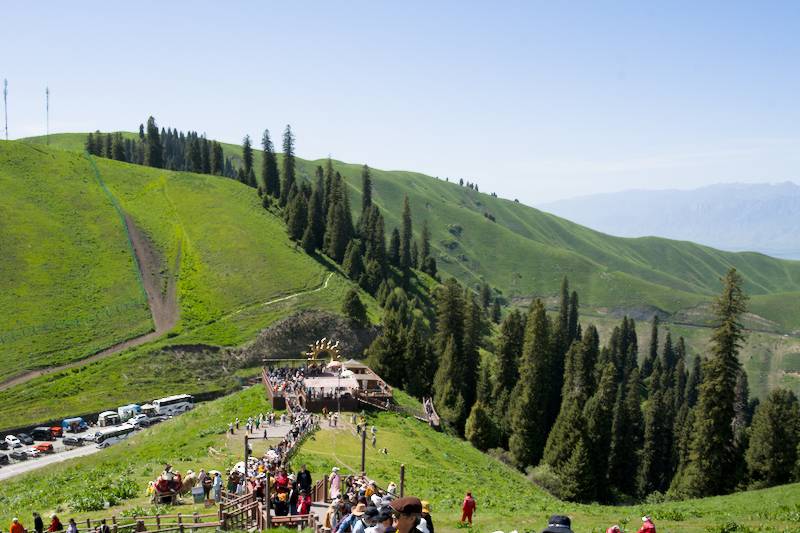
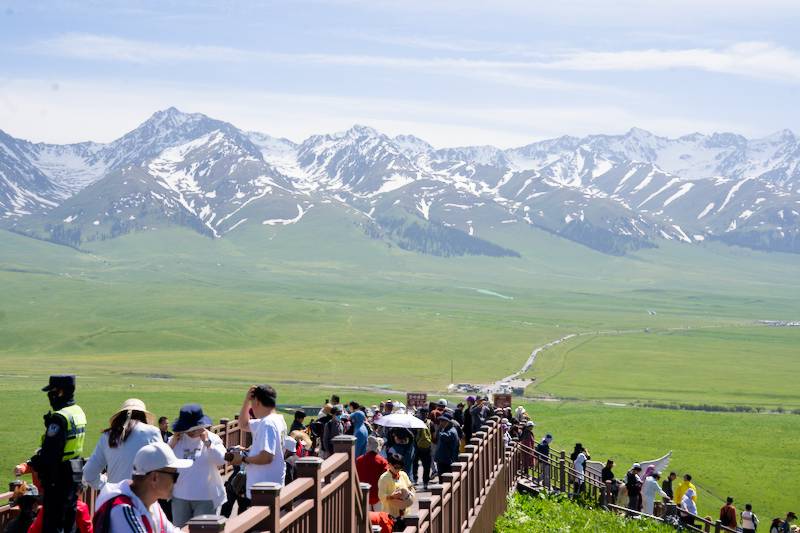
Narat Grassland is located in the high mountains at an elevation of around 2,000 meters. At the highest viewpoint, we walked up a wooden boardwalk to reach the observation platform. From the top, the panoramic view of the entire Narat area was absolutely breathtaking. There were blue skies and layers of mountains in the distance, while the foreground gradually opened into vast, rolling grasslands stretching endlessly across the valley.
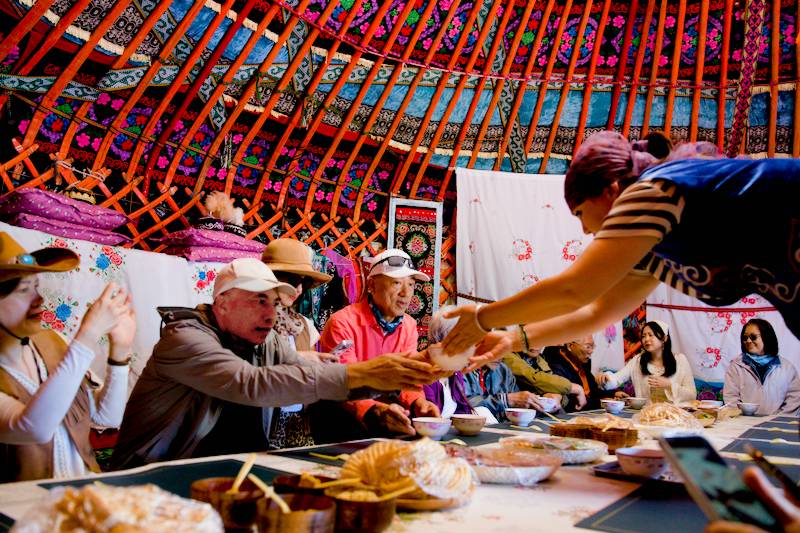
Our second stop was a traditional yurt of the Kazakh 哈萨克 ethnic group. We were invited inside and warmly welcomed with traditional dance performances, milk tea, and a variety of local snacks.
The final stop turned out to be the most scenic of the day. Here, we were much closer to the snow-capped mountains, and we had the chance to walk directly onto the open grasslands surrounded by spectacular scenery. The combination of green grasslands, grazing fields, and snowy mountain peaks in the background created a postcard-like view, with beautiful sunlight and crystal clear visibility.
Day 10
17. Kurdeni Grassland 库尔德宁草原
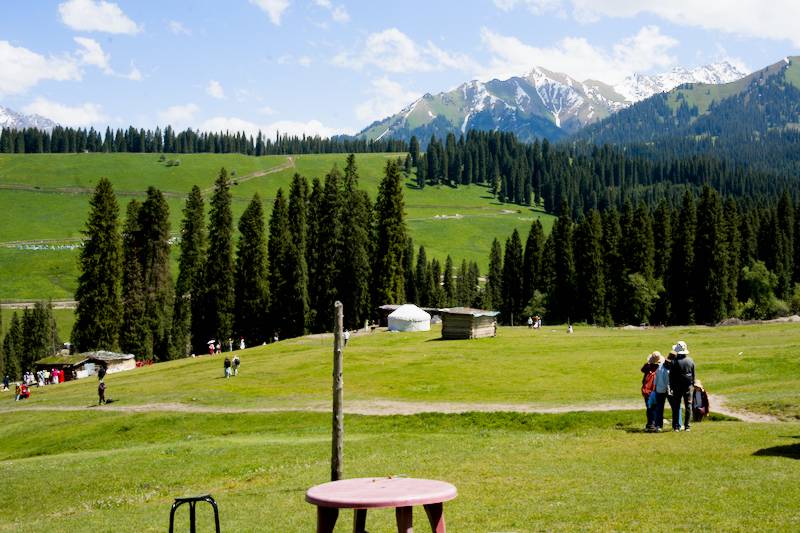
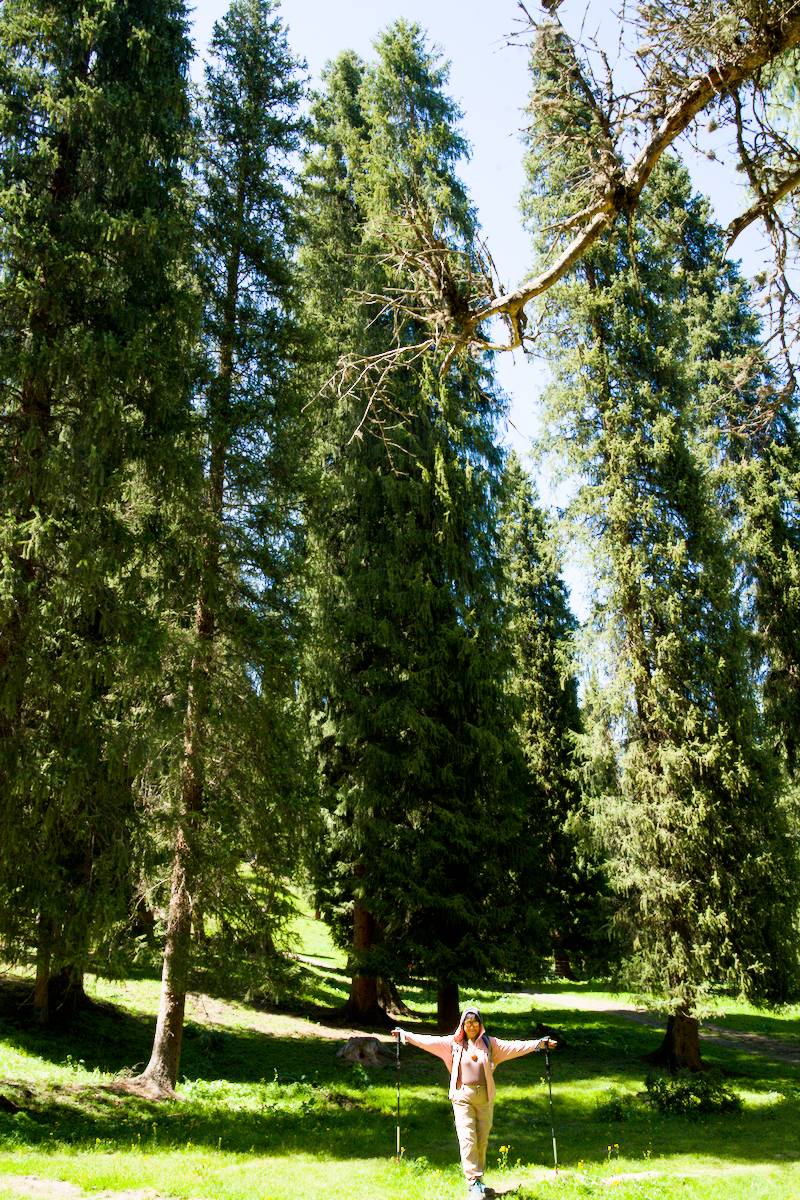
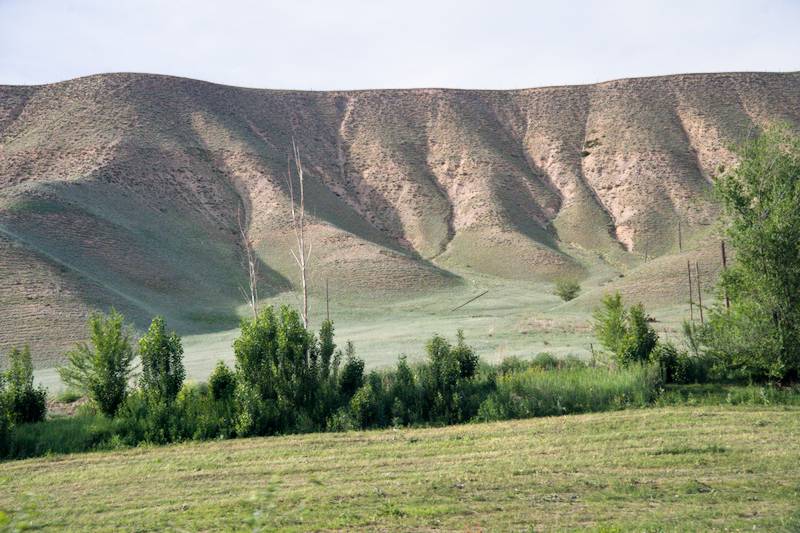
The scenery at Kurdeni Grassland feels quite different from Narat Grassland. Instead of vast open grasslands, Kurdeni is more mountainous and heavily forested, giving it a completely different atmosphere.
Honestly, words alone are not enough to fully describe how beautiful this place is, so I am sharing some photographs for everyone to experience it together.
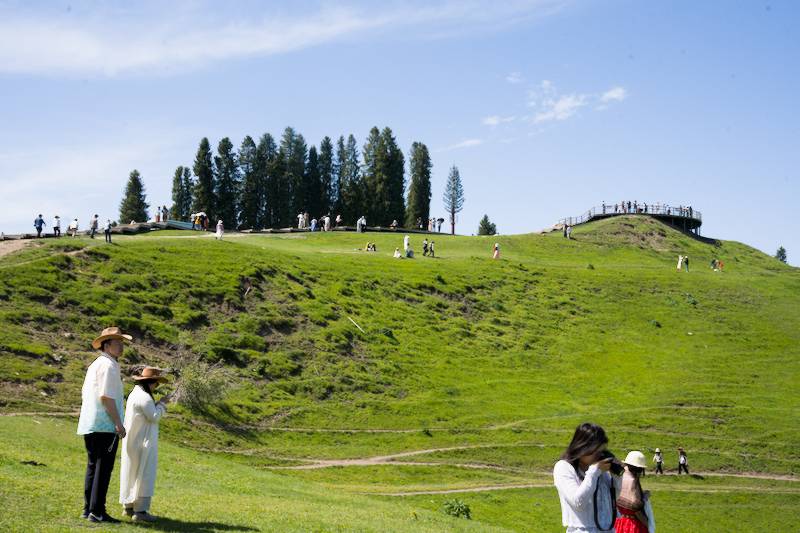
In total, the round-trip walk was close to four kilometers. I actually turned back before reaching the very end of the boardwalk because I was not sure how much farther it continued uphill.
Standing near the top of the hill, under the beautiful blue sky, we saw endless rows of pine trees stretching across the valley, with snow-capped Tianshan mountains in the distance. The combination of fresh mountain air, peaceful forests, and dramatic alpine scenery made this one of the most memorable landscapes of our trip so far.
Day 11
18. Kanajun Grassland 喀拉峻草原
Today was a much more relaxing day compared to the past few days. We started our journey around 9:30 am and drove about 45 minutes to Kanajun Grassland 喀拉峻草原.
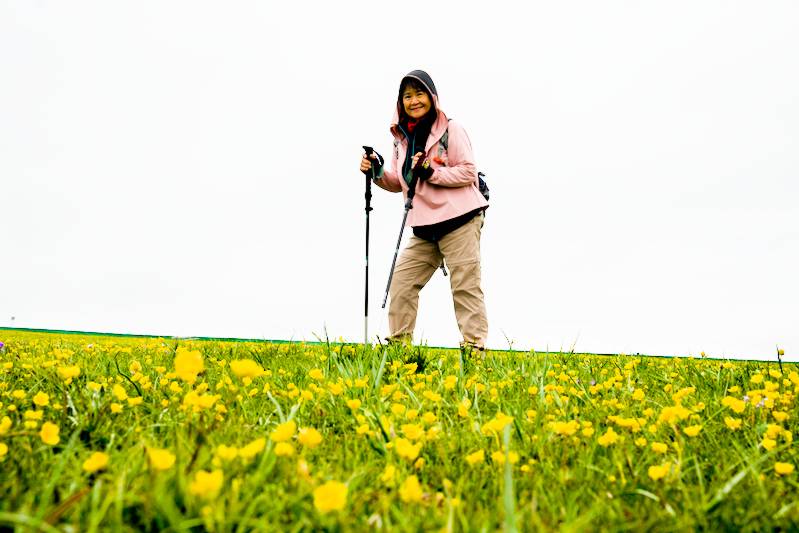
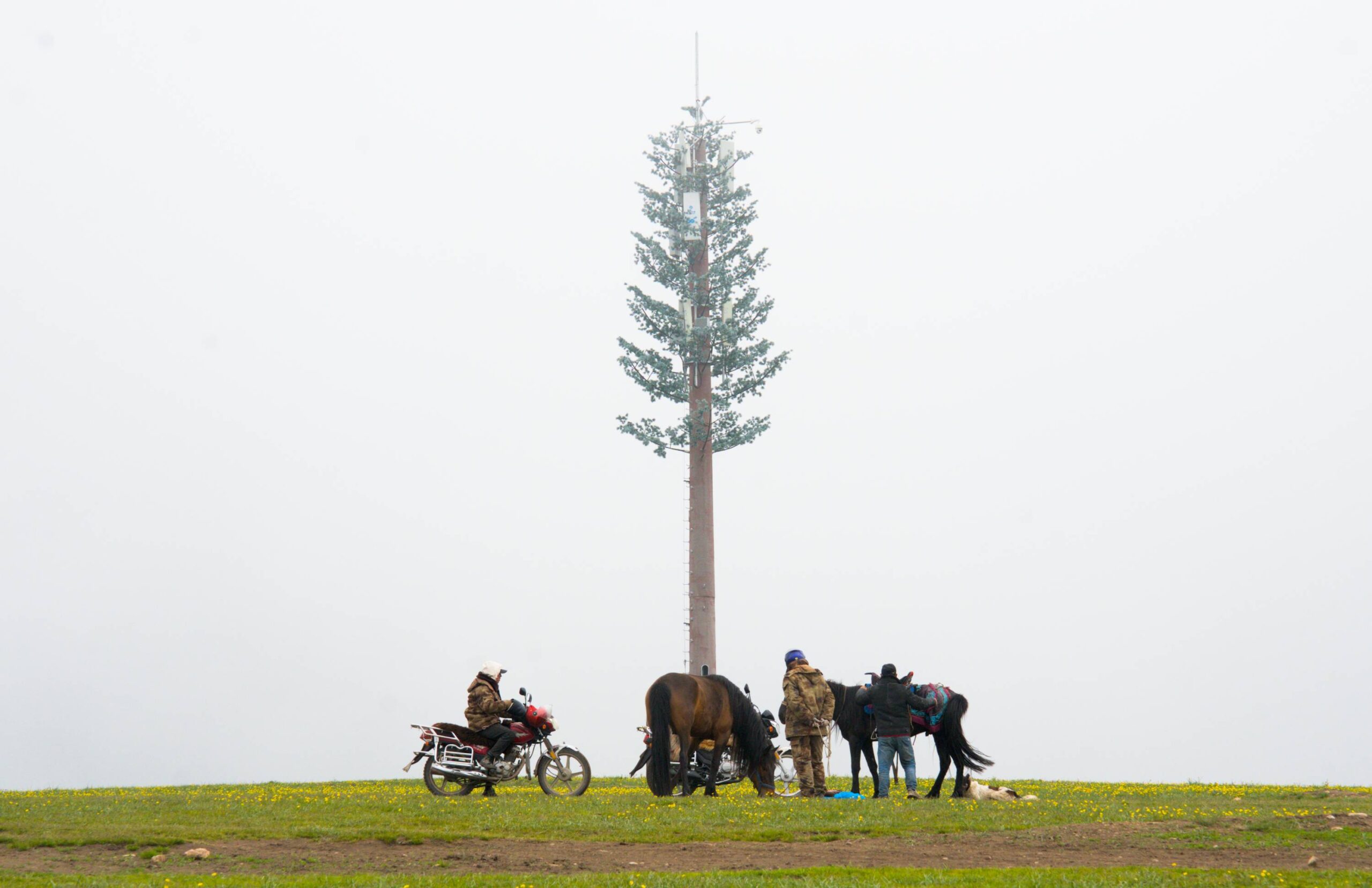
This grassland felt quite different from the others we had visited earlier in the trip. There were far fewer trees here. Instead, it is an endless rolling grassland stretching all the way to the horizon. Small yellow and purple wildflowers were scattered across the fields, adding splashes of color to the grasslands. There are wooden boardwalks, making it comfortable and easy to explore.
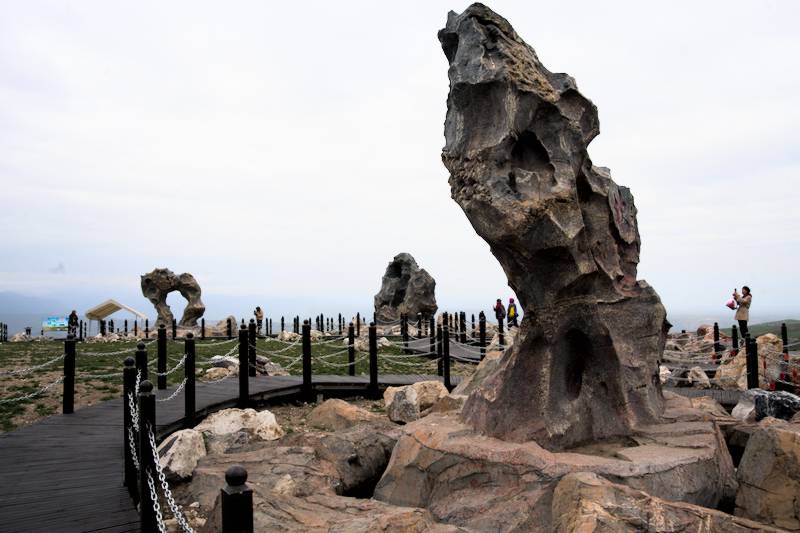
Our first stop was Stone Fountain 石泉, a stone formation designed around the concept of the Eight Trigrams 八卦. Personally, it felt a little too man-made for my taste, so we spent more time simply enjoying the surrounding scenery.
The second stop was Flower Terrace 花台. Unfortunately, there were not many flowers blooming during this season.
By the time we reached the third stop, the weather had changed slightly. A drizzle began to fall, and mist slowly drifted across the grassland. The entire atmosphere suddenly felt softer, calmer, and incredibly peaceful.
19. Tekes City 特克斯市
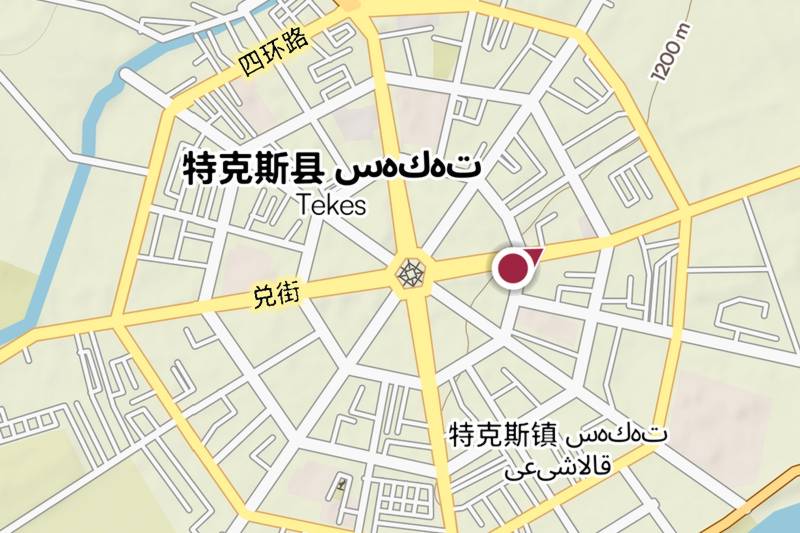
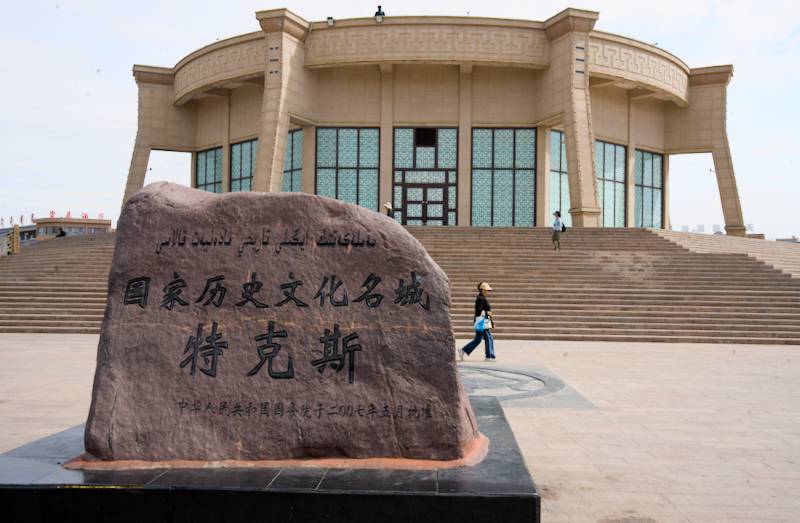
After finishing our visit to the grassland, we returned by coach to Tekes City 特克斯市, famous for being the world’s only city designed entirely around the concept of the Eight Trigrams 八卦.
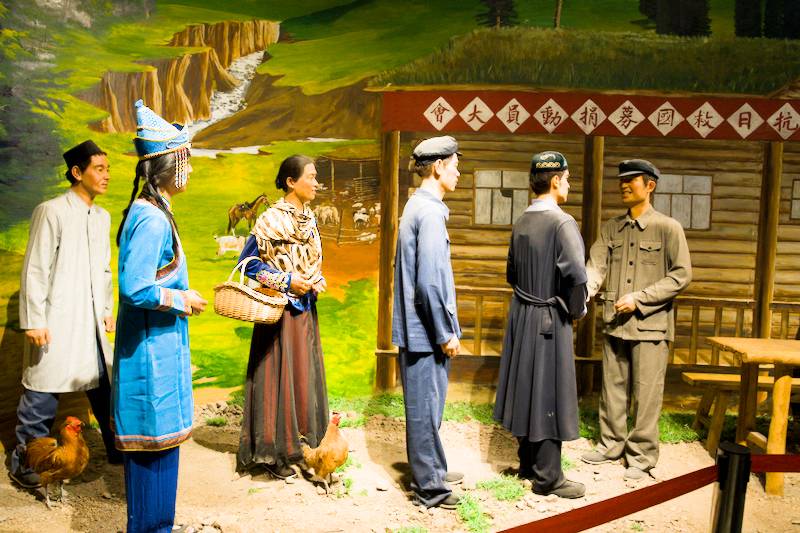
From above, the city layout looks almost like a giant spider web, with eight main roads extending outward from the center. Right in the middle stands a museum dedicated to the history and development of Tekes.
After visiting the museum, we went up to the top floor for a panoramic view of the entire city. Seeing the perfectly symmetrical layout from above was truly fascinating.
One of the most interesting experiences was standing at the exact center point on the top floor, which aligns with the center of the Eight Trigrams design. Because the distance in every direction is perfectly balanced, our voices sounded naturally amplified when we spoke, almost like standing inside an opera house. It was a surprisingly amazing experience.
Day 12
20. Tianshan Flower Sea Scenic Area 天山花海景区
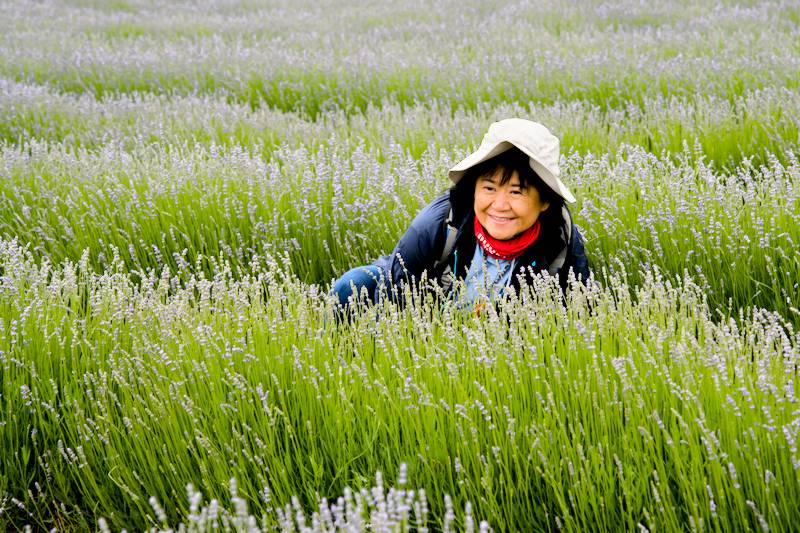
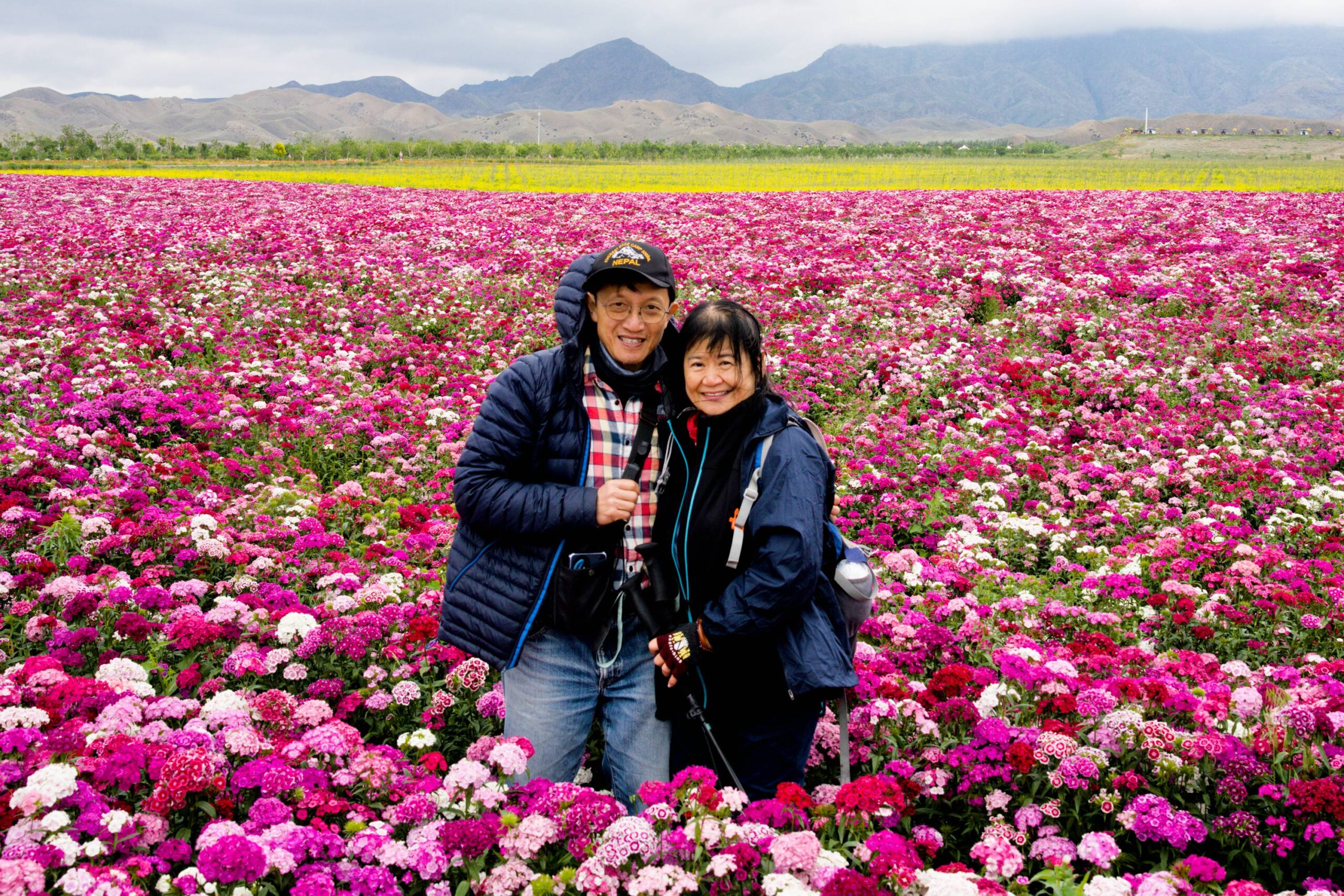
Time flies, and we had already reached the second last day of our trip. In the morning, we visited the Tianshan Flower Sea Scenic Area 天山花海景区, a well-known agricultural tourism destination famous for its colorful flower fields.
There were wide varieties of flowers here, but the most eye-catching were definitely the lavender fields 薰衣草. We also took many photos among the larkspur 飞燕草 and 石竹花 Dianthus chinensis, along with the endless stretches of blooming flowers across the landscape.
The flowers are mainly grown for commercial purposes, especially for essential oil production. After visiting the gardens, we were invited to tour a showroom featuring various essential oils, skincare products, soaps, and cosmetics made from the flower extracts.
Since the showroom visit was already included as part of the entrance ticket, there was no pressure to buy anything, and we were free to browse at our own will.
21. Kazanchi Old Street 喀赞其老街
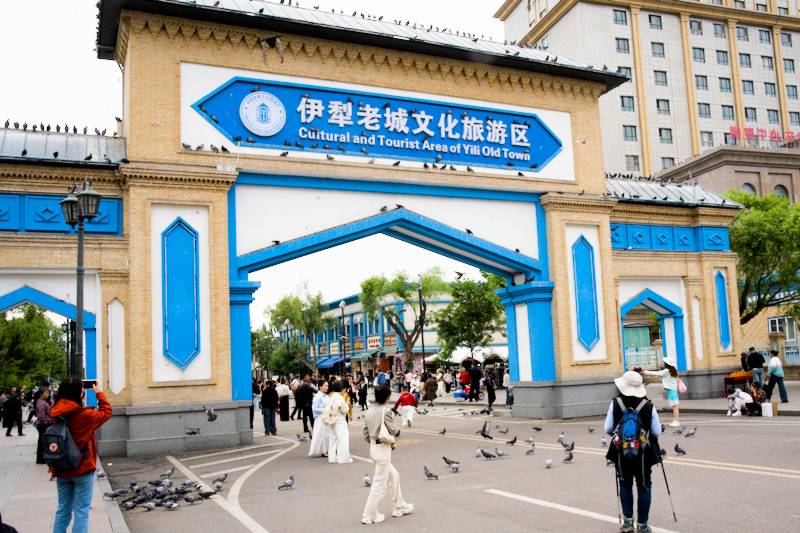
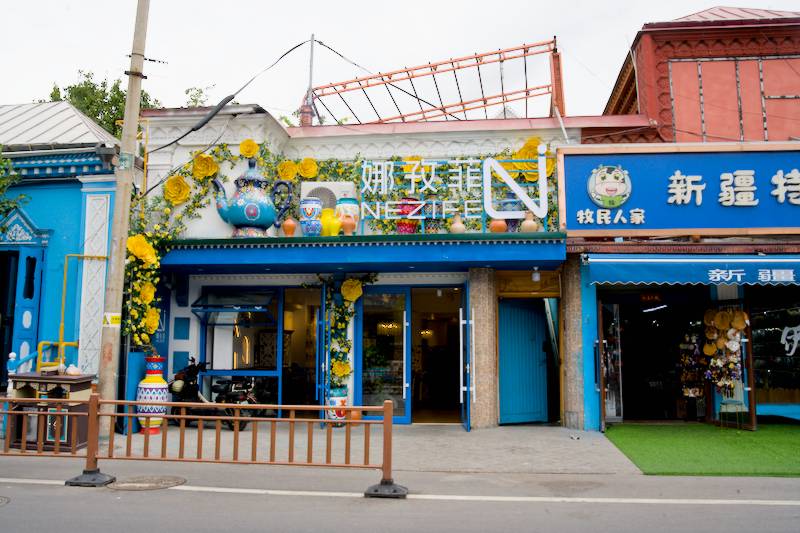
Our next destination was Kazanchi Old Street 喀赞其老街, a charming area filled with buildings painted in blue inspired by old Russian-style architecture.
Personally, I felt that many of the streets and houses had been heavily renovated or rebuilt in a traditional style rather than being fully original structures. Even so, the area still had a unique atmosphere that felt very different from the other architecture we had seen over the past few days in Xinjiang.
Most of the shops here cater to tourists, including souvenir stores, local handicraft shops, clothing stalls, and small eateries selling regional snacks and drinks.
The central area is pedestrian-friendly, making it comfortable and safe to walk around while slowly exploring the old street.
22. Hanren Street Grand Bazaar 汉人街大巴扎
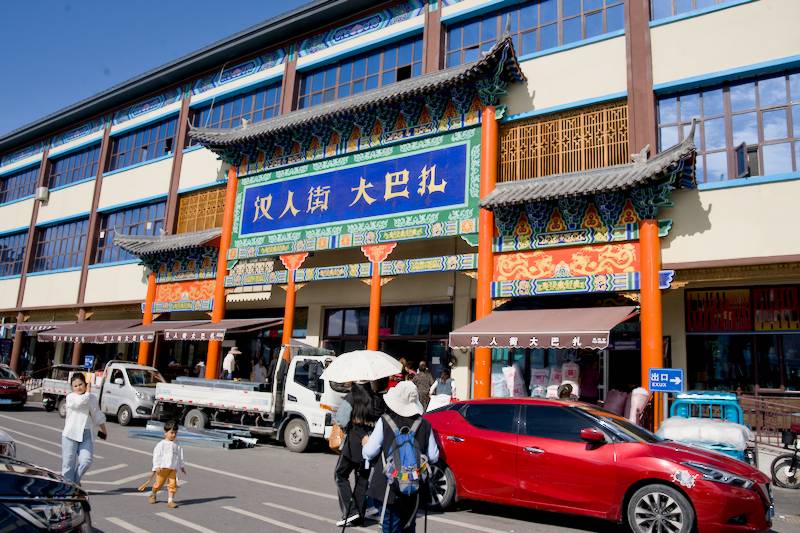
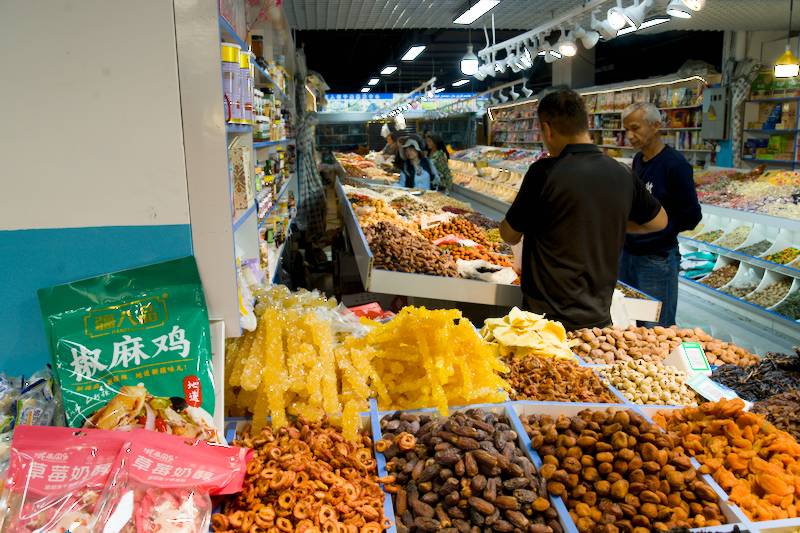
The last stop for the day was the Hanren Street Grand Bazaar 汉人街大巴扎. This place was once a trading area mainly used by Han merchants, but over time, the original community gradually moved out. Today, it is mostly operated by Uyghur locals and has become a lively everyday market rather than just a tourist spot.
The bazaar has two floors. The ground level is mainly filled with food stalls and daily necessities, while the upper floor offers a mix of household items and various goods.
This is still very much a local market. Many of the shoppers are residents doing their daily shopping, which gives the place a very authentic atmosphere. There are also plenty of street food stalls, making it a great place to experience local snacks and flavors.
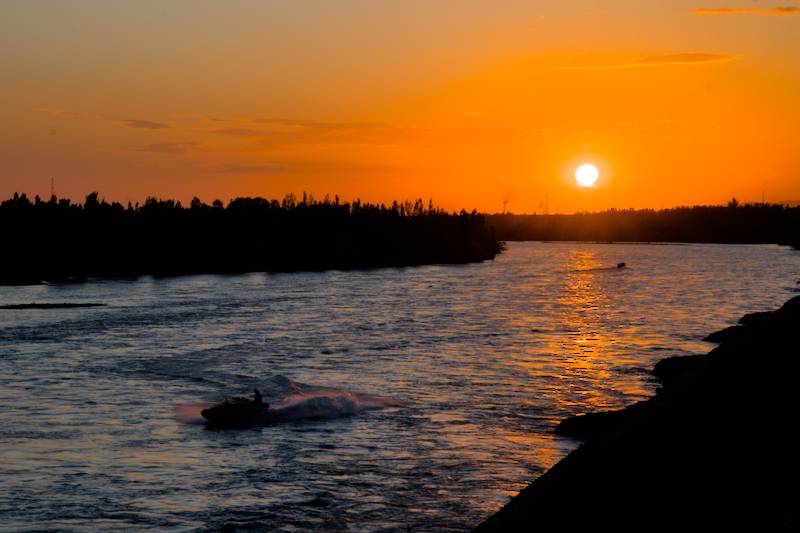
23. The Ili River Bridge 伊犁河大桥看日落
As a bonus, we made a stop at the Ili River Bridge to catch the sunset, a popular spot among both locals and visitors.
It was a simple moment, but a beautiful way to end the day.
Day 13
It was time to head back to Urumqi, so we took a train from Yining Railway Station. The journey took about five hours before we finally returned to the capital of Xinjiang.
24. International Grand Bazaar 国际大巴扎
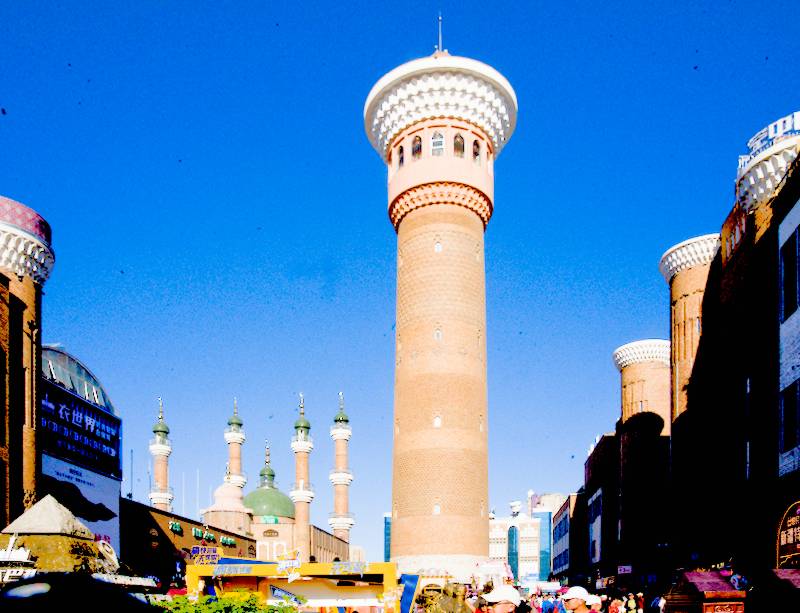
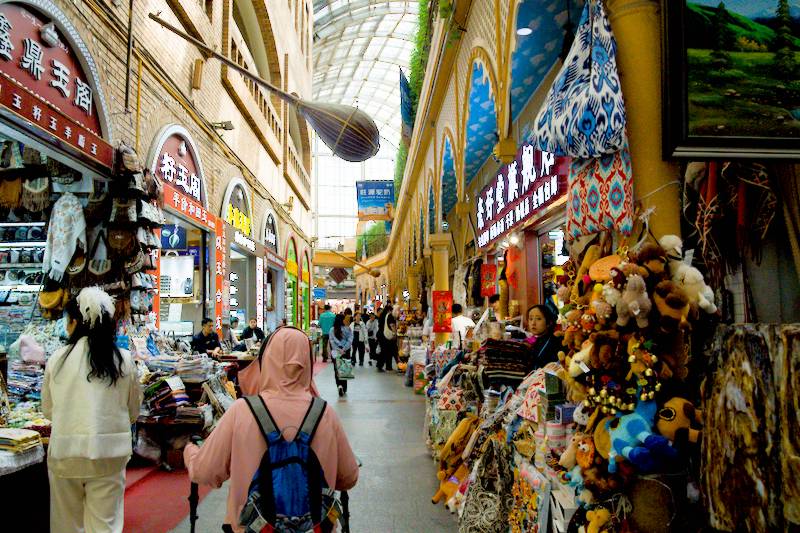
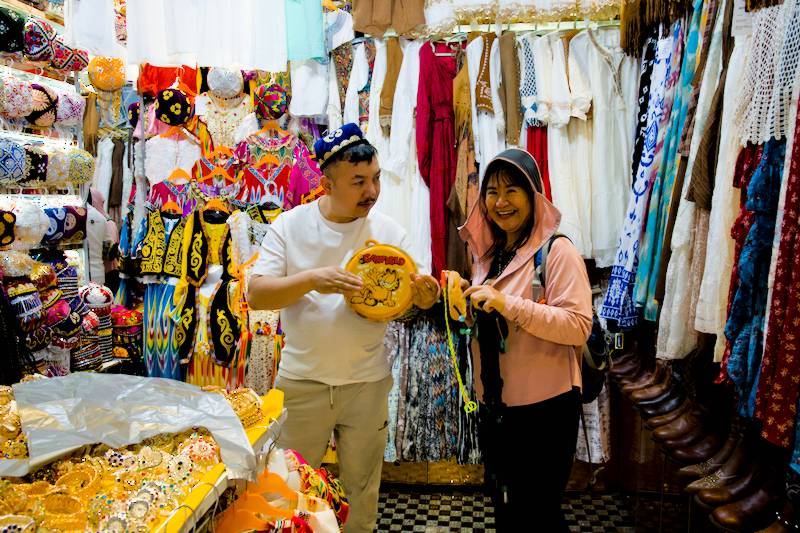
For our final stop, we visited the International Grand Bazaar (国际大巴扎). It turned out to be the most impressive shopping and cultural area we saw throughout the entire trip.
The layout is grand, with a central square surrounded by several large buildings and countless smaller shops along the side lanes. The variety here is huge, ranging from traditional handicrafts, clothing, and handbags to modern cafes and eateries such as Luckin Coffee.
If there is only one place to shop during a trip to Xinjiang, this would easily be my top recommendation. It truly brings together local culture and modern convenience in one place.
Day 14
Today is our return journey to Kuala Lumpur, Malaysia. We left the hotel as early as 7:00 am and headed to the airport for our flight back home.
The journey involved a transit in Beijing before continuing to Kuala Lumpur. It was a long travel day, but also the final chapter of a memorable holiday.
By the time we finally arrived home, it was already close to midnight, marking the end of our two-week adventure in Xinjiang.
🎥 Watch our Video: 14 Days in Northern Xinjiang, China
We’ve put together a video from this trip, which you can watch on YouTube by clicking the image below.

If this itinerary is what you are looking for, you can contact Yat Travel or reach out directly to our tour guide, James, at his WhatsApp at +8613109530863 for more information. Group tours and bespoke small group tours can be arranged to fit your needs.
China is a fascinating country. We also recently returned from Guizhou, just a month before our trip to northern Xinjiang. If you would like to know more about the best places to visit there, click this link to explore our six-day, five-night trip in Guizhou.
KK Tan
Monday 8th of June 2026
What is the cost of this 14 day tour ? Is this English speaking? Is this a private tour, or part of a regular group tour ?
kwankp
Tuesday 23rd of June 2026
This is a group tour of about 25 people over 14 days. The total cost is RMB 14680, excluding airfares. However, please keep in mind that the cost may vary. You can WhatsApp James for more information.
Pete Hew
Sunday 31st of May 2026
Wow! Very well written!
kwankp
Tuesday 2nd of June 2026
Thanks Pete :)