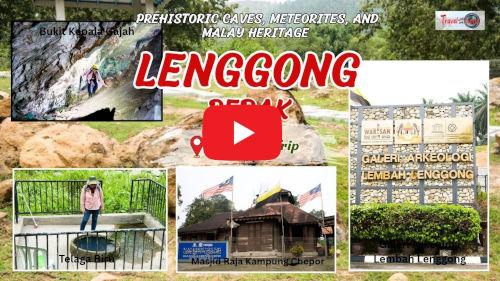
Lenggong is a small town in northern Perak that rarely appears on the list of must-visit destinations in Malaysia. In fact, I believe many Malaysians have never considered visiting this quiet little town, let alone foreign travelers.
But three remarkable events from the distant past make the Lenggong Valley so special. The first was a meteorite impact around 1.83 million years ago. The second was the presence of prehistoric humans, including Perak Man, whose skeleton dates back approximately 11,000 years. The third was the massive eruption of Mount Toba about 74,000 years ago, which covered parts of the valley with volcanic ash.
Together, these discoveries have made Lenggong an important archaeological and geological destination. The Lenggong Valley was inscribed as a UNESCO World Heritage Site in 2012, and in April 2026, Lenggong also received recognition as a UNESCO Global Geopark.
These fascinating stories were what prompted us to make a two-day, one-night trip to Lenggong to see the places for ourselves.
Content
Note: Click any item to jump straight to that part of the post.
- Bukit Bunuh – Where a Meteorite Struck 1.83 Million Years Ago
- Galeri Arkeologi Lembah Lenggong
- Galeri Lenggong Geopark
- A Peaceful Night at Aguilar Resort
- Gua Ular, Batu Putih & Pentas
- Gua Teluk Kelawar, Tiga Lapis & Ngaum
- Taman Eko Rimba Lata Kekabu – A Walk by the River
- Bukit Sapi – Volcanic Ash from 74,000 Years Ago
- Masjid Raja Kampung Chepor – A Nearly 500-Year-Old Wooden Mosque
- Aki’s Gallery – Meeting Tok Aki
- Telaga Biru – Our Last Stop in Lenggong
- Leaving Lenggong with Wonderful Memories
- Places We Visited in Lenggong – Addresses and Contact Information
- 🎬Watch our video
Day 1 – Discovering Lenggong’s Ancient History
We drove from Kuala Lumpur and arrived in Lenggong around noon, heading straight to the Bukit Bunuh Meteorite Impact Site
Bukit Bunuh – Where a Meteorite Struck 1.83 Million Years Ago
Researchers discovered evidence of a meteorite impact at Bukit Bunuh dating back approximately 1.83 million years.
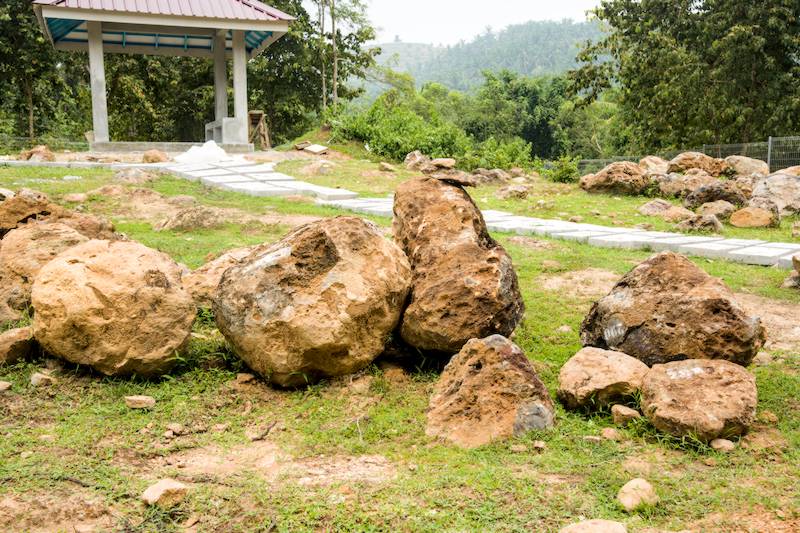
The tremendous heat and pressure from the impact shattered and melted the surrounding granite, forming an unusual rock called suevite.
When we arrived, the site was undergoing upgrading work to make it more accessible to visitors. We saw several large suevite boulders around the construction area, and a worker told us they would eventually be protected by fencing.
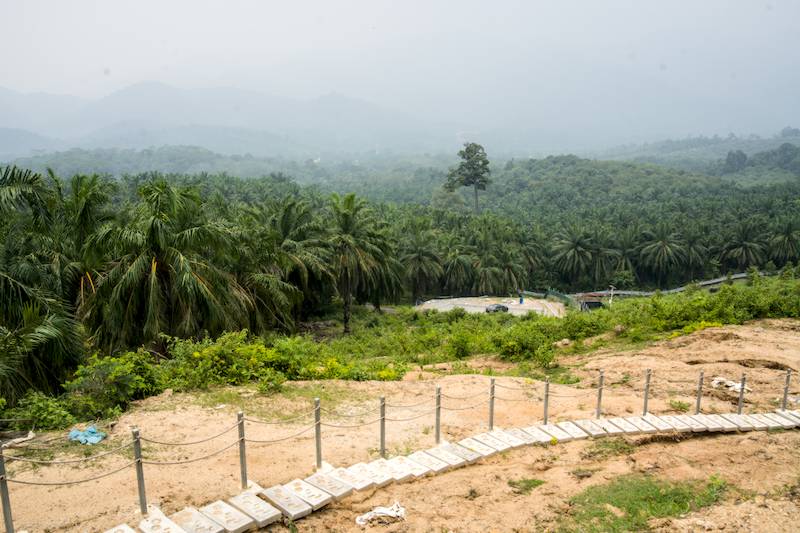
While exploring the surroundings, we found another narrow road leading into an oil palm plantation. At the end of the road was a paved stairway going up Bukit Bunuh, leading to a viewpoint overlooking the surrounding landscape.
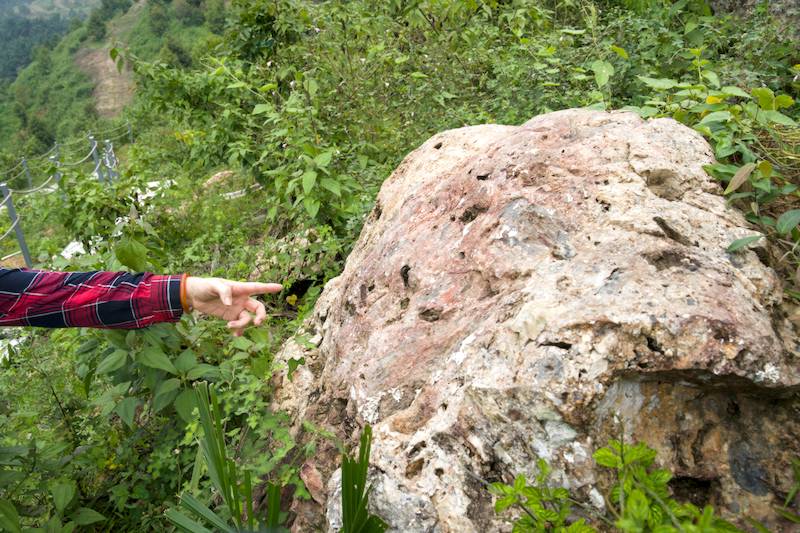
We decided to climb up and were rewarded with beautiful views of the green valley. Along the steps, we also spotted more suevite rocks.
Standing in such peaceful surroundings, it was difficult to imagine the enormous impact that had taken place here almost two million years ago.
Galeri Arkeologi Lembah Lenggong
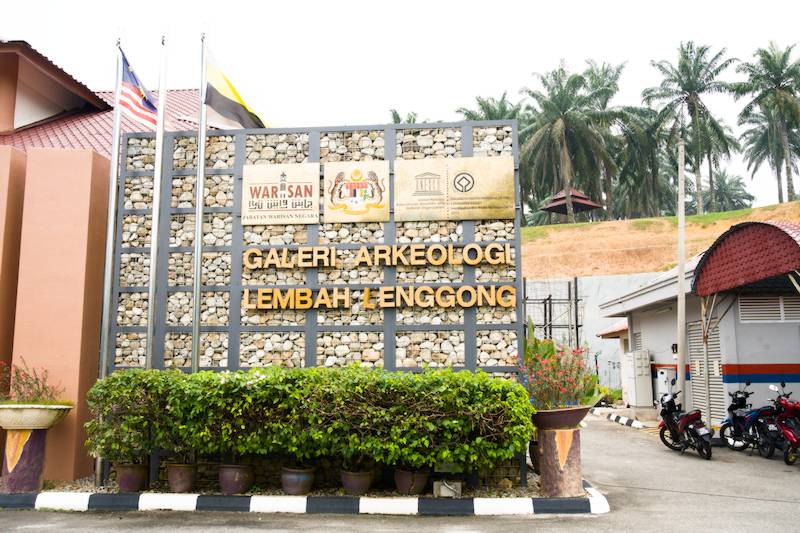
Our next stop was Galeri Arkeologi Lembah Lenggong, an ideal place to learn more about the valley’s prehistoric history. Admission was free during our visit.
There are five galleries, each displaying different archaeological and geological discoveries.
- Gallery A: We saw ancient stone tools, pottery, and ornaments discovered in prehistoric caves around Lenggong, giving us an idea of everyday life thousands of years ago.
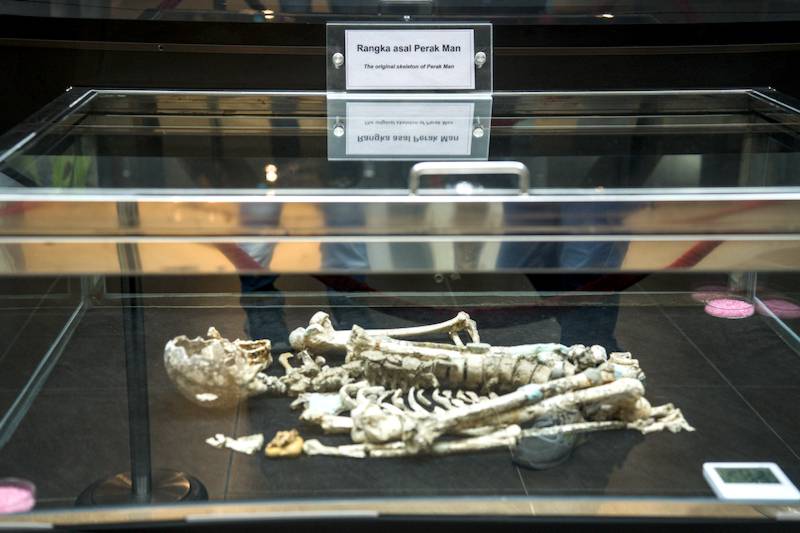
- Gallery B: This was particularly interesting because it houses the original skeleton of Perak Man, along with a reconstruction of his burial position, artifacts from Gua Gunung Runtuh, and prehistoric stone tools.
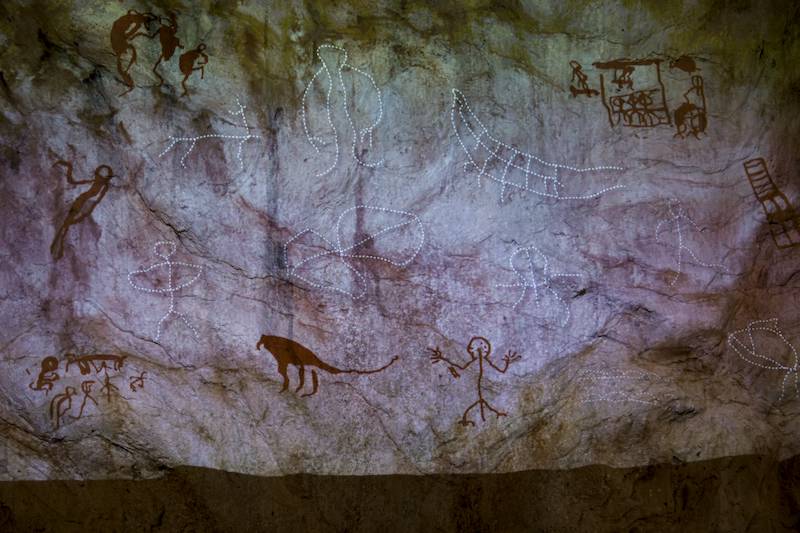
- Gallery C: There were more stone tools, a reconstruction of an archaeological excavation site, interactive cave painting exhibits, and displays of traditional games played by the Orang Asli community.
- Gallery D: We saw stone tools and samples of suevite from Bukit Bunuh, which we had visited earlier that afternoon.
- Gallery E: The final gallery displayed blowpipes, darts, axes, and exhibits showing how prehistoric people carried out their daily activities inside caves.
After visiting all five galleries, we had a much better understanding of Lenggong’s archaeological importance.
If you enjoy exploring caves, you might also like our cave adventure in Dabong, Kelantan. We visited several fascinating caves there, and you can read about our experience in the this article.
Galeri Lenggong Geopark
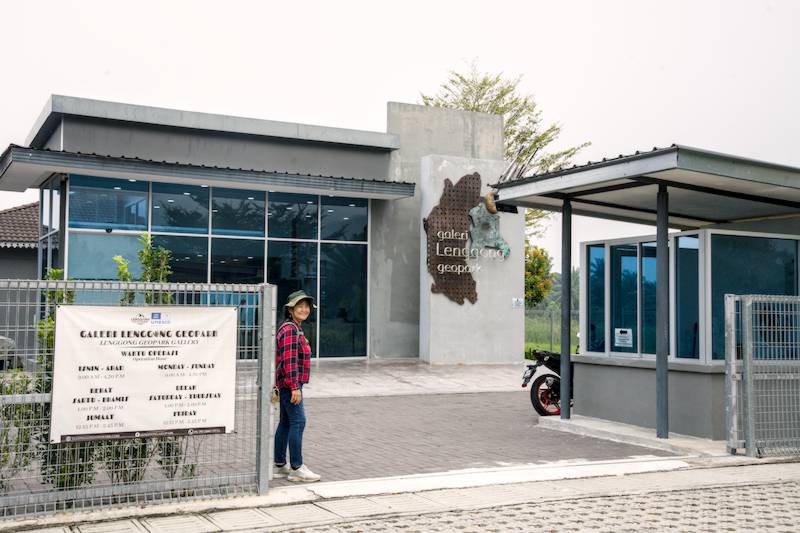
Not far from the archaeological museum is another smaller gallery called Galeri Lenggong Geopark.
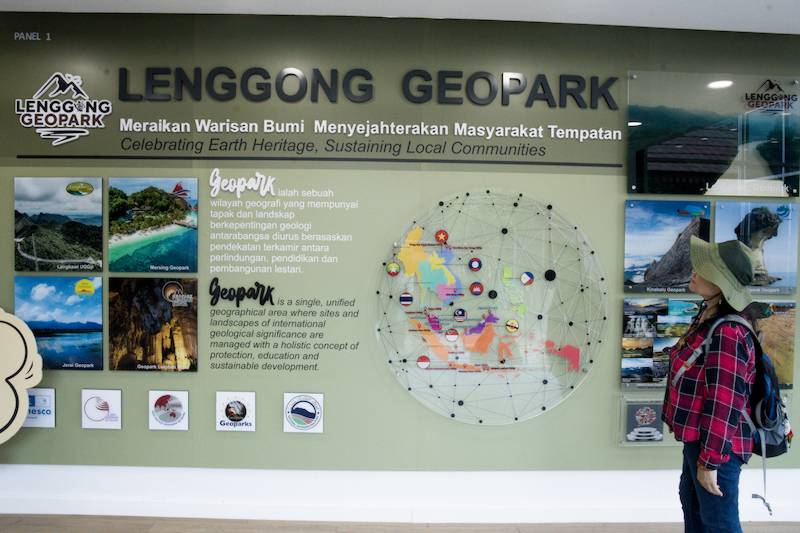
The exhibits consist mainly of colorful information panels explaining the geological history and important sites around Lenggong.
Much of the information overlaps with what we had already seen at the archaeological museum. So, if you have limited time, I would suggest giving priority to Galeri Arkeologi Lembah Lenggong.
A Peaceful Night at Aguilar Resort
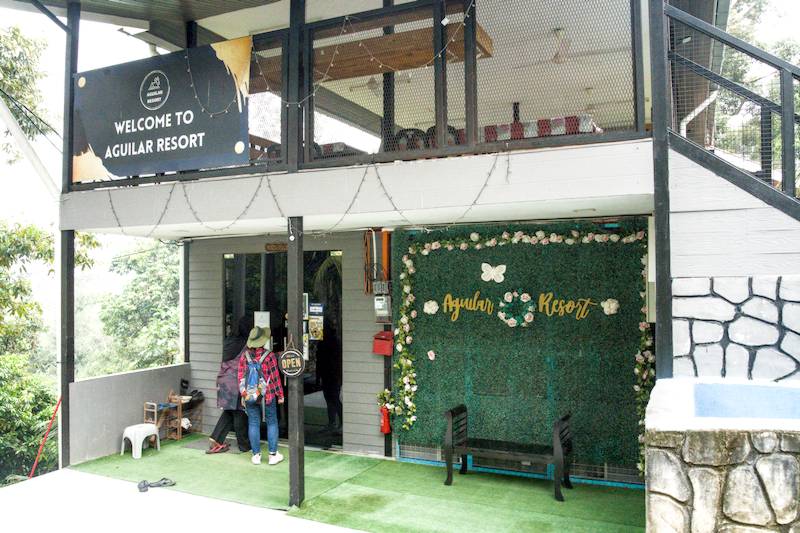
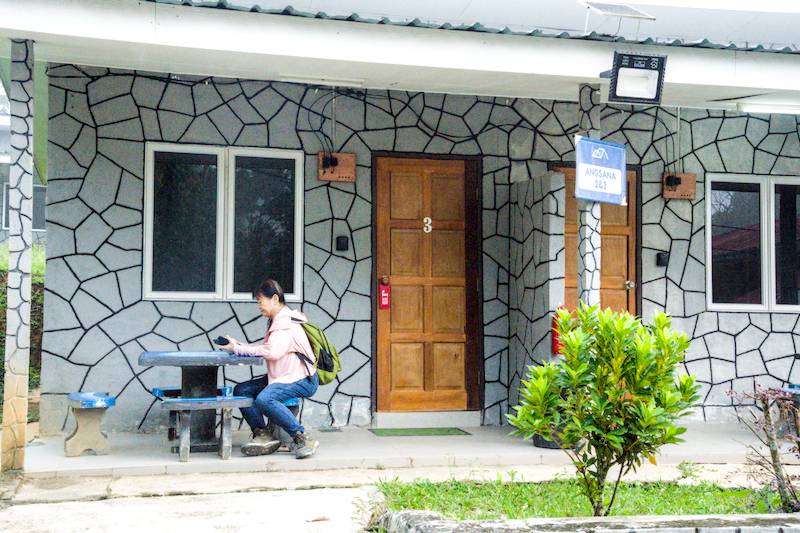
We stayed at Aguilar Resort, tucked away inside a plantation on a hillside close to the forest.
The resort was exceptionally peaceful, and the owner welcomed us with warm, traditional kampung hospitality.
Our room was simple but comfortable, with an attached bathroom and air conditioning. What I enjoyed most was the lush, forested surroundings. Even with the windows closed, I could still hear the insects outside, almost like a natural symphony.
It was a lovely place to relax before our cave exploration the following morning.
Day 2 – Exploring the Prehistoric Caves of Lenggong at Bukit Kepala Gajah
At 8:30 a.m., we met our guide and headed to the Bukit Kepala Gajah limestone cave complex.
According to our guide, there are around 12 caves here. We planned to explore six, including Gua Teluk Kelawar, Gua Ngaum, and other caves along the route.
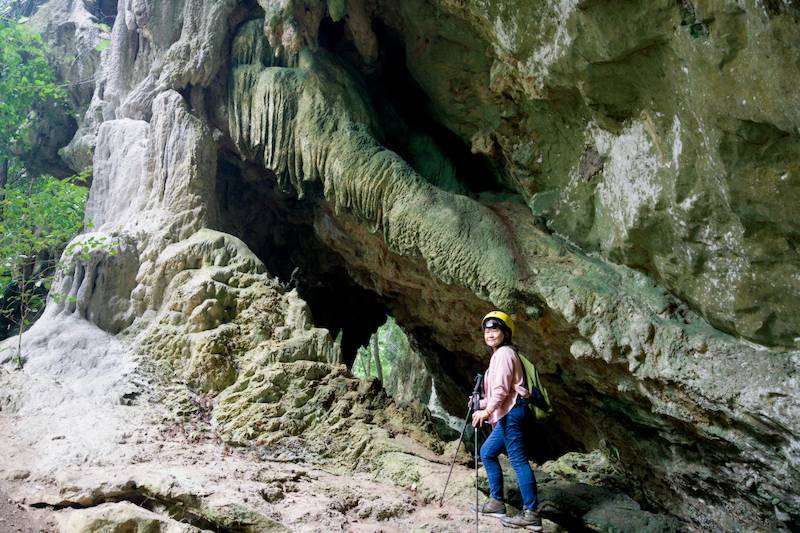
Our guide explained that the limestone is approximately 180 to 200 million years old. It formed from marine sediments when this area was beneath the sea. Later, geological movements lifted the limestone above sea level, and rainwater gradually dissolved parts of the rock, creating the caves we see today.
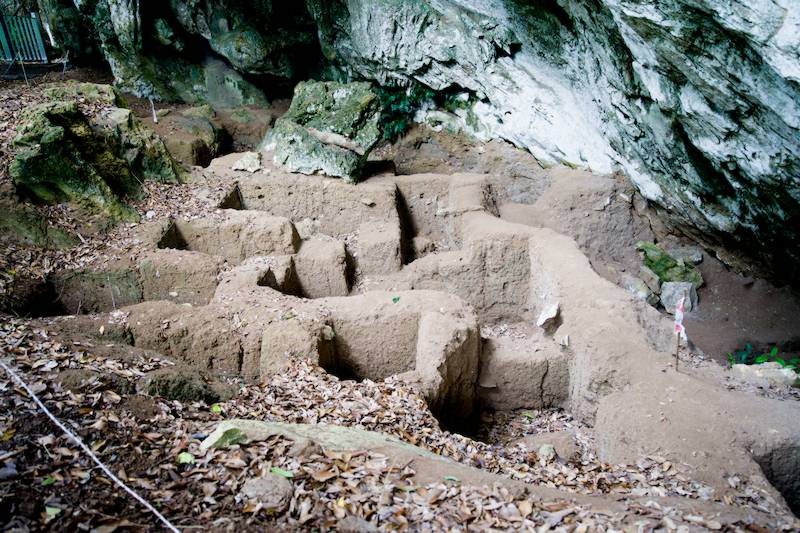
Some of these caves were used by prehistoric humans as shelters and burial sites.
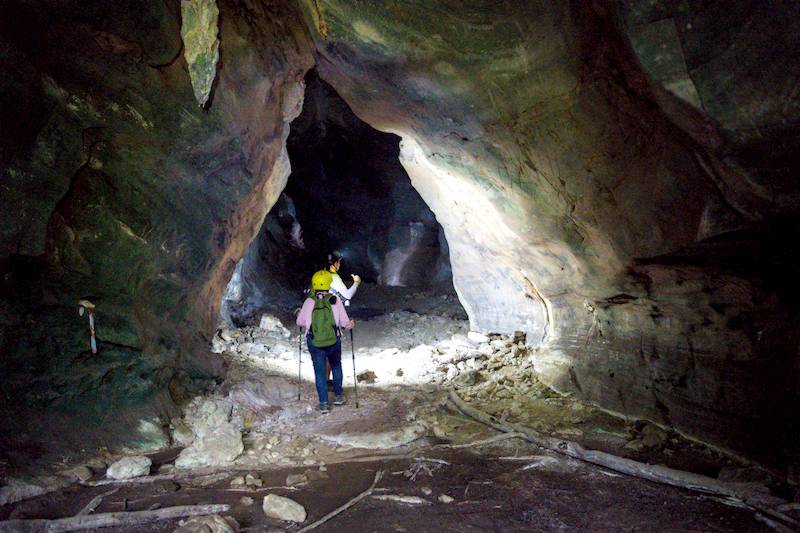
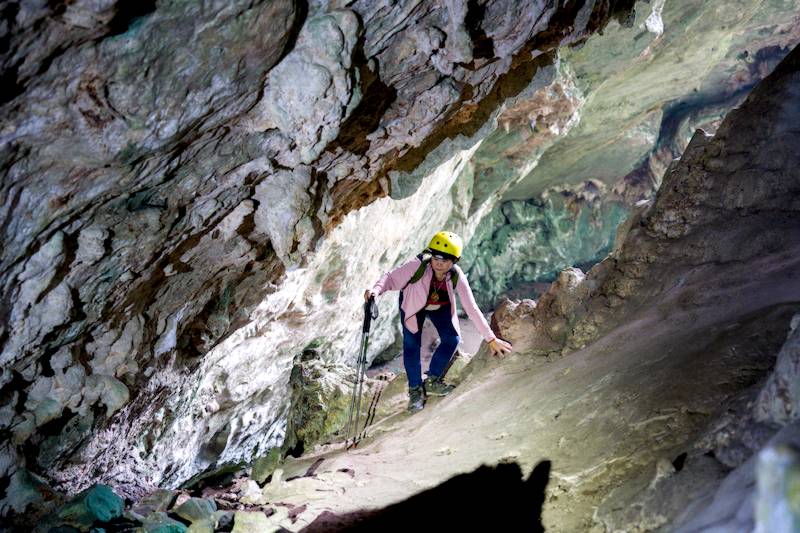
A walking trail connects the caves we visited. Some sections are paved with stone slabs, while others are steep and uneven, requiring a little climbing. Fortunately, ropes have been installed along the more difficult sections, making it easier to move from one cave to another.
Gua Ular, Batu Putih & Pentas
Gua Ular – Our First Cave
Our first stop was Gua Ular, meaning Snake Cave. According to our guide, the cave received its name because snakes have been found here, particularly at night.
We climbed a short, steep section using the ropes provided to reach the entrance.
Fortunately, we did not encounter any snakes, although we spotted a few bats inside.
Gua Batu Putih – Drawings from the Past
At Gua Batu Putih, our guide pointed out drawings believed to have been made by the Negrito Orang Asli community over 100 years ago.
The drawings included people, animals, hunting activities, and everyday scenes. According to our guide, some also reflected changes during the British colonial period, including the arrival of new forms of transportation.
It was interesting to see this relatively recent history alongside the much older prehistoric discoveries around Lenggong.
Gua Pentas – A Resting Place After Farming
Our next stop was Gua Pentas.
The cave has a relatively flat interior, and our guide explained that local people once rested here after working on the surrounding farms.
The name pentas means stage or platform in Malay, which seems appropriate given its flat surface.
It was easy to imagine people taking shelter here from the sun and rain after a long day of farming.
Gua Teluk Kelawar, Tiga Lapis & Ngaum
Following the Historic Berkeley Trail
Part of our walking route followed the Berkeley Trail, an approximately 3-kilometer trail connecting several caves around Bukit Kepala Gajah.
It was named after Hubert Berkeley, a British colonial official who served in Hulu Perak during the early 20th century. Apparently, he used this route through the limestone hills.
Gua Teluk Kelawar – Where Perak Woman Was Discovered
Gua Teluk Kelawar was one of the most important stops during our cave exploration.
This was where archaeologists from Universiti Sains Malaysia discovered the remains known as Perak Woman in 2004.
She is estimated to have lived around 8,000 to 8,400 years ago. She was approximately 40 to 50 years old when she died and stood about 148 centimeters tall.
Unlike Perak Man, whose skeleton was relatively complete, her remains were less complete.
Gua Tiga Lapis – Unusual Rock Layers and Complete Darkness
Next was Gua Tiga Lapis, meaning Three-Layer Cave.
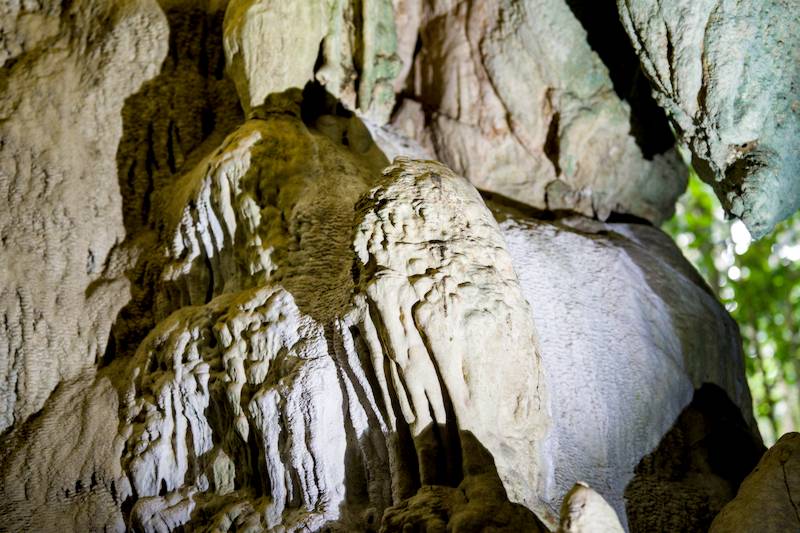
The cave has some unusual rock formations, with distinct streaks and brownish layers running through them. According to our guide, these formations might be related to ancient geological activity beneath the sea, possibly involving volcanic processes.
The cave has several levels, but we climbed only to the second, which was easier to access.
Farther inside, we switched off our lights for a moment. It was completely pitch-black. That brief moment made me realize how dependent we were on our lights to find our way.
Gua Ngaum – The Cave with a Wild Cat Story
Our final cave was Gua Ngaum, which was discovered by researchers from Universiti Sains Malaysia in 1990.
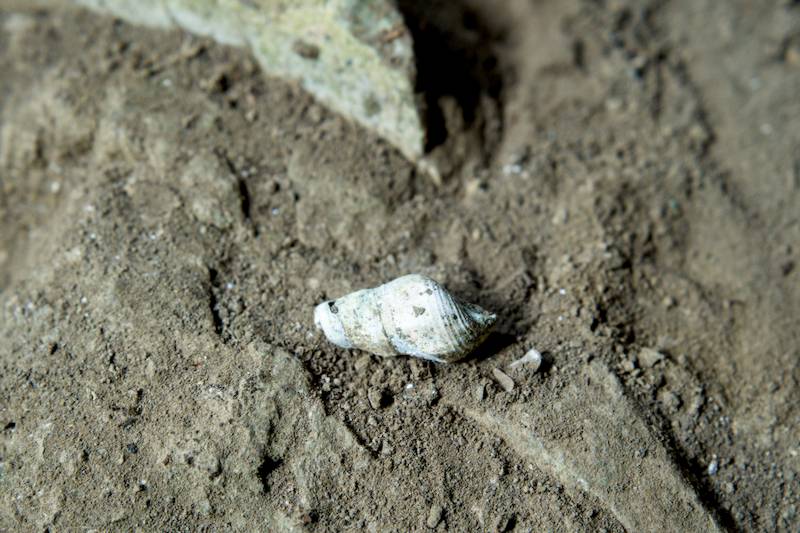
Excavations uncovered stone tools, pottery fragments, and food remains, suggesting that prehistoric people used the cave around 6,000 to 7,000 years ago.
There is also an interesting story behind its name.
According to local accounts, the cave was once associated with a large wild cat, possibly a leopard or black panther, known locally as harimau kumbang. Other accounts mention a tiger roaring near the cave. That is reportedly how it received its name, as ngaum refers to the roar of a wild animal.
By the time we returned to the parking area, we had spent the entire morning exploring the caves. It was a satisfying experience, especially after seeing the related exhibits at the archaeological museum the previous day.
Taman Eko Rimba Lata Kekabu – A Walk by the River
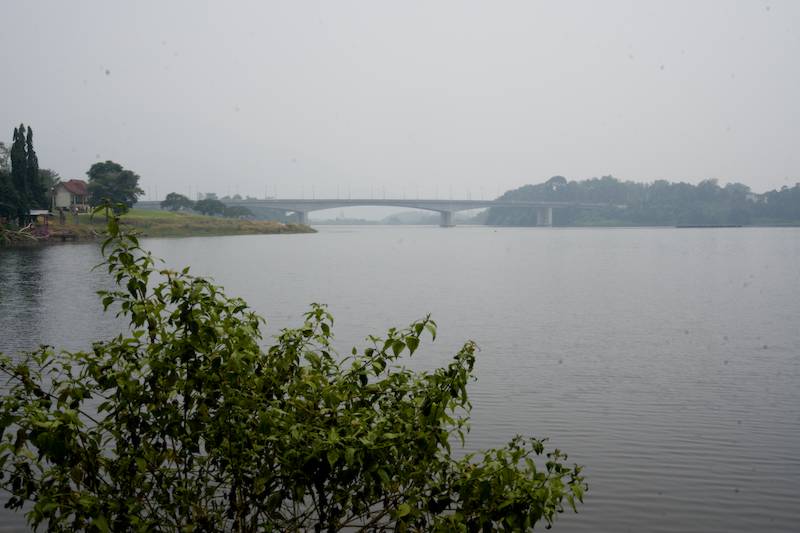
After lunch, we continued toward Taman Eko Rimba Lata Kekabu, stopping briefly at Tasik Raban (Raban Lake).
The lake was beautiful, surrounded by greenery, and we spent a little time taking photographs.
We decided to skip the boat ride because we still had several places to visit before leaving Lenggong.
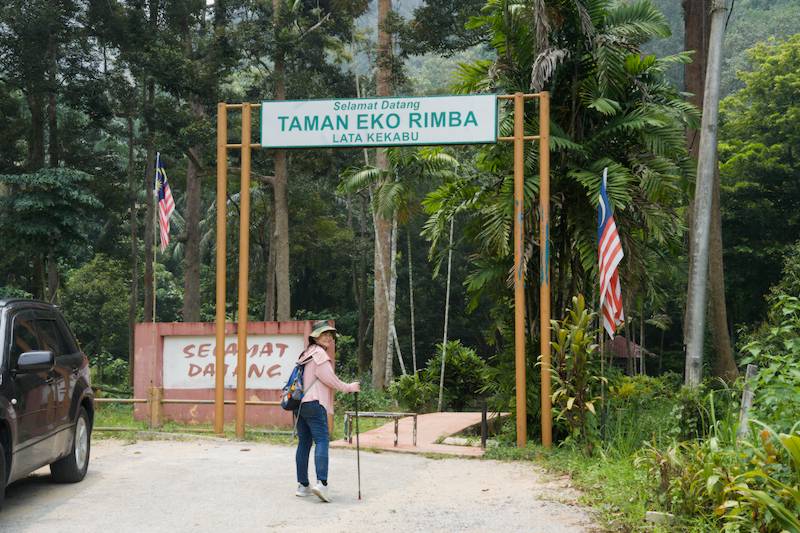
Taman Eko Rimba Lata Kekabu – A Walk by the River
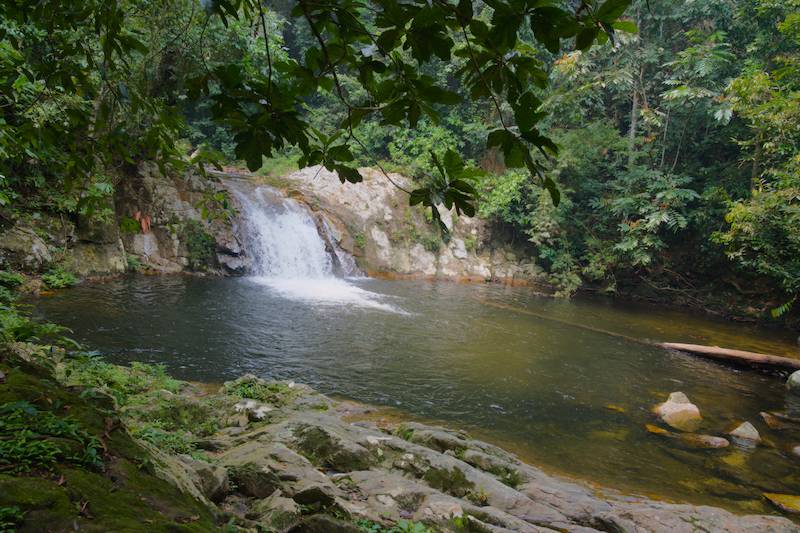
Lata Kekabu is a recreational forest park with a river, waterfalls, and walking paths.
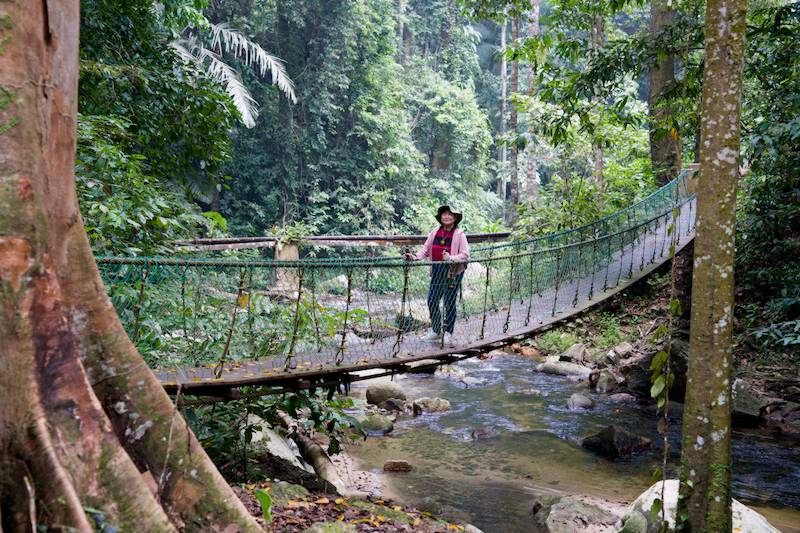
We followed a pink-colored cement pathway alongside the river for about ten minutes before reaching one of the waterfalls. There was also a suspension bridge crossing the river.
The surroundings were peaceful, with flowing water and greenery everywhere. It seemed like a lovely place to relax and enjoy nature.
After spending so much time exploring caves and archaeological sites, Lata Kekabu showed us another side of Lenggong’s natural beauty.
Bukit Sapi – Volcanic Ash from 74,000 Years Ago
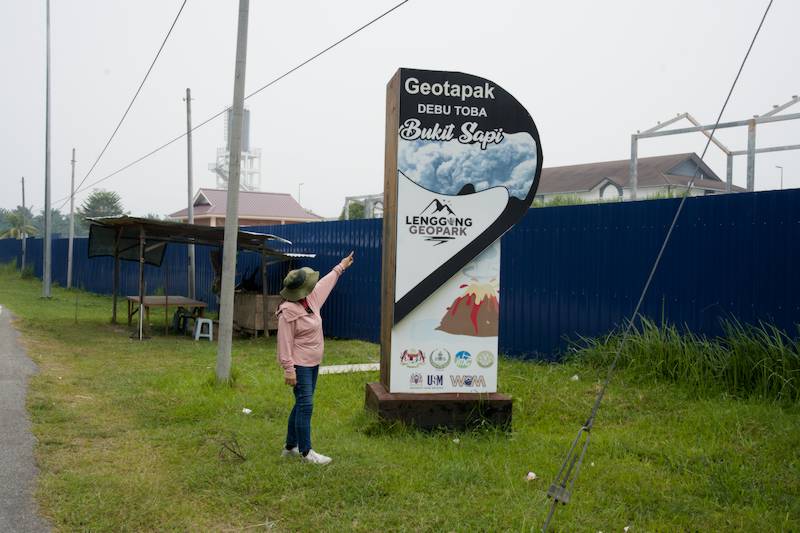
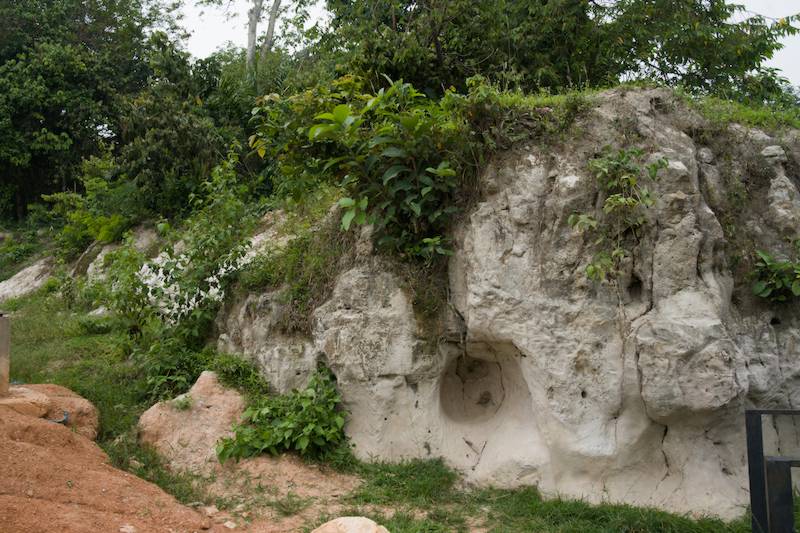
Our next stop was Geotapak Debu Toba Bukit Sapi (Bukit Sapi Toba Ash Geosite).
Around 74,000 years ago, Mount Toba in northern Sumatra experienced an enormous volcanic eruption, sending ash across much of Southeast Asia, including Lenggong.
At Bukit Sapi, we could still see thick deposits of volcanic ash left behind by that eruption.
The site was undergoing conservation and upgrading work during our visit, making it rather difficult to locate.
We recorded the following GPS coordinates:
Latitude: 5.146356
Longitude: 101.023258
Hopefully, the ongoing development of Lenggong Geopark will make this remarkable geological site easier to visit in the future.
Masjid Raja Kampung Chepor – A Nearly 500-Year-Old Wooden Mosque
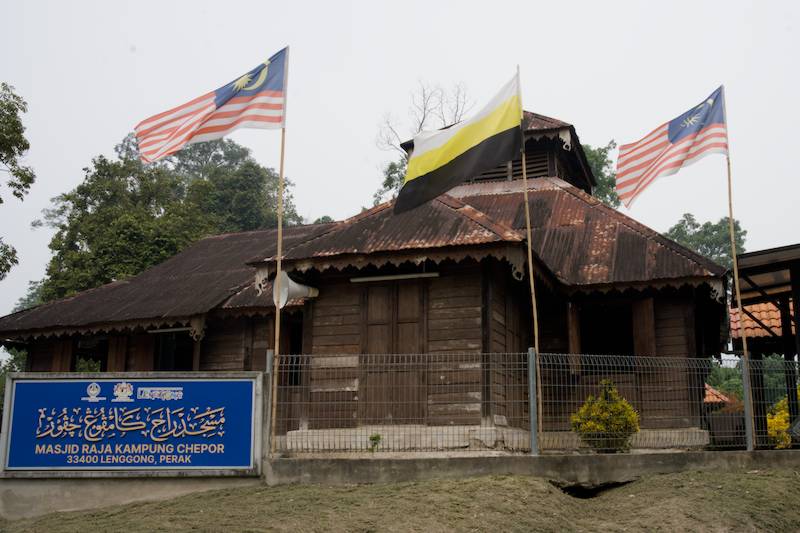
We then visited Masjid Raja Kampung Chepor, one of the oldest mosques in Perak.
According to local historical accounts, it was built in 1541 during the reign of Sultan Muzaffar Shah I, the first Sultan of Perak.
Unlike modern mosques, this is a small traditional wooden building, with four large wooden pillars supporting the roof. Interestingly, the mosque stands on ground containing volcanic ash from the Mount Toba eruption.
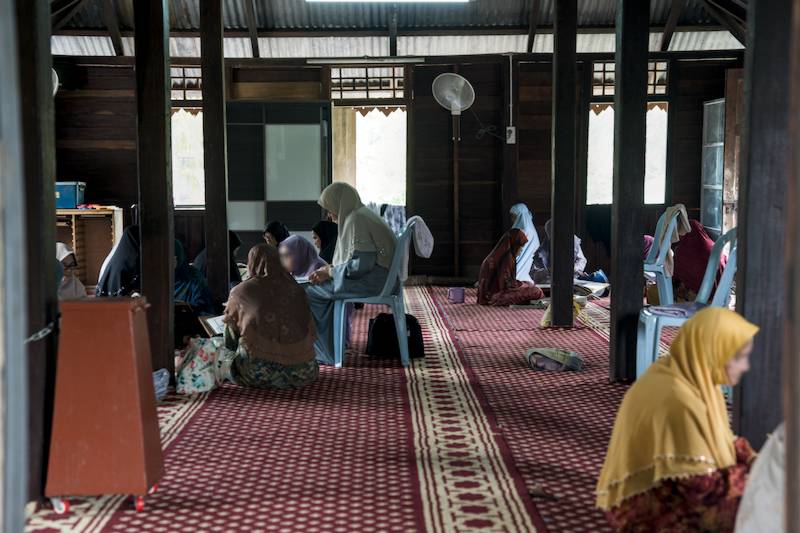
It is still used for religious activities. During our visit, a religious study session was taking place, so we took some time to appreciate the building without disturbing those inside.
Aki’s Gallery – Meeting Tok Aki
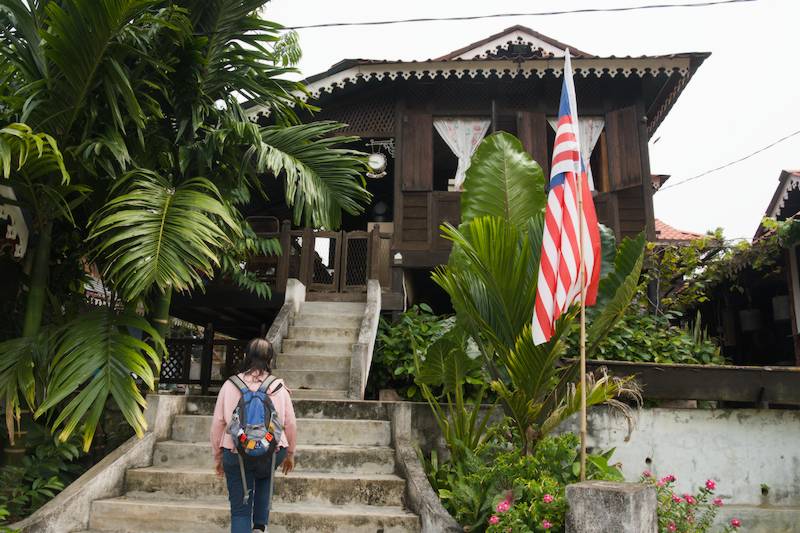
Not far from the mosque is Aki’s Gallery, a traditional Malay wooden house filled with antiques and old household items.
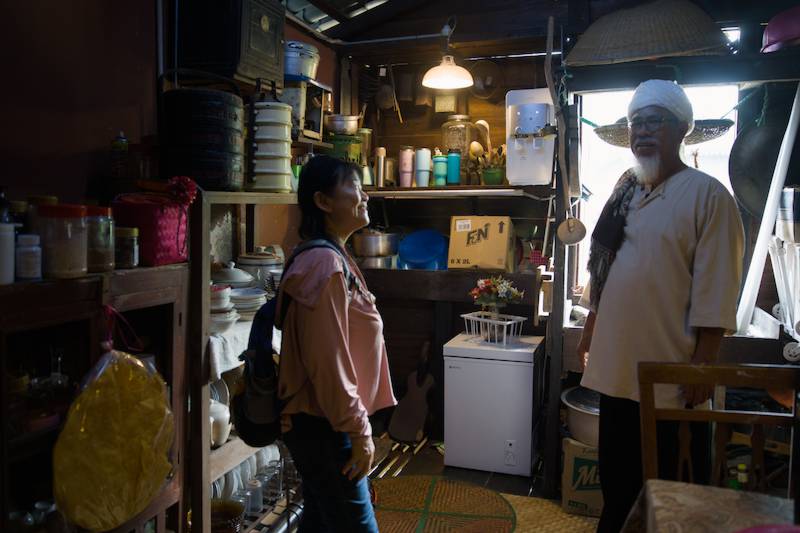
We were delighted to meet the owner, Tok Aki, who happily shared stories about his collection and the history of the house.
There were traditional kitchen utensils, farming equipment, wedding accessories, and all sorts of objects from earlier generations. Some reminded me of my childhood, as I could remember seeing similar items in my parents’ house.
Tok Aki explained that the house originally belonged to his uncle and was once located behind its present position. Instead of demolishing it, the villagers moved the entire house using the traditional angkat rumah method, where people work together to lift and carry a wooden house to a new location.
Imagine an entire house being carried by a group of villagers!
He later transformed it into a private gallery, with the project taking shape around the COVID-19 period.
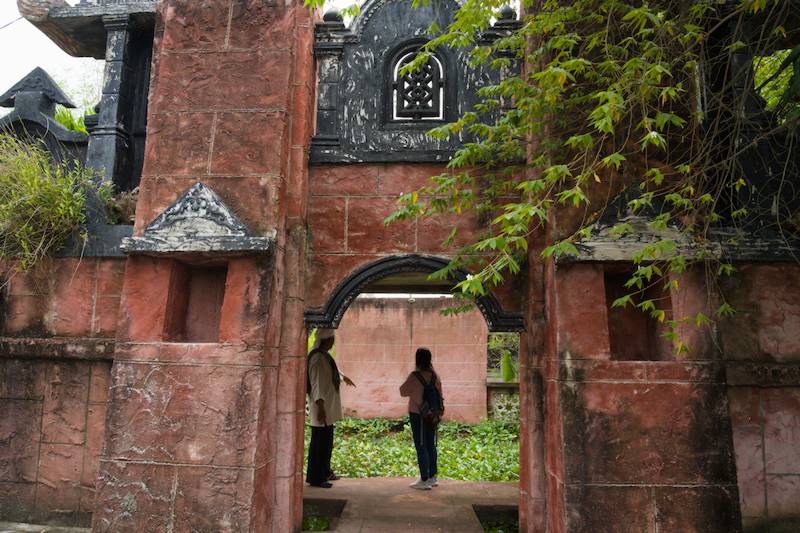
Outside, we also noticed a traditional-looking fort, or kota. At first, we thought it was an old historical structure, but Tok Aki explained that it was actually a newer addition he was developing.
Meeting Tok Aki made the visit particularly meaningful. If you have the chance, I would recommend stopping by and listening to his stories.
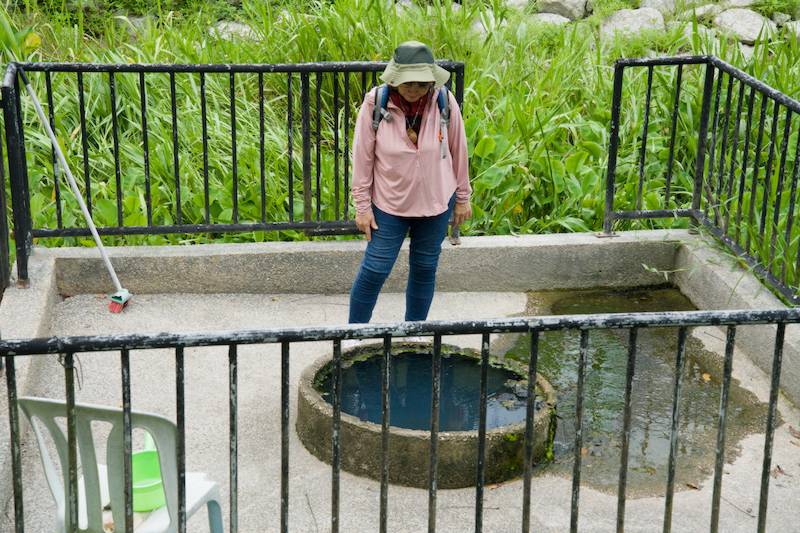
Telaga Biru – Our Last Stop in Lenggong
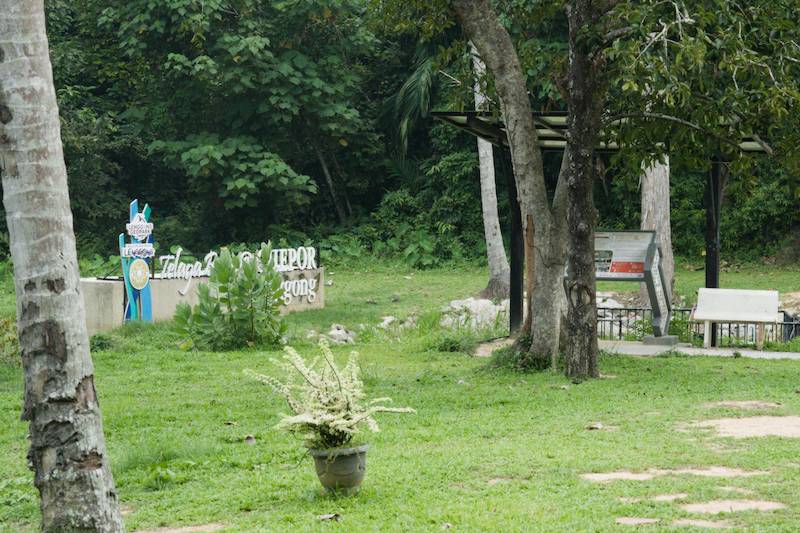
Before leaving Lenggong, we made one final stop at Telaga Biru in Kampung Chepor.
Telaga Biru means Blue Well in Malay, and its most striking feature is the exceptionally clear, bluish water.
The spring water rises from underground through cracks in the surrounding rocks. Its remarkable clarity, together with the way light passes through the water, contributes to its deep blue appearance.
It was an interesting geological feature to end our visit.
Leaving Lenggong with Wonderful Memories
Our two-day, one-night trip to Lenggong turned out to be quite different from our usual travels around Malaysia.
We came mainly for its prehistoric caves and meteorite impact site, but also discovered beautiful natural scenery, traditional Malay heritage, and interesting local stories.
I would particularly recommend visiting Galeri Arkeologi Lembah Lenggong before exploring the caves. Understanding the history beforehand made our cave experience much more meaningful.
Lenggong may be a quiet little town, but it has plenty to offer, especially for anyone interested in history, archaeology, and geology.
Places We Visited in Lenggong – Addresses and Contact Information
Here is a quick reference to the places we visited during our two-day, one-night trip to Lenggong, arranged in the order of our journey.
Day 1
- Bukit Bunuh Meteorite Impact Site
Location: Jalan Kampung Pulau Cheri, Kampung Luat, 33400 Lenggong, Perak. - Galeri Arkeologi Lembah Lenggong
Address: Kota Tampan, 33400 Lenggong, Perak.
Phone: +605-767 9700 - Galeri Lenggong Geopark
Address: Kampung Baru Kota Tampan, 33400 Lenggong, Perak.
Phone: +605-767 7207 - Aguilar Resort
Address: Lot 2781-A, Kampung Danglang, Kuak, 33400 Lenggong, Perak.
Phone: +6019-381 8894
Day 2
- Bukit Kepala Gajah Limestone Cave Complex
Location: Bukit Kepala Gajah, Lenggong, Perak.
Caves visited: Gua Ular, Gua Batu Putih, Gua Pentas, Gua Teluk Kelawar, Gua Tiga Lapis, and Gua Ngaum. Part of our walk followed the Berkeley Trail. A local guide is recommended. - Tasik Raban (Raban Lake)
Location: Tasik Raban, Lenggong, Perak. - Taman Eko Rimba Lata Kekabu
Location: Kampung Kota Tampan Air, 33400 Lenggong, Perak.
Phone: +605-791 2384 - Geotapak Debu Toba Bukit Sapi (Toba Ash Geosite)
Location: Bukit Sapi, Lenggong, Perak.
GPS coordinates: 5.146356, 101.023258 - Masjid Raja Kampung Chepor
Location: Kampung Chepor, 33400 Lenggong, Perak. - Aki’s Gallery
Location: Kampung Chepor, 33400 Lenggong, Perak.
Phone: +6012-880 2966 - Telaga Biru (Blue Well)
Location: Kampung Chepor, 33400 Lenggong, Perak.
Note: Some caves and geological sites do not have individual street addresses or publicly listed phone numbers. I recommend checking directions and access arrangements before visiting, particularly for the cave complex and sites undergoing upgrading work.
🎬Watch our video
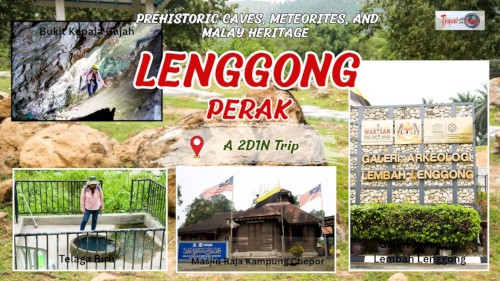
We’ve put together a video from this trip, which you can watch on YouTube by clicking the image below.