
Dabong is a small town in central Peninsular Malaysia. Caves in Dabong are with impressive limestone formations, unusual shapes, narrow passages, and huge natural chambers. With fewer tourists and no large hotels, Dabong still feels relatively undeveloped, making its caves an exciting destination for those who enjoy nature and adventure.
There are many limestone caves here, with magnificent sizes, narrow passages, and unusual shapes that are worth exploring. That is what attracted us to visit.
And the best way to get there is by train, as it passes through this quiet and peaceful town, where life is simple and stress-free.
Sometimes, it is these lesser-known places that make the most memorable trips.
Our guide, Ijai, greeted us at the train station, and then we went straight to begin our expedition to the famous caves in Dabong.
Today will be all about the caves. Tomorrow, we will explore Gunung Stong, trekking up to Jelawang Waterfall. We were all excited and trying to imagine what the caves would be like.
Before starting our adventure, we stopped by the roadside for some simple tea and roti for breakfast.
Gua Gelap: The Dark Cave
The first cave we visited was Gua Gelap, which means “dark cave” in English.
The first part was already unexpected, as there was no obvious sign of an entrance. Ijai suddenly pointed at a small gap between the rocks and said, “This is the entrance!”
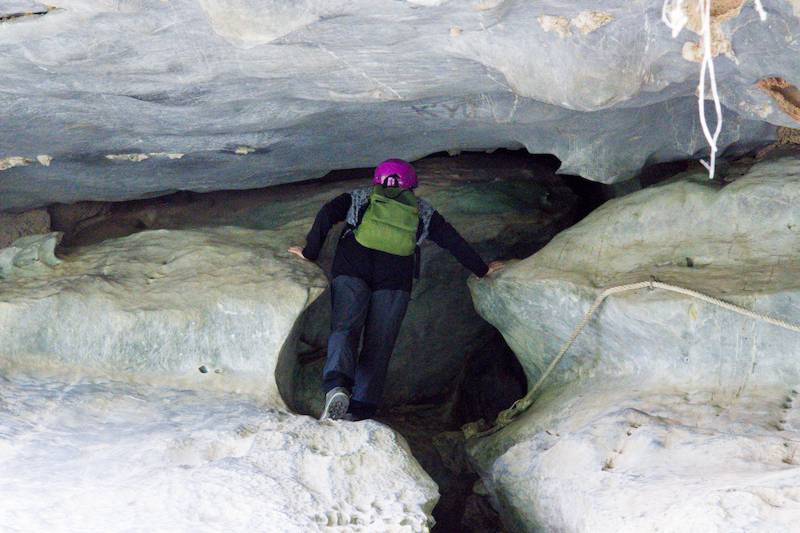
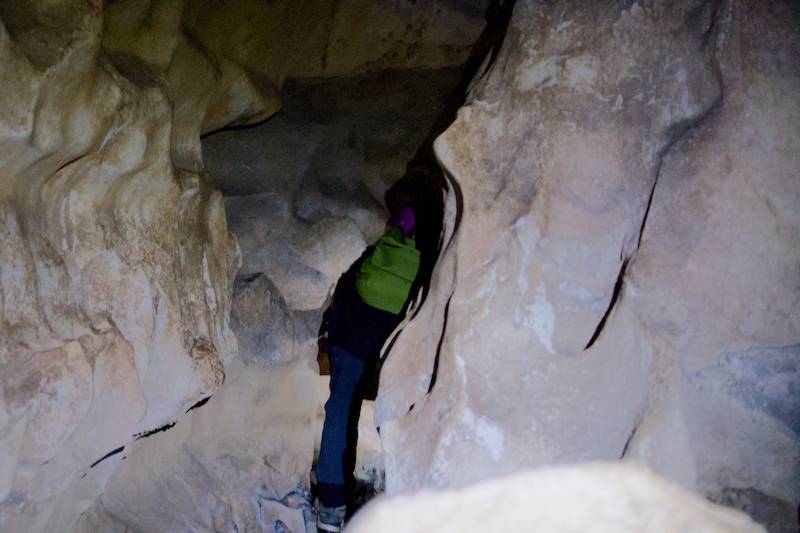
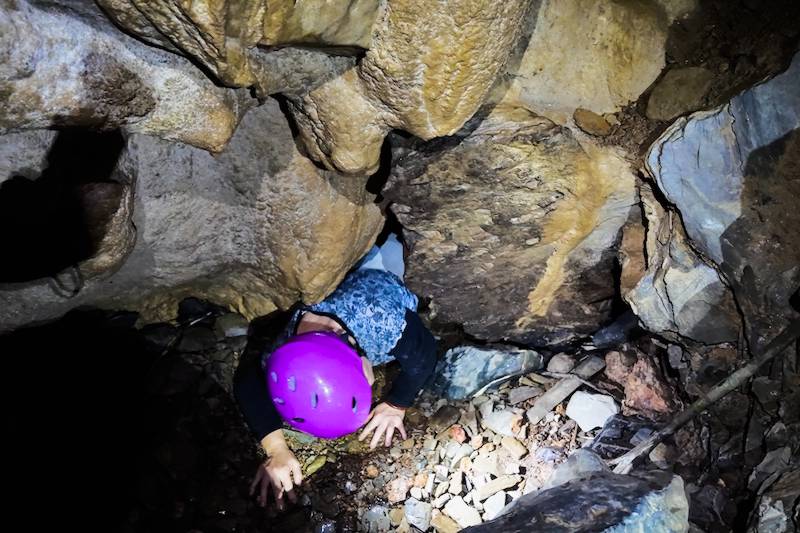
The entrance was so narrow that we had to remove our backpacks and squeeze ourselves through the gap. Then we reached another passage that was so low that we had to lie down completely in some shallow water and squeeze through a gap that was only around a foot high.
I never expected that I would already be wet within the first few minutes.
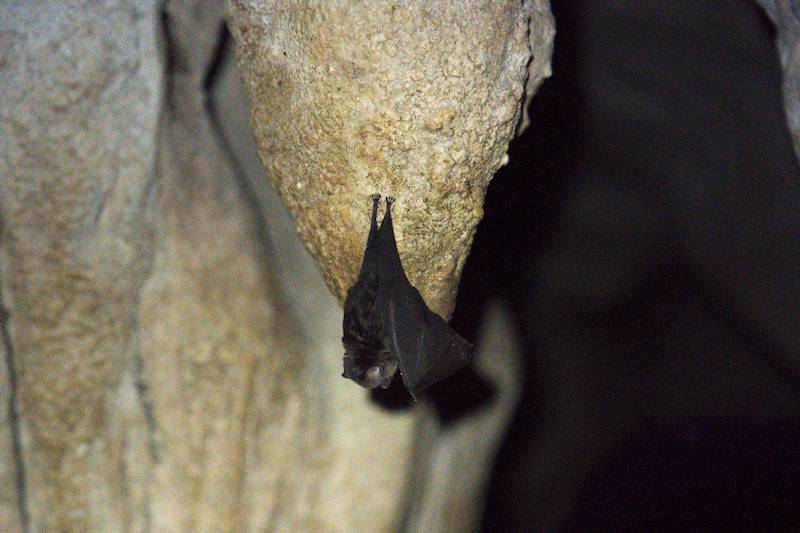
There were a lot of bats in the cave, with some of them suddenly flapping right past our faces.
Then we moved toward a brighter area through an opening. But before that, there was a section that was truly dark and “gelap.” At certain points, it was completely dark when we switched off our headlamps.
Gua Gelap is also known as Gua Batu Susun. From the name, you can probably guess that the rock formations resemble rocks that have been deliberately arranged.
Gua Keris: The Kris-Shaped Rock and God’s Light
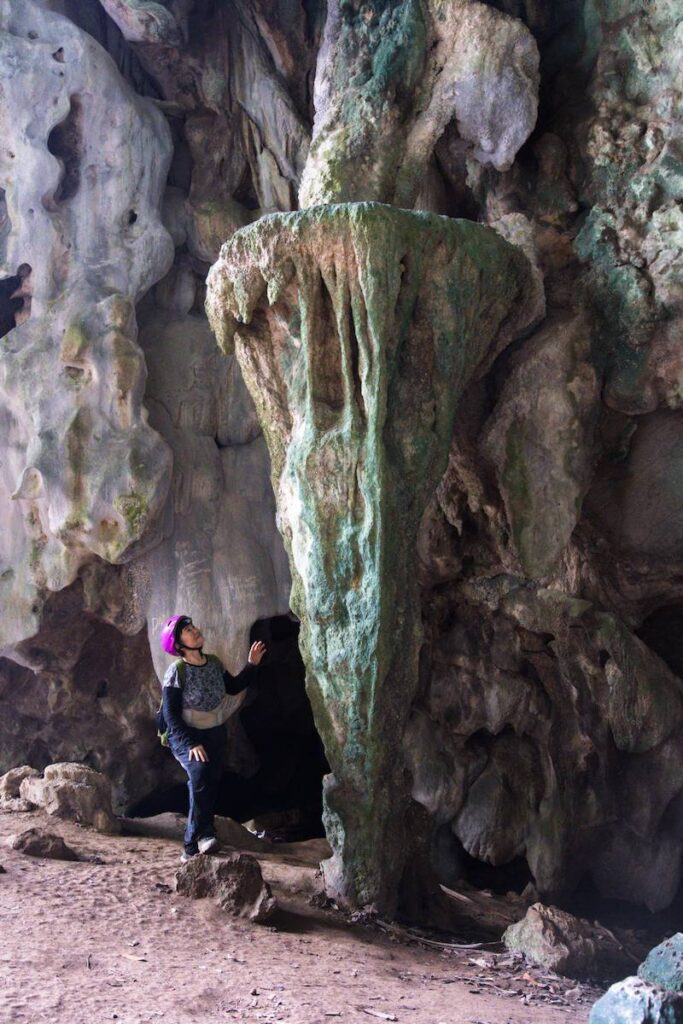
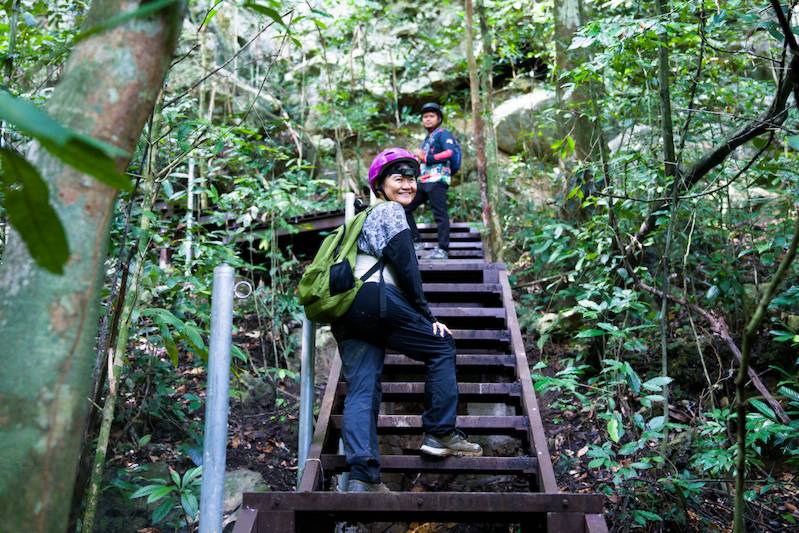
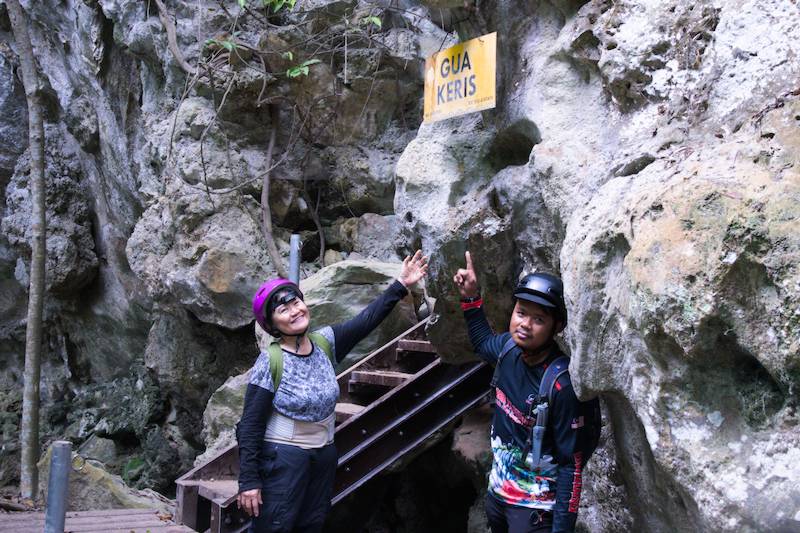
After visiting Gua Gelap, we had to climb some stairs and walk through the jungle to reach the second cave we visited, Gua Keris.
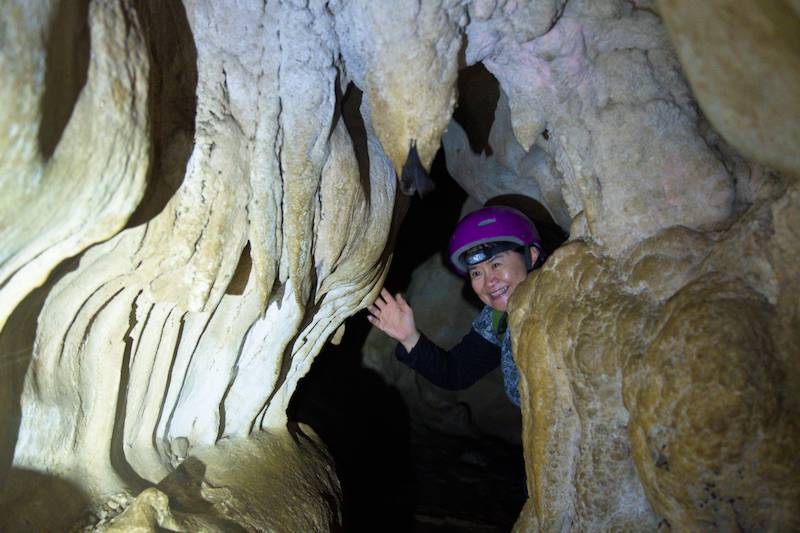
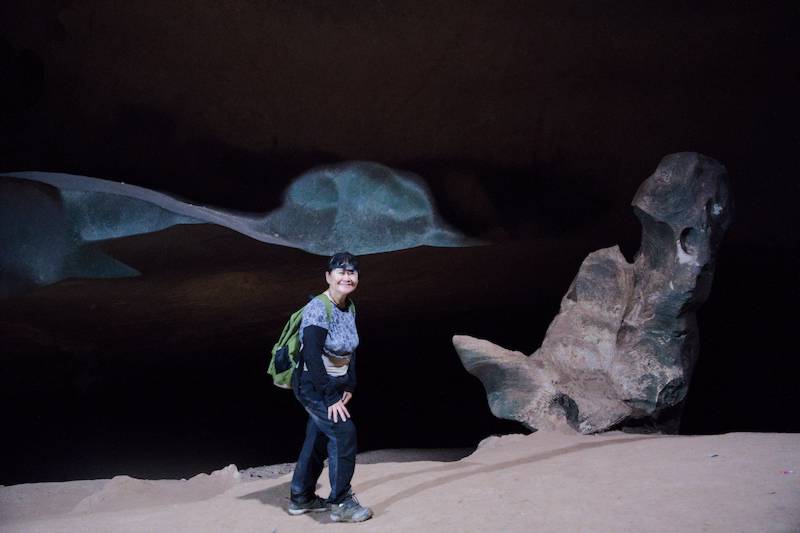
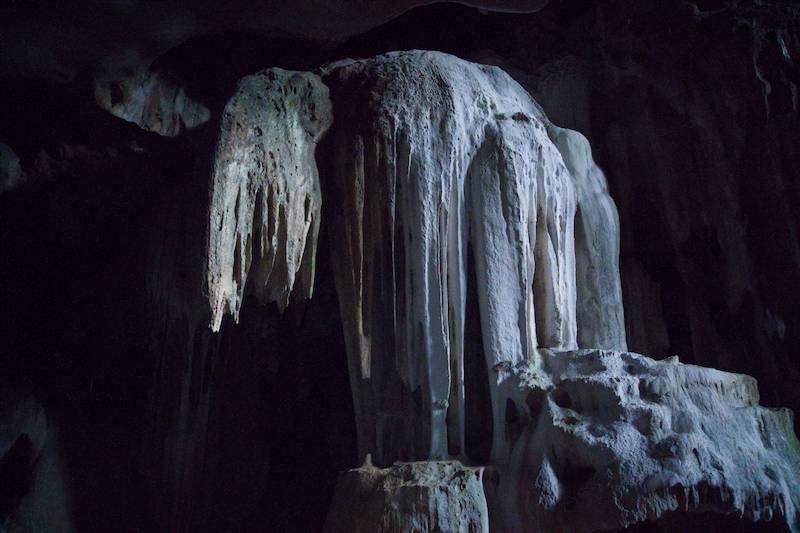
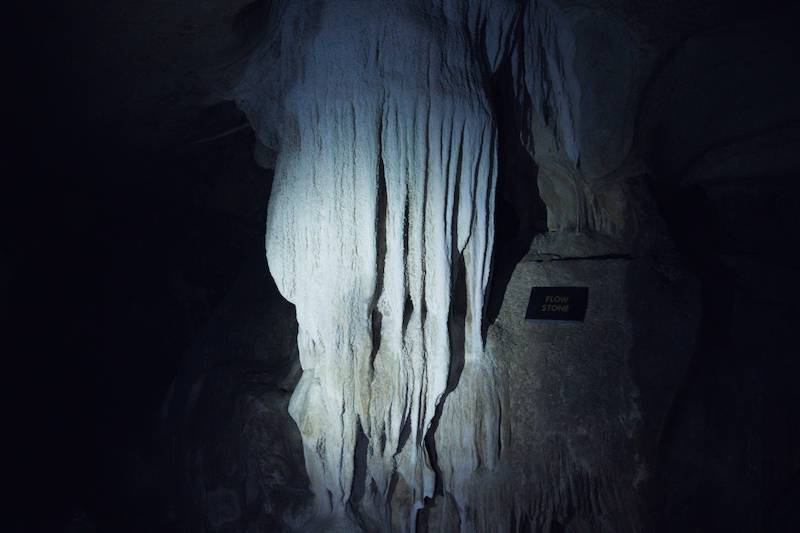
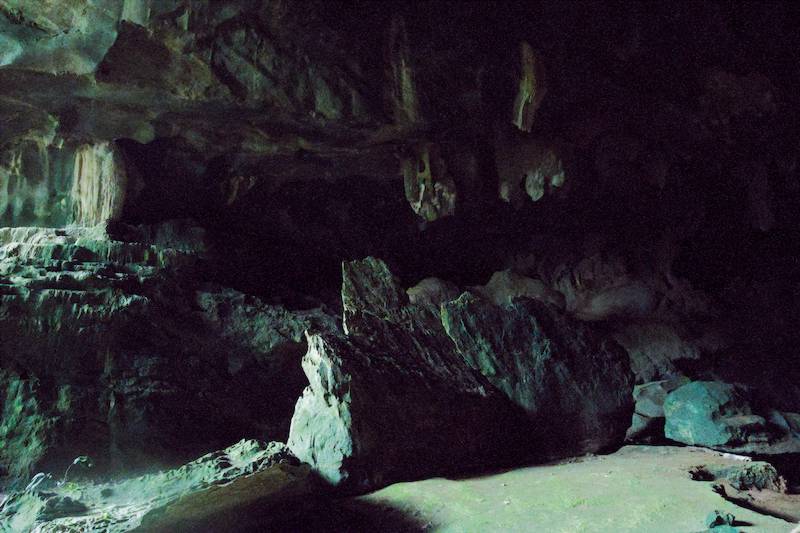
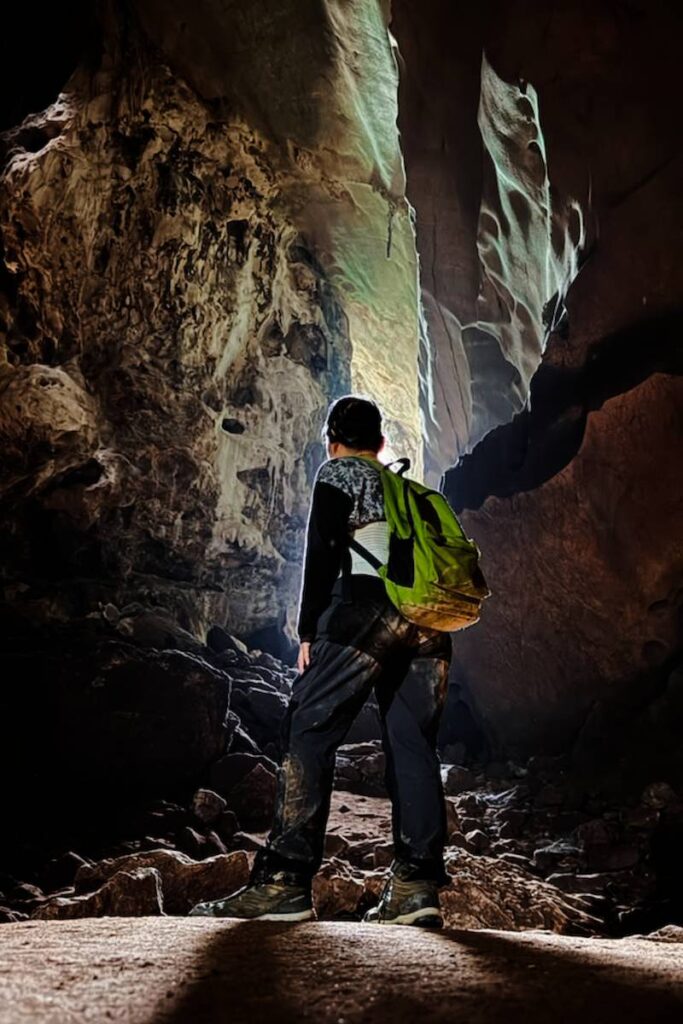
Gua Keris is much more open and spacious, and much brighter than Gua Gelap. The rock formations are also unique, as they have been carved into different shapes by nature.
There is also an excavation site where scientists are trying to find out if humans lived here in the past.
The most prominent feature is the rock formation that looks like a kris standing vertically.
And one thing we love is that the cave is not lit up with colorful lights, which some other caves have. It is so much better this way, allowing the natural light to shine through without the interference of artificial lighting.
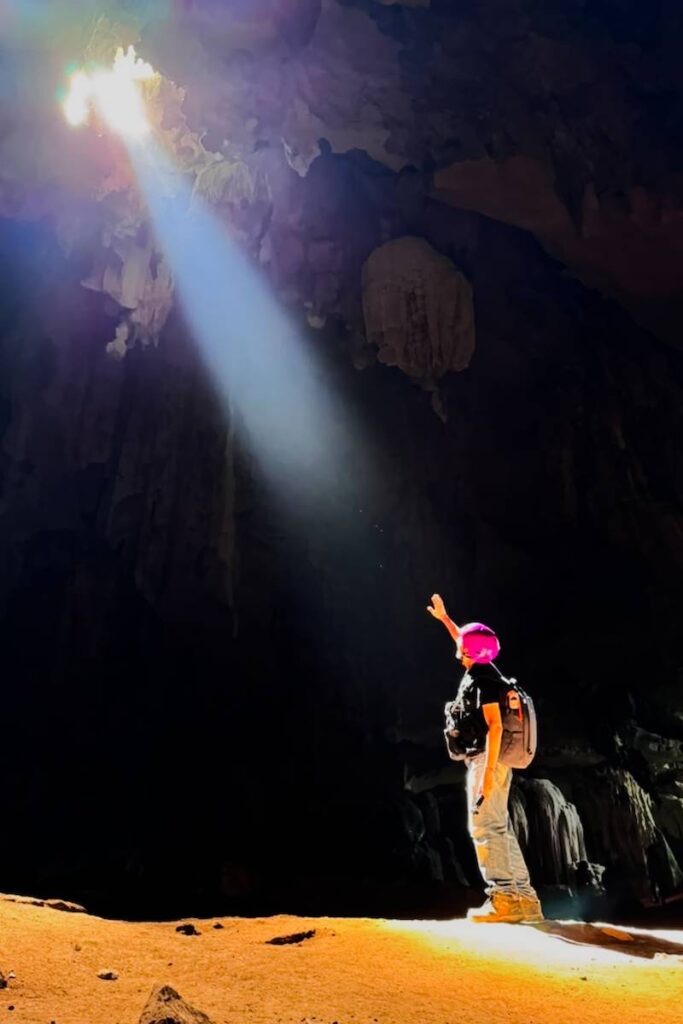
Then we walked further to a place where there was an opening in the roof of the cave. Through it, a ray of light shone down onto the floor of the cave. This natural phenomenon is often called “God’s Light.” We arrived just at the right time, as the ray of light only appears from this position at certain times.
It was a spectacular moment that reminded me of what we had seen in Niah Cave a few years ago, with a similar experience.
We also found what appeared to be dry coral, another reminder that this area was once part of an ancient marine environment.
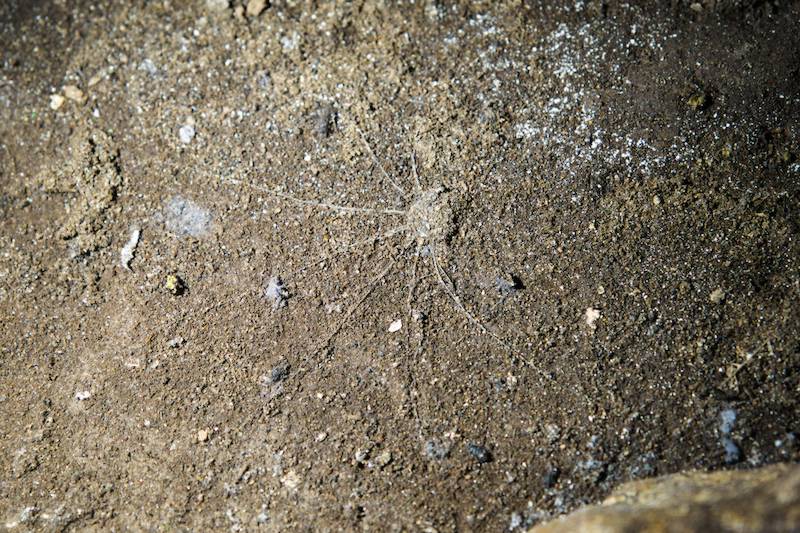
There were also trapdoor spiders and crickets that could be seen easily in this cave. Ijai also showed us Gua Pool and explained to us how it was formed.
Gua Pagar: Fossils Above Our Heads
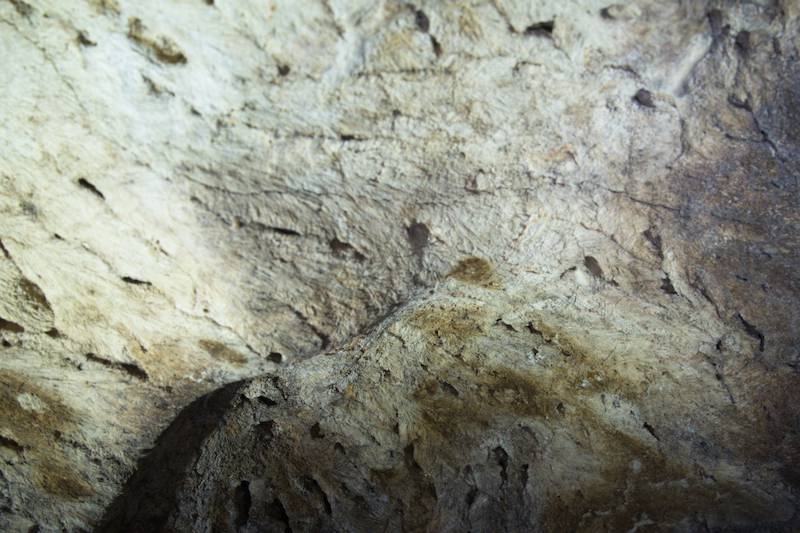
The last cave we visited was Gua Pagar. This cave, for me, was not as spectacular as the two caves we visited just before, but there were still some interesting things to see, including seaweed fossils lining the roof of the cave, right above our heads.
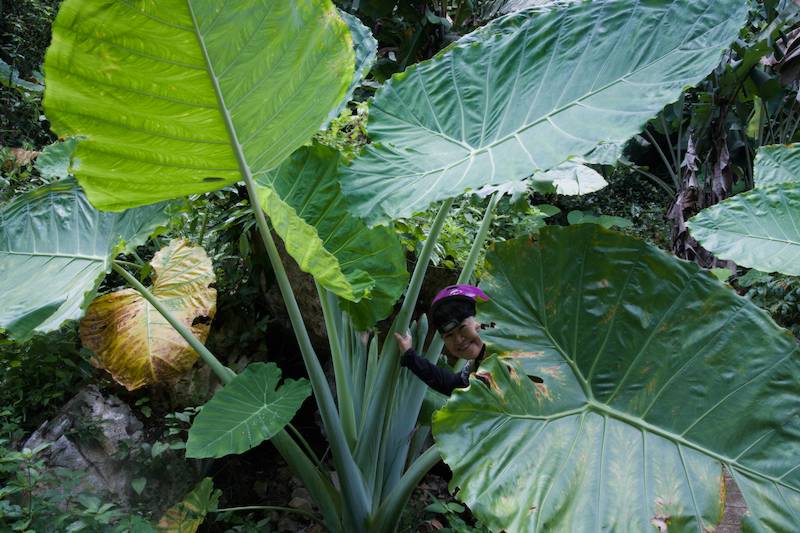
Lastly, we slowly descended the staircase back to the entrance, where there were a few huge leaves called Keladi Gajah.
These were the three caves we visited today. In fact, there is one more cave just across the road called Gua Ikan. However, the Gua Ikan Complex is currently closed to visitors for upgrading work. The closure began on April 1, 2026, and is scheduled to last for 14 months.
Planning a Trip to the Caves in Dabong
If you are thinking about exploring the caves in Dabong, there are a few things worth knowing before you go. Our visit was a guided cave expedition, so the experience was quite different from simply visiting a tourist attraction.
How to Get to Dabong
One of the easiest ways to get to Dabong is by train. The railway passes through this quiet town, and you can alight at Dabong Station. This is how we arrived, and our guide, Ijai, met us at the station before we headed out for our cave expedition.
Where to Stay
Accommodation options in Dabong are limited, and there are currently no proper hotels, so we stayed in a homestay. This is also part of the charm of visiting a place that has not yet been heavily developed for tourism.
Which Caves Can You Visit?
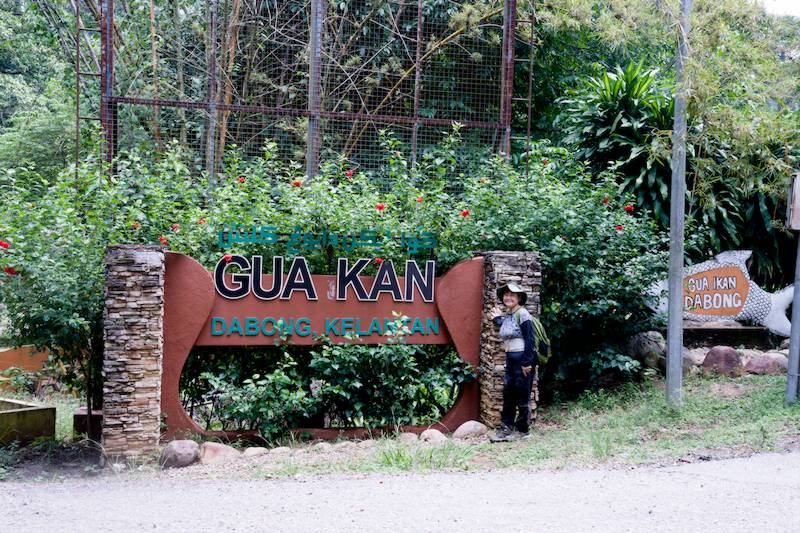
The cave complex includes Gua Gelap, Gua Keris, Gua Pagar, and Gua Ikan. We visited the first three during our expedition.
Gua Ikan was closed to visitors when we visited. The Gua Ikan Complex is currently closed for upgrading work, with the closure beginning on April 1, 2026, and scheduled to last for 14 months.
Do You Need a Guide?
For our trip, we explored the caves with our guide, Ijai. Having someone familiar with the caves made a big difference, especially when we came to the narrow and less obvious entrances and passages.
This is not the kind of cave trip where you simply walk in along a clearly marked tourist trail. Some sections are narrow and require crawling, so having someone who knows the caves is important.
What to Expect Inside the Caves
The caves are very different from one another. Some are relatively open and spacious, while others have narrow passages that require you to squeeze through or crawl.
You may also encounter shallow water, bats, insects, and uneven surfaces. In Gua Gelap, we had to remove our backpacks and squeeze through a very narrow entrance, and I was already wet within the first few minutes.
A headlamp is essential because some sections of the caves can become completely dark when there is no natural light.
What to Wear and Bring
Wear comfortable clothes and footwear that you don’t mind getting wet or dirty. A good pair of shoes with a firm grip is important because the cave surfaces can be uneven and slippery.
A headlamp is also useful, and it is better to have your hands free when negotiating narrow passages. A small backpack is preferable to a large one, especially if you need to squeeze through tight spaces.
Most importantly, be prepared for a real cave adventure rather than a conventional tourist attraction. The experience involves walking through the jungle, climbing stairs, crawling through narrow passages, and getting wet in some sections.
Is It Worth Visiting?
If you enjoy nature, caves, and outdoor adventures, Dabong is well worth considering. The caves are relatively undeveloped, and the experience feels much closer to exploring nature than visiting a heavily developed tourist attraction.
For us, that was exactly what made the expedition so enjoyable.
Our Cave Expedition in Dabong
Looking back at our cave expedition in Dabong, it was definitely worth the time and effort. We truly enjoyed crawling through narrow tunnels, getting wet, and emerging into huge chambers of the caves, surrounded by strangely shaped rock formations.
It felt so pristine and relatively untouched, with hardly any evidence of human intervention or tourism development, except for some stairs and ropes.
If you enjoy nature, exploring caves, looking at spectacular rock formations, understanding the history of these places, and immersing yourself in nature, this is one place that is still relatively underrated in Malaysia and definitely worth a trip.
It is also quite easy to get to Dabong if you can catch a train from somewhere nearby. You can then alight at Dabong Station and begin your adventure from there.
🎬Watch our video shot at three caves
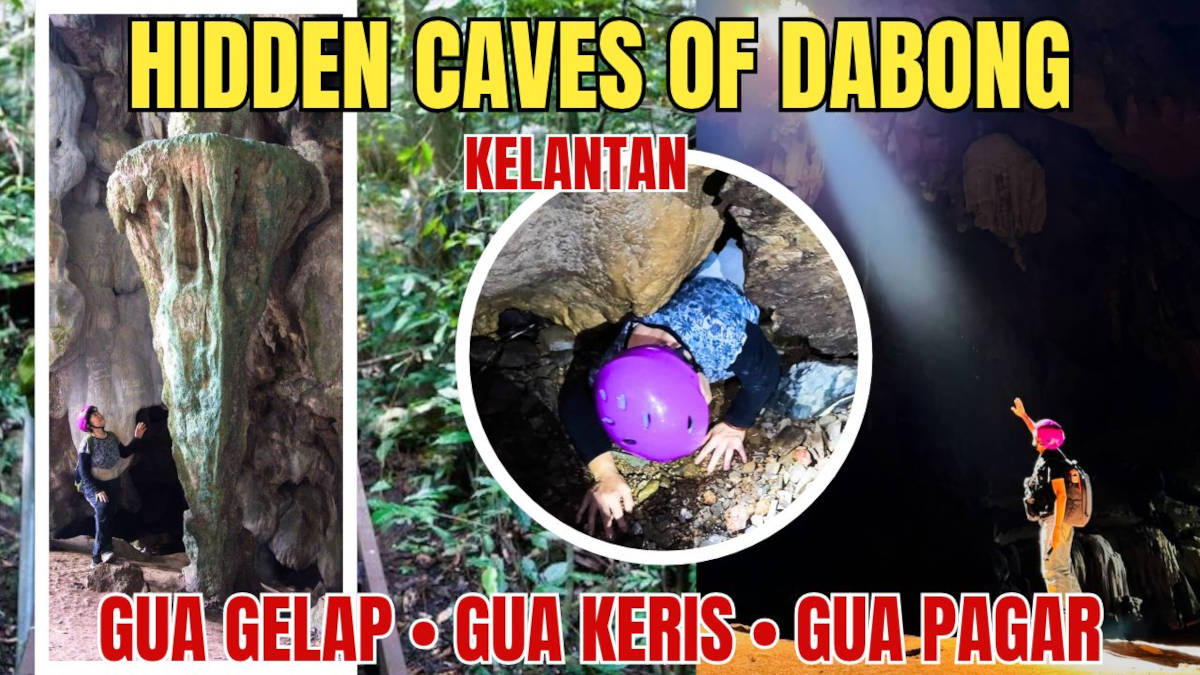
We’ve put together a video from this trip, which you can watch on YouTube by clicking the image below.
Dabong is also famous for its hiking activities to Gunung Stong. Read our hiking story here.


Nice blog travel blog page, happy travel.