
In this part of our journey, we want to take you along as we landed, explored, and took off from Paro International Airport, one of the most thrilling airports in the world. For the full story of our Bhutan adventure, check out our Bhutan Hub Post.
Our trip to Bhutan was short—we spent just six days and four nights—but everything we experienced felt so different from home: the culture, beliefs, lifestyle, architecture, and even Paro Airport.

Preparing for the Flight
Visiting Bhutan wasn’t something we decided on the spur of the moment. We first heard about this country twenty years ago, when a friend returned from a visit. Back then, Bhutan had just opened its doors to international tourists. Everything they described, from the food to the dzongs, from snow-capped mountains to the unique architecture, sounded almost magical.
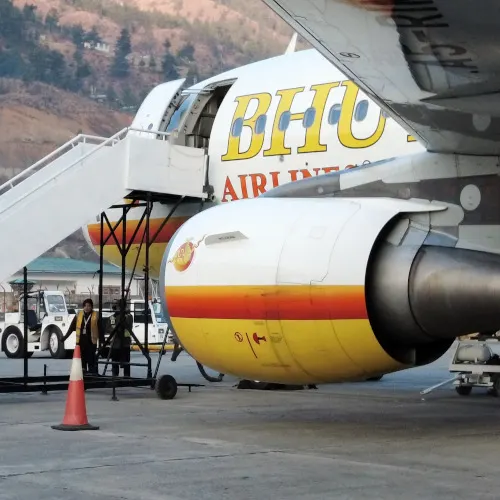
Now, here we were at KLIA2 International Airport, waiting to board Bhutan Airlines, one of only two carriers allowed to land at Paro Airport. The flight would take 4 hours and 20 minutes, and Bhutan is two hours behind Malaysia. Even though it was 4 a.m., our excitement was impossible to contain.
We were on a chartered flight direct to Paro, and we knew this was considered one of the world’s most challenging airports to land at and take off from. We had secured a window seat, eager for our first glimpses of Paro Valley and the Himalayan peaks.
Why Paro Airport Is Considered Dangerous
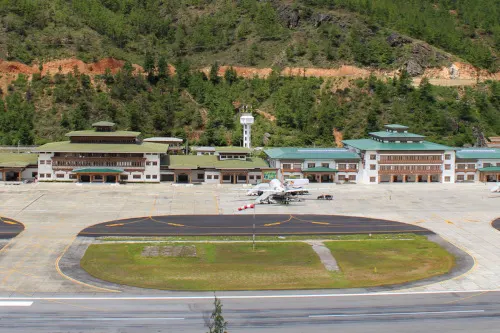
Paro International Airport began operating in 1983. Before that, international visitors could only enter Bhutan by land from India or via treacherous mountain routes. Bhutan has five other airports, namely Bathpalathang, Gelephu, Yongphulla, Bumthang, and Mongar. However, these are used only for domestic flights.
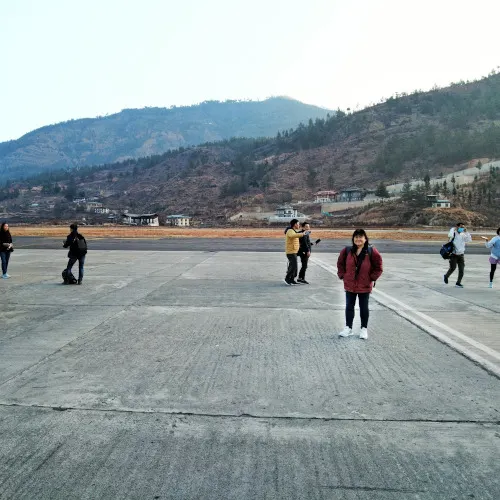
Paro sits 7,300 feet (2,230 meters) above sea level. While it is not the highest airport in the world (that title goes to Daocheng Yading Airport in China at 14,472 feet), it is extremely challenging. Strong winds and a deep mountain valley approach make landing tricky. Pilots must land manually during daylight, weaving between peaks as high as 18,000 feet before descending into the valley. The runway only comes into view about 200 meters before landing, after a sharp 45-degree turn.
The runway itself is only 6,500 feet (1,990 meters) long and 98 feet wide. Pilots need at least 1,500 flight hours, including 500 in mountain flying, along with specialized training that combines simulators and practical experience at Paro. Fewer than twenty pilots worldwide are qualified to land here.
Flying to Paro
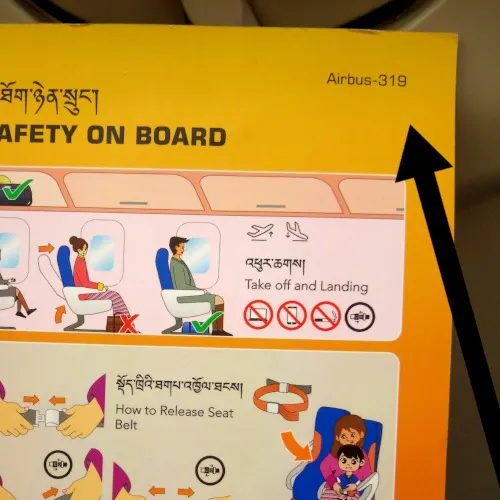
Only two airlines fly to Paro Airport: Drukair (Royal Bhutan Airlines) and Bhutan Airlines. Their planes, the A3219-100 and A320neo, are specially designed for the short runway and high-altitude approach. We flew on an Airbus 319 chartered from Kuala Lumpur, since there is no regular direct flight from Malaysia.
From our window, the view was breathtaking. The plane weaved through towering mountain ranges, descending into the long, narrow Paro Valley. With every turn, jagged peaks, forested slopes, and tiny villages below came into view—a scene so stunning it made the heart skip a beat.
Our First Impressions of Bhutan
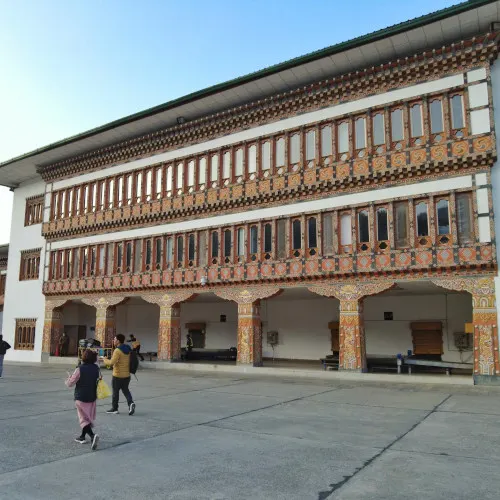
Arriving at Paro Airport, we were immediately stunned. It didn’t feel like an airport at all. The architecture is a masterpiece of traditional Bhutanese design. The roof is topped with a golden spire, the walls are adorned with wooden carvings and sculptures, and inside, the space is vibrant with intricate frescoes, traditional paintings, and detailed woodwork.
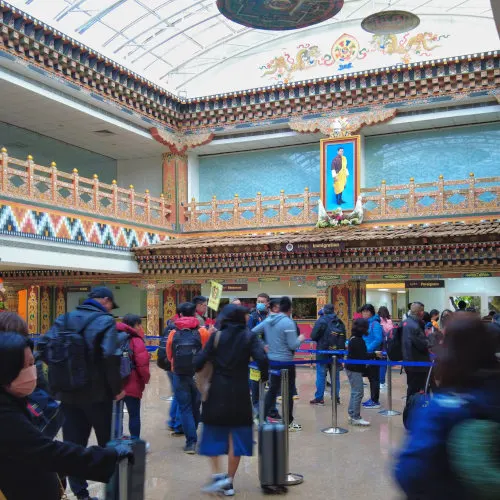
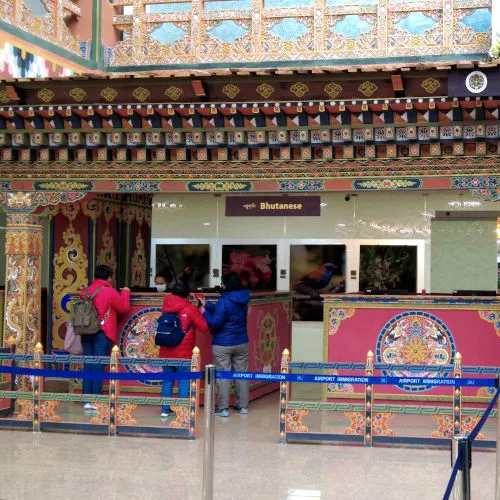
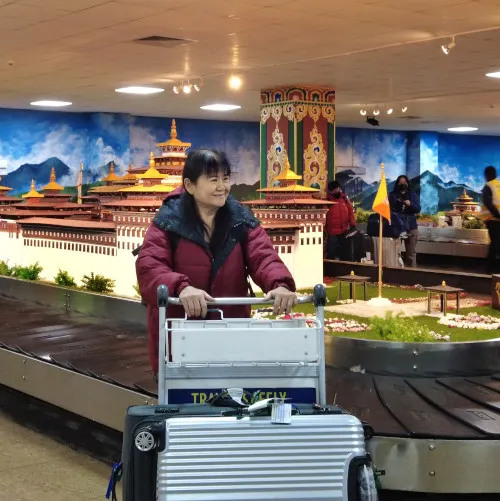
Even with all the modern facilities and technology, the building still radiates a regal, cultural character. For a moment, we almost felt like we had arrived at a historical site rather than an airport.
Exploring Bhutan From Paro
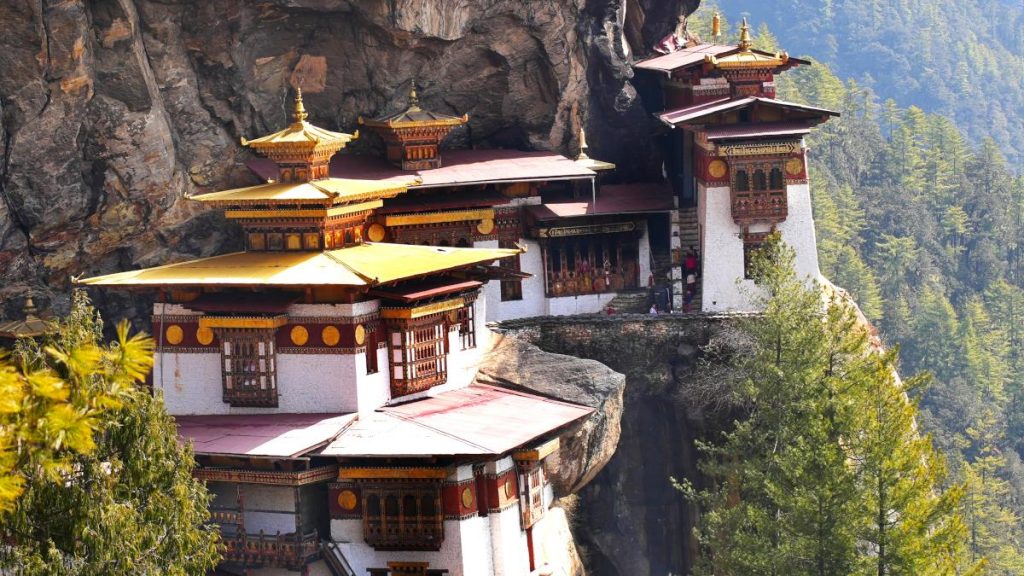
After landing, we kicked off our Bhutan adventure with visits to Tiger’s Nest Monastery, Punakha Dzong, and Chimi Lhakhang. Each stop offered a glimpse into Bhutan’s rich spiritual and cultural heritage, but those first moments at Paro Airport truly set the tone for everything that was to come.
Take-Off: A Last Glance at Paro
We also captured the take-off when leaving Bhutan. As we climbed into the sky, the mountains, villages, and valleys stretched out below us. Our pilot flew manually with remarkable precision, keeping the plane steady despite strong winds. Looking down, the valley seemed impossibly small, while the Himalayan peaks soared around us—a final, unforgettable view of Bhutan before we headed home.
A Journey Unlike Any Other
Paro Airport isn’t just a gateway. It’s the very first taste of Bhutan. From the thrilling approach and landing to the stunning architecture and quiet majesty, it immediately sets the tone for the entire trip. Even the intricate carvings, the golden spire, and the perfectly maintained runway reflect the care and culture that Bhutan is known for.
We couldn’t wait to step out, breathe in the crisp mountain air, and start exploring this incredible kingdom. To follow our full journey, check out our Bhutan 6-Day Itinerary and see all the sights, from Paro Airport to Thimphu, Punakha, and the Tiger’s Nest Monastery.
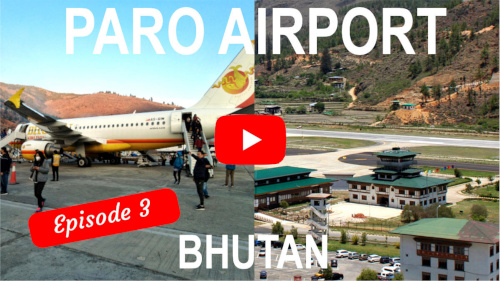
Watch our video shot during the landing and at Paro Airport. 👇👇
If you have read this blog post this far, don’t miss out on the video shot during the landing and at the Paro Airport. Click the image below to watch on YouTube (shot in high definition!).
What a thrilling experience landing at Paro Airport! The breathtaking Himalayan views and the unique architecture of the airport make arriving in Bhutan truly unforgettable. For travellers exploring India and planning their next adventure, arranging convenient transportation in advance can make the journey much smoother. Choosing reliable Airport Cab Services can help make airport transfers and onward travel more comfortable and hassle-free. Thanks for sharing this wonderful travel experience!
Regards,
Deeba
Airport Cab Services
http://www.yanseva.com