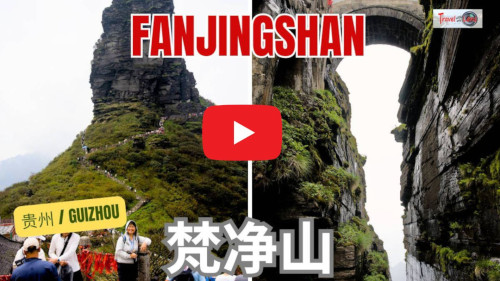
Fanjingshan (梵净山), also known as Mount Fanjing, is one of those places that leaves a lasting impression. Located in Guizhou in southwest China, it is the highest peak in the Wuling Mountains (武陵山脉), standing at about 2,570 meters (8,430 feet). It has been listed as a UNESCO World Heritage Site since 2018.
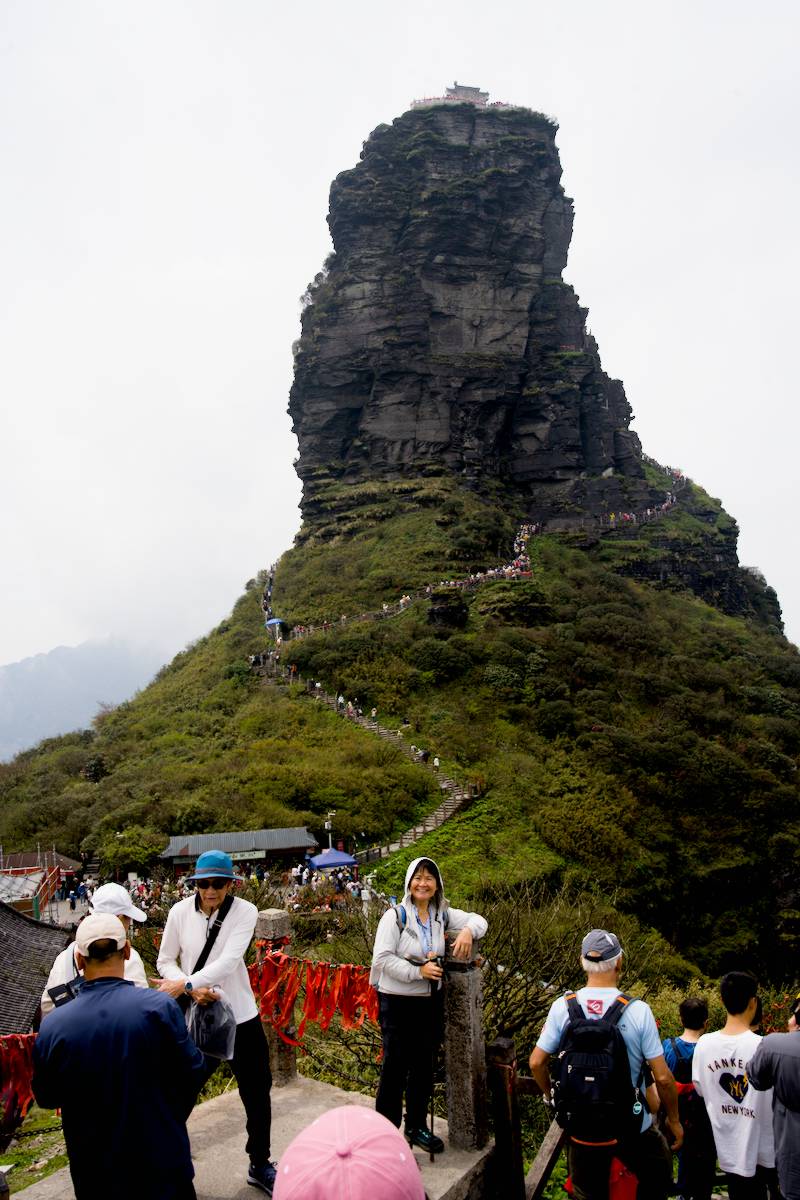
What makes it special is not just its height, but its setting. A dramatic, almost isolated peak rises sharply from the landscape, crowned by two Buddhist temples perched on twin rock summits and connected by a narrow bridge. It’s the kind of view that feels almost unreal when you see it in person.
That’s exactly why we decided to join a tour that included Fanjingshan. Traveling with a tour made everything much easier, as the company handled transportation and cable car tickets, allowing us to focus on exploring and enjoying the experience.
From Mountain Roads to the Cable Car
We set off early in the morning. The coach ride took about an hour, winding through narrow mountain roads before eventually following a river toward our destination. By the time we arrived around 9:00 AM, our guide had already arranged the group tickets.
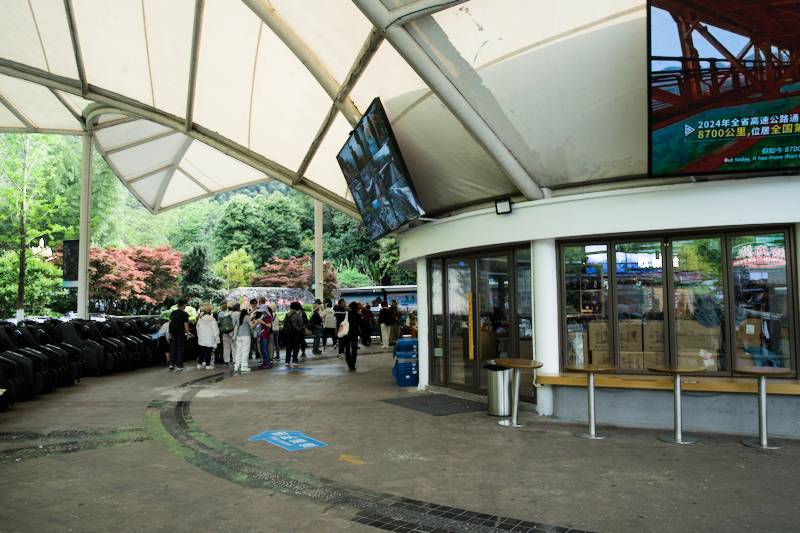
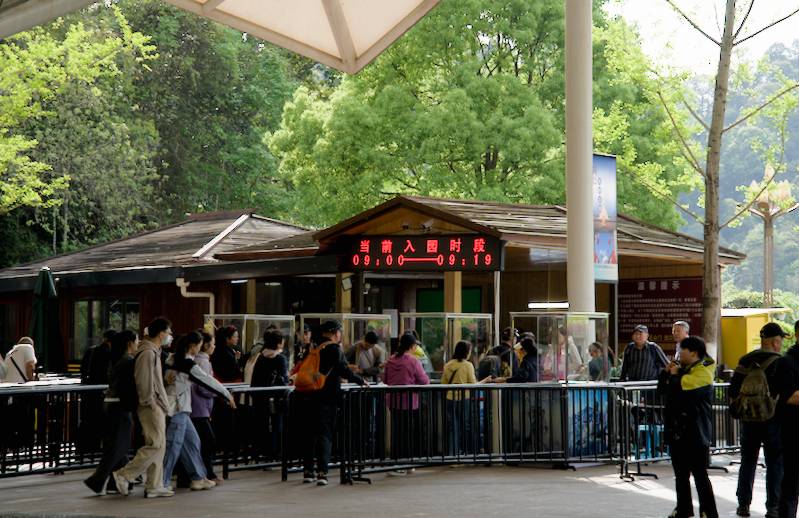
First, we took a shuttle bus to the lower cable car station. From there, we boarded the cable car for the ride up to the upper station.
There was a queue of about 20 minutes at the cable car station. Soon, we stepped into the slow-moving cabin and began gliding over mountain ranges blanketed in dense forest, like a vast green carpet below us.
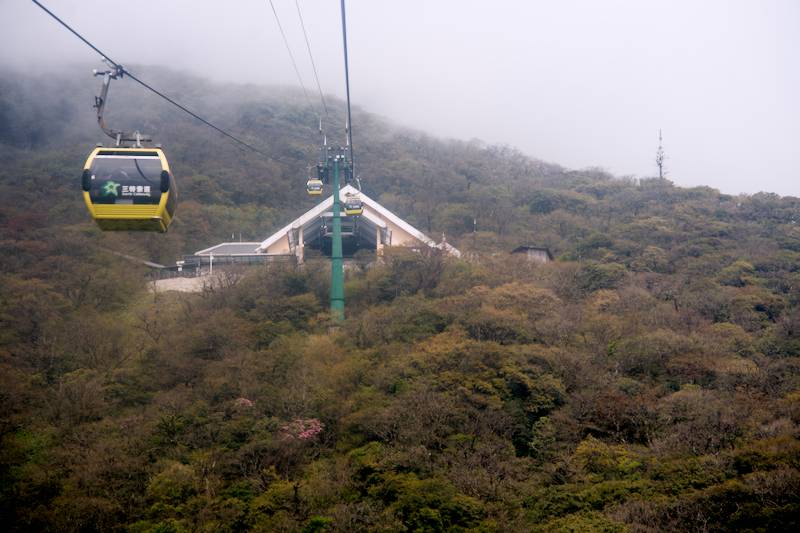
The weather was breezy and overcast, and we knew we were lucky, as the weather at Fanjing Mountain can be unpredictable.
Walking Toward Mushroom Rock
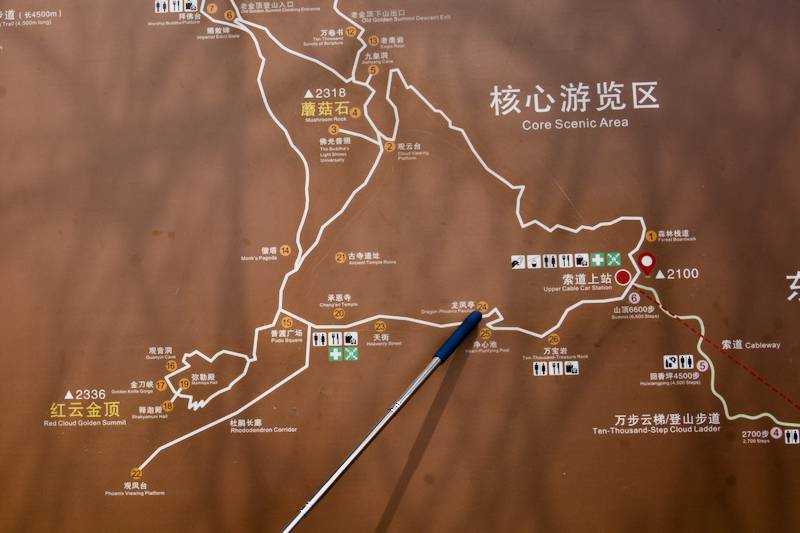
Once we got off the cable car at the upper station, the hike began. This is also the last stop with restroom facilities, so it’s a good idea to use them before heading toward the Mushroom Rock.
The walk takes about 40 minutes at a moderate pace. The path is a well-maintained wooden boardwalk with even steps and handrails on both sides. It zigzags steadily upward, with plenty of rest areas along the way, and some of which also double as viewpoints.
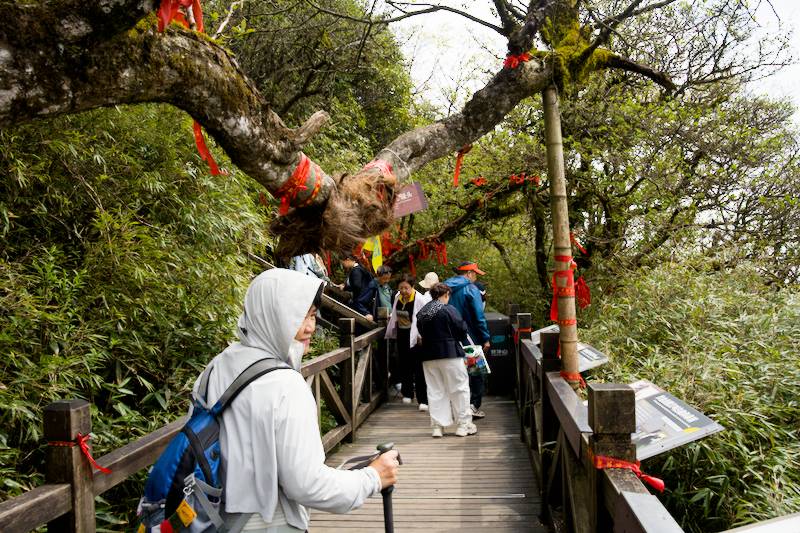
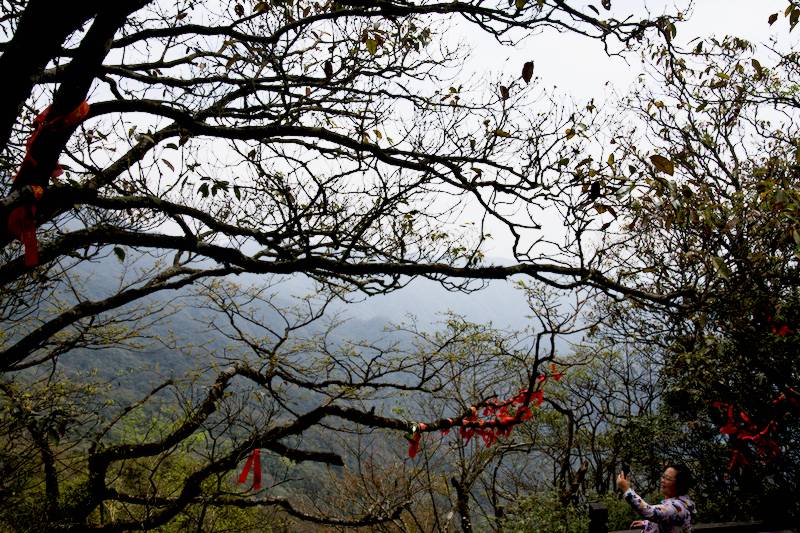
As we climbed higher, the scenery became increasingly misty. In a few sections, tree trunks stretch across the path, so you do need to watch your head.
For those who prefer not to walk, there’s another option. You can hire a Chinese sedan chair, known in Chinese as jiào (轿), where two carriers will take you up to Mushroom Rock. The cost is based on your weight, typically around 5 RMB per catty (about 0.6 kg).
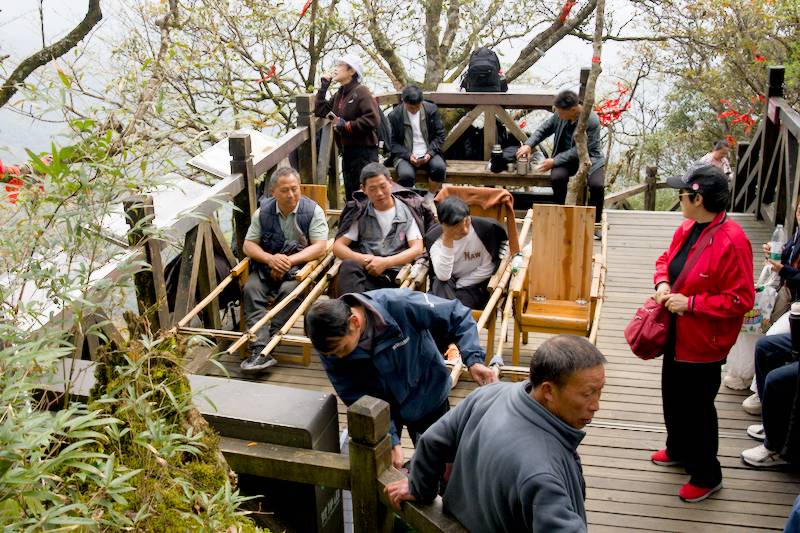
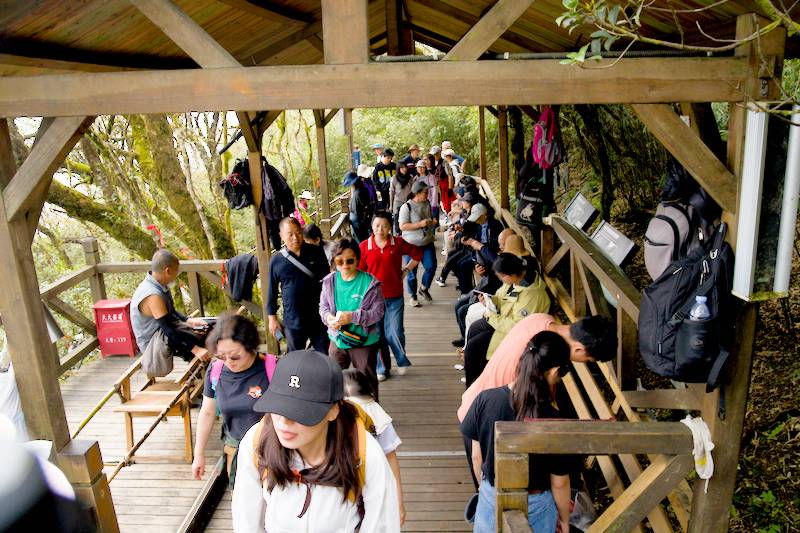
Mushroom Rock and the Path Ahead
The first stretch involved climbing about 1,200 steps to a midway point, where a viewpoint overlooks the well-known rock formation called Mushroom Rock (蘑菇石). (2318 m)
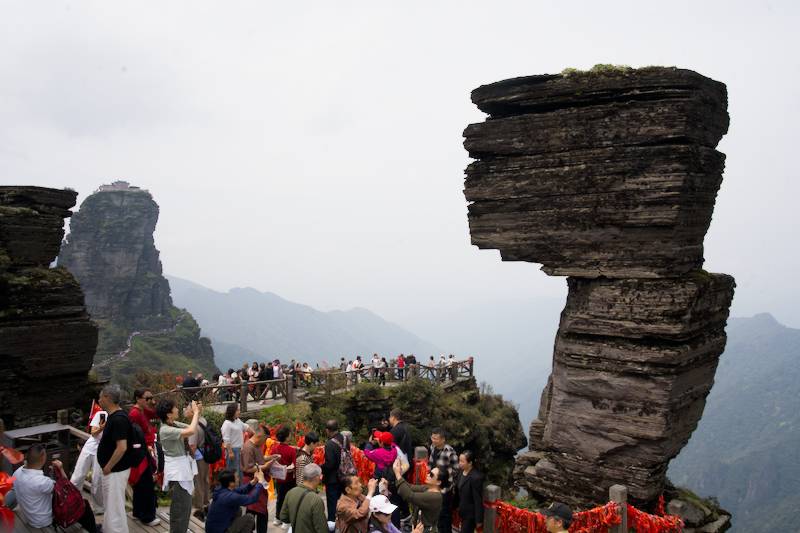
Near the top, we arrived at an open platform where we rested before continuing toward the peaks. From there, it’s just a short one-minute walk to the right to reach Mushroom Rock, along with several other uniquely shaped rock formations nearby.
These rocks are formed through differential erosion. The lower portion is made of a softer material than the top layer, so over time, wind and rain wear down the base more quickly. This leaves a narrow stem supporting a wider top, giving it that distinctive mushroom shape.
We were very fortunate with the weather. With clear skies and no mist, we could see Red Clouds Golden Summit (红云金顶) clearly in the background.
From this area, turning right leads to the Old Golden Summit (老金顶), the highest point of the mountain (2494 m). Due to time constraints, we decided to skip it. Instead, we turned left and followed the path down to a pavilion known as Pudu Square (普度广场).
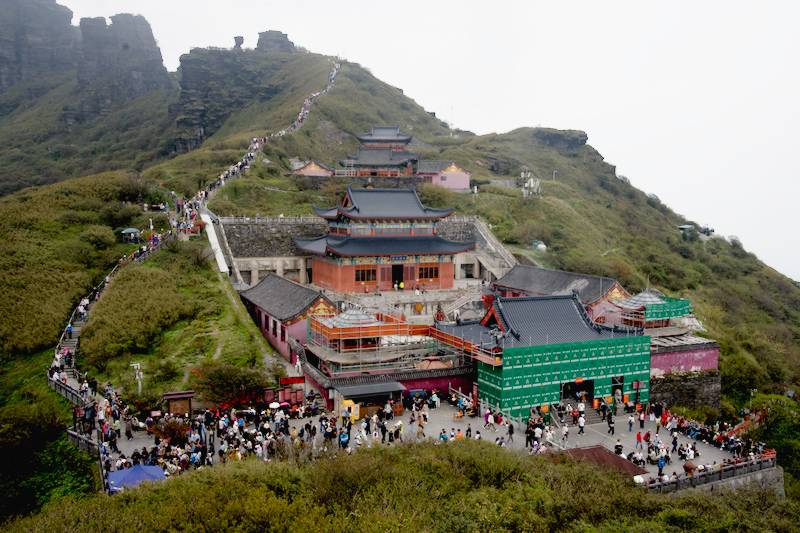
Pudu Square marks the starting point of our second climb, the route up to the Red Clouds Golden Summit (红云金顶), the highlight of the day. At the top, two narrow peaks rise side by side, separated by a dramatic split in the rock just a few feet wide.
Hiking to Red Clouds Golden Summit (红云金顶)
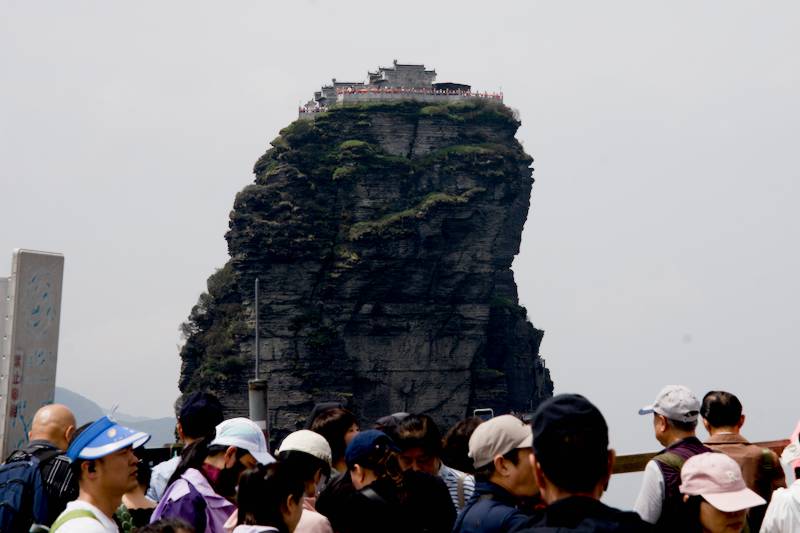
The initial path leading up to Red Cloud Golden Peak (红云金顶) (2,336 m) is well paved, with railings on both sides. It is slightly narrower than the earlier boardwalk but still wide enough for a few people to walk side by side. With the clear weather, we could see the Old Golden Summit (老金顶) clearly in the distance.
As we climbed higher, the path gradually narrowed, especially after a fork where it became a one-way ascending route. The incline also increased significantly. At one point, we had to pause while staff directed the flow of visitors due to the steep terrain.
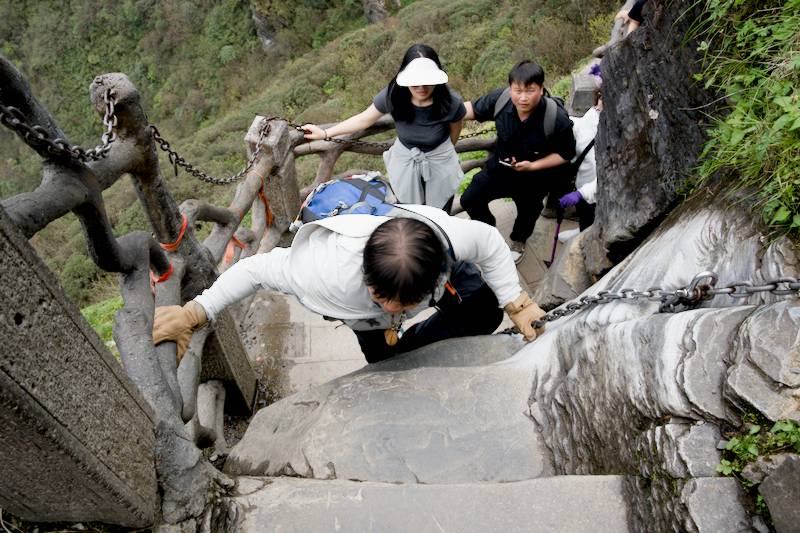
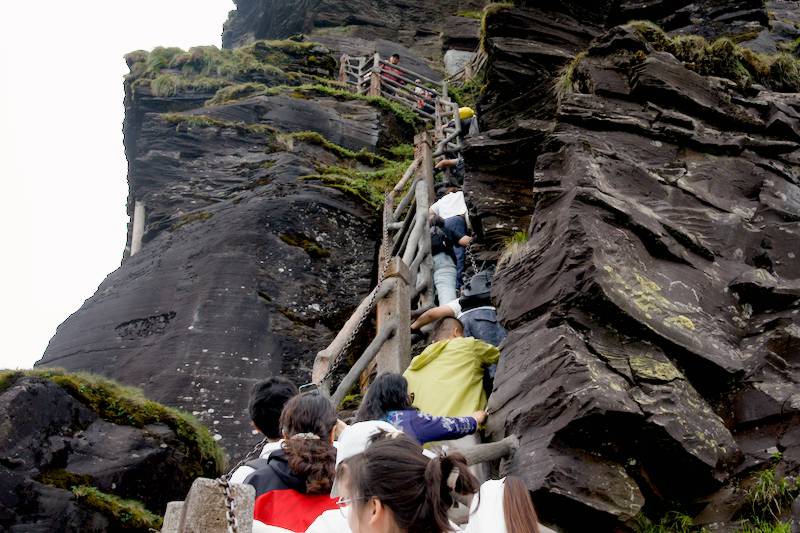
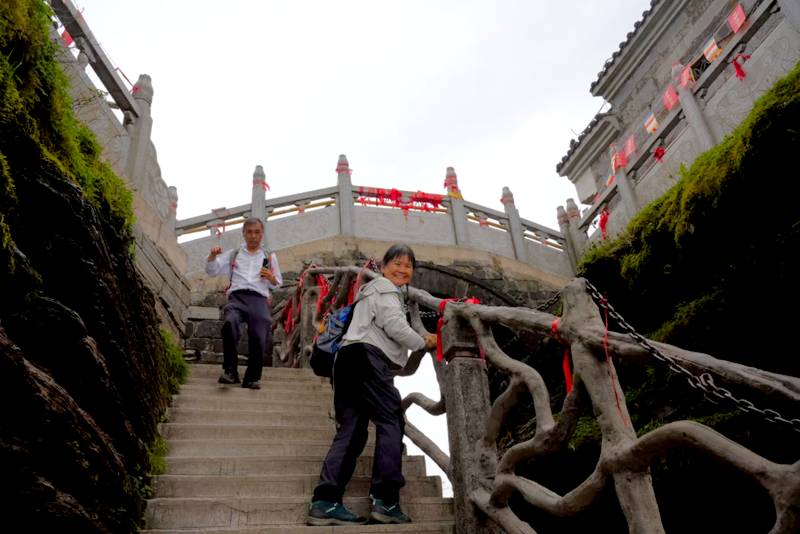
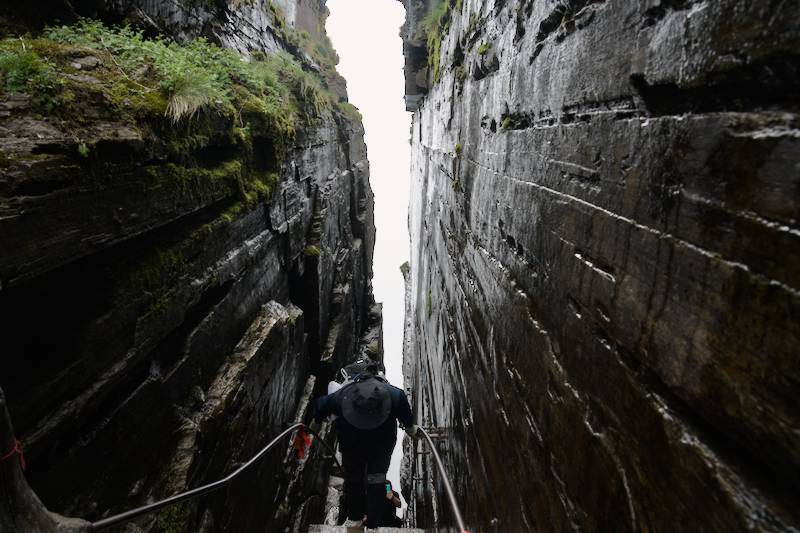
From here onward, the climb required much more effort. Some sections reach an incline of about 70–80 degrees. Stainless steel chains are installed to pull yourself up. The steps are very narrow, sometimes allowing only half a foot placement. In some areas, parts of the rock jut into the path, so we need to bend slightly as we climb.
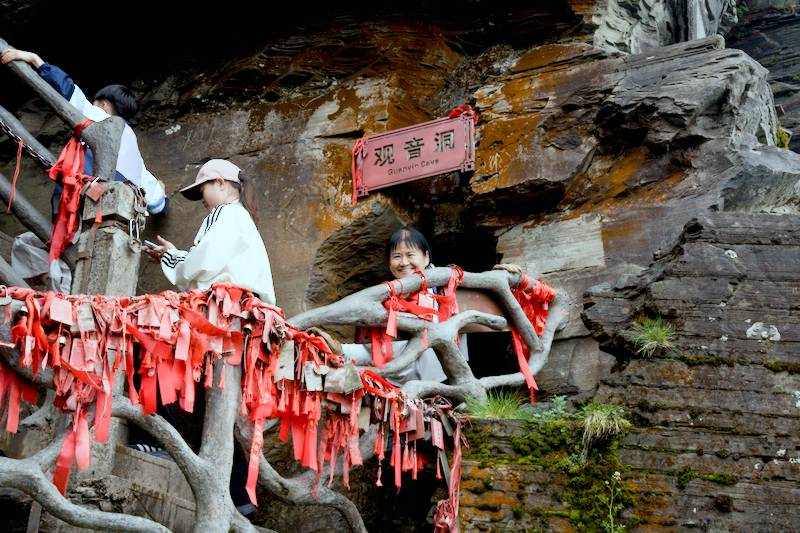
The final stretch is truly stunning. We reached the top by passing through the famous split rock section, where the two peaks rise on either side, separated by a narrow gap just a few feet wide.
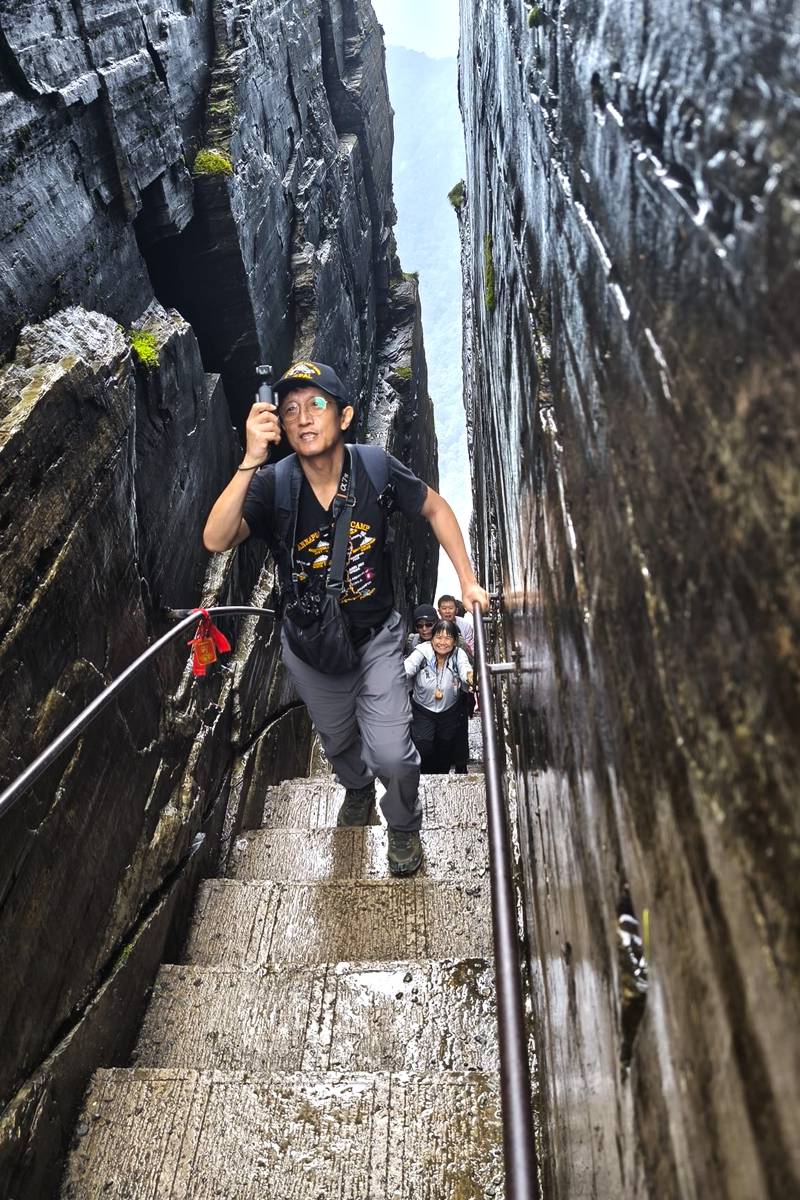
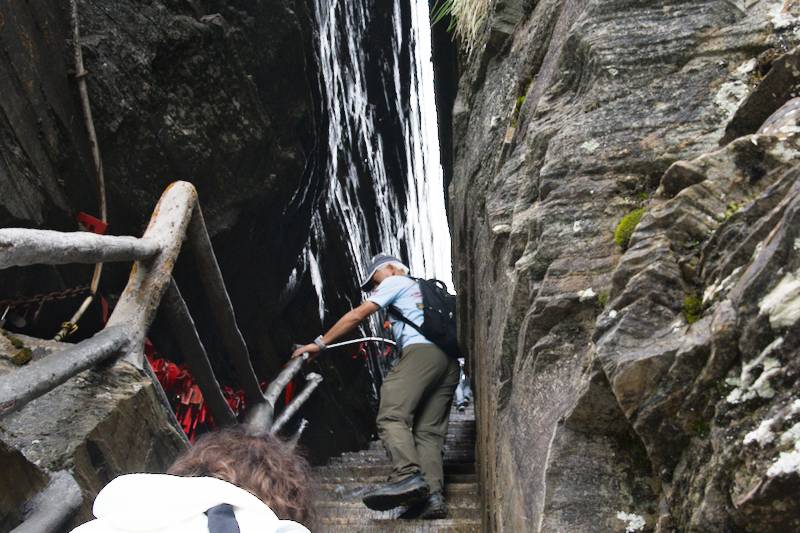
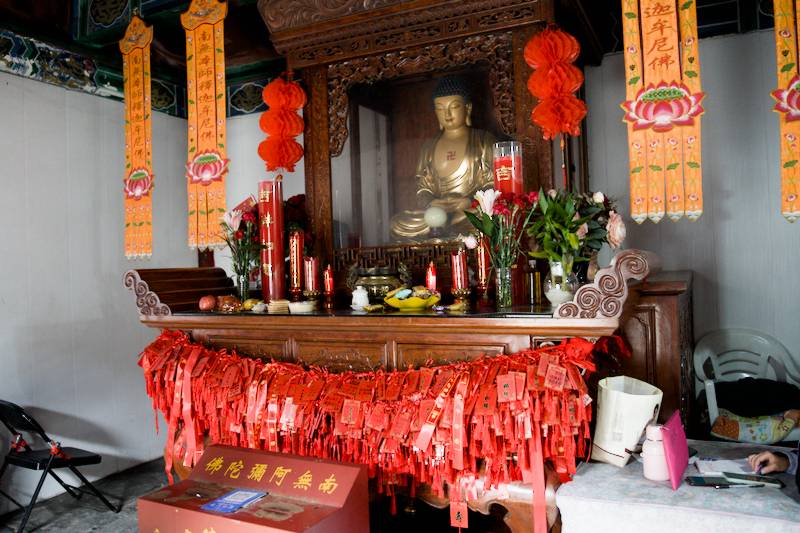
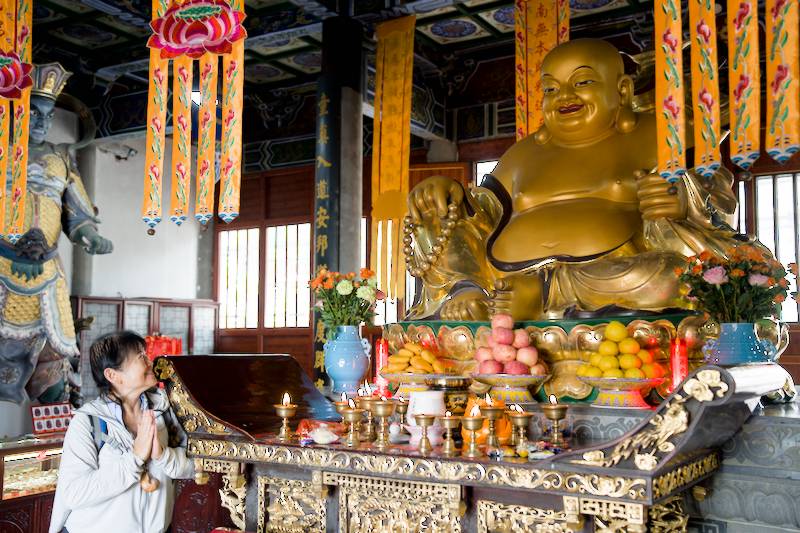
At the summit, there were already many visitors. On the side where we first arrived, there is a temple dedicated to Shakyamuni Buddha (释迦牟尼佛), a small prayer hall housing the statue. After making a small donation, we crossed a narrow bridge called Heavenly Bridge (天桥) to the other peak, where another temple is dedicated to Maitreya Buddha (弥勒佛), the future Buddha.
Heading Back Down the Mountain
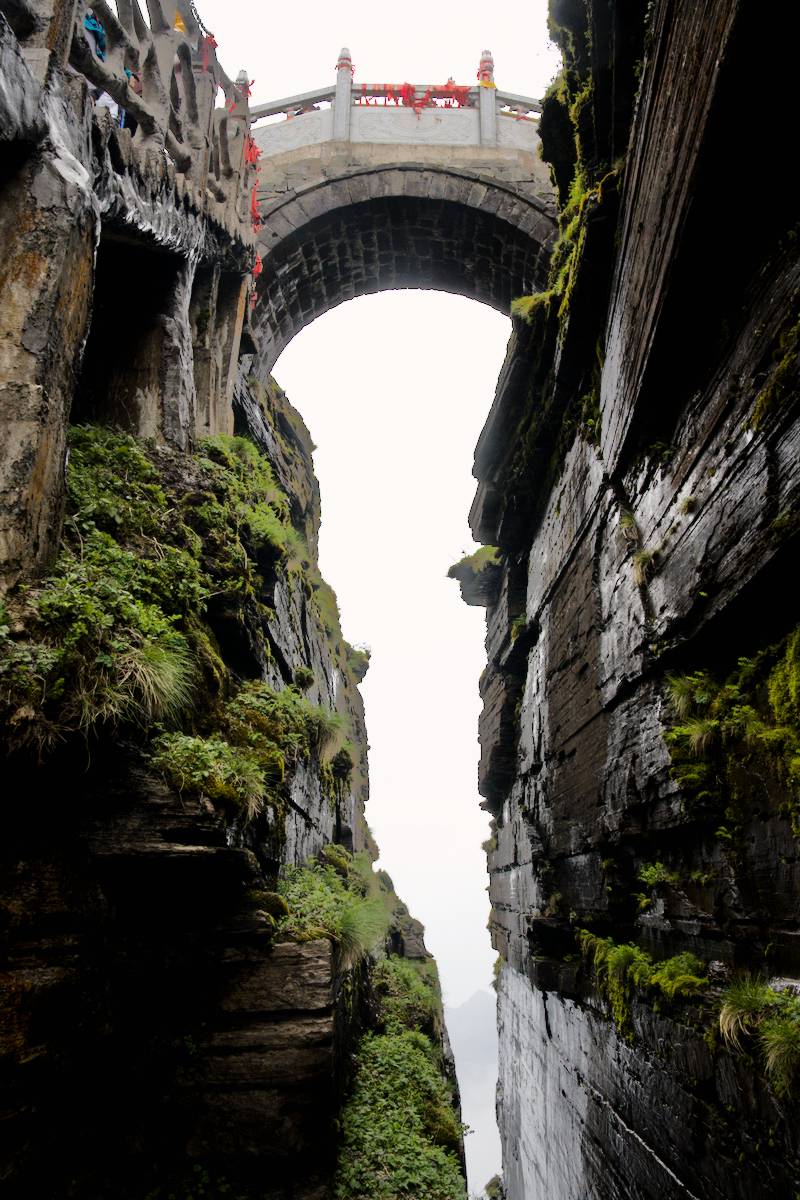
After visiting the temples, we descended via a different one-way route, which was easier and involved about 800 steps. This path eventually led us back to the fork, where we rejoined the wider two-way trail.
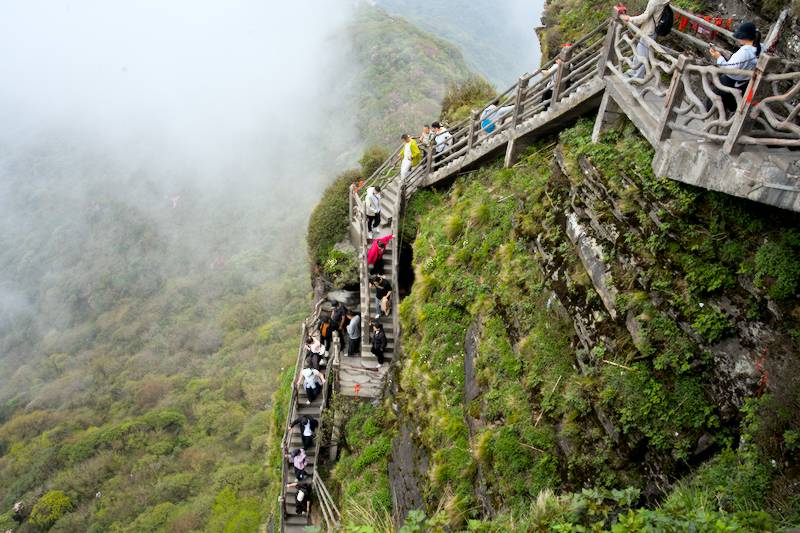
From there, we retraced our steps along the same route we had taken earlier, returned to the pavilion, then visited the Cheng’en Temple 承恩寺 nearby, and continued back to the cable car station of Fanjing Mountain.
At the base of Fanjingshan, near the shuttle bus station, several restaurants are located. We stopped there for a late lunch before continuing to our next destination.
Fanjingshan – Complete Visitor FAQ
Here are some simple, quick answers to the most frequently asked questions about visiting Fanjingshan. This section is meant to give you a clear overview before your trip.
1. How long does it take to get from the nearest town to Fanjingshan, and what is the town’s name?
The nearest major city to Fanjingshan is Tongren City (铜仁). The driving distance is approximately 50–80 km (30–50 miles), which typically takes 1 to 1.5 hours by car. The journey takes over an hour because the route is largely a winding mountain highway.
2. How much are the tickets, and do I need separate tickets for the shuttle bus and the cable car?
Yes, tickets are sold separately. You will need to purchase three distinct tickets: the entrance ticket, the shuttle bus ticket, and the cable car ticket. A rough estimate is around: Entrance + shuttle + cable car: about RMB 200–300. Tour groups normally arrange everything together.
3. How long do I need to cover the whole Fanjingshan: a day or two?
A single long day is sufficient if you start early and take the cable car. The recommended visiting duration is at least 5 hours. If you plan to hike the 6,600+ steps from the base instead of taking the cable car, or if you want a more relaxed pace, consider a two-day trip and stay overnight near the mountain.
4. What are the names of the two ancient temples on top of the summit?
The two temples are on the Red Clouds Golden Summit (also known as the New Golden Summit). They are:
- Temple of the Buddha (释迦殿) – Dedicated to Sakyamuni Buddha (the present Buddha).
- Maitreya Temple (弥勒殿) – Dedicated to Maitreya Buddha (the future Buddha).
5. When were the temples and the bridge between them built?
The original temples were built about 500 years ago during the Ming Dynasty, though many structures have been rebuilt or restored over time. The famous narrow connecting bridge is a modern reconstruction built as part of scenic restoration and safety works in recent development years (not an ancient structure).
6. Is it dangerous to go up to the summit? How hard is it?
It is not considered dangerous for normal visitors, but the final ascent is very steep and requires caution.
The climb is not long in distance (the vertical rise is only about 100m), but it is incredibly steep. The final section involves pulling yourself up a near-vertical stone stairwell using metal chains on both sides. The incline is around 70 to 80 degrees. It becomes a single file, and you must hold metal chains for support
7. Are there times you are not allowed to go up (due to mist, rain, snow)?
Yes, the summit is frequently closed for safety during the rainy season. Because the climb is so steep and the stone steps become extremely slippery when wet, park authorities will close the Red Clouds Golden Summit trail during heavy rain, snow, fog, or strong winds.
8. What is inside the two small temples at the summit?
The temples are very small (each hall is roughly 5.4m x 5.55m) and are primarily stone structures. Inside, you will find statues of the Buddha (Sakyamuni in one, Maitreya in the other) and an altar for prayer.
9. Why did my guided trip not include going to the Old Golden Summit?
There are two peaks: the famous “Red Clouds Golden Summit” (the one with the two temples and the bridge) and the “Old Golden Summit” (also known as Phoenix Mountain). Most tourists prioritize the Red Clouds Golden Summit because it is the iconic “must-see” photo spot. If your trip did not include the Old Golden Summit, it is likely because it is a separate, steep climb that takes significant extra time and physical effort.
10. I did not see the front view of the two temples as shown on the internet. Where was that photo taken?
The classic “front view” photo showing both temples perfectly with the bridge between them is taken from a distance using a drone or from the top of the Old Golden Summit. You cannot stand in front of both temples at the same time, as you are standing on one of them. To get that iconic shot, you need an aerial perspective or to be on the opposite peak.
11. How frequent is the shuttle bus within the Fanjingshan area?
The shuttle buses run frequently, approximately every 15 minutes during operating hours. The ride from the entrance gate to the cable car station (or hiking trailhead) takes about 20 minutes.
Check out another top tourist attraction in Guizhou, China, Wujiangzhai International Tourism Resort.
🎥 Watch our Video at Fanjingshan
We’ve put together a video from this trip, which you can watch on YouTube by clicking the image below.