Punakha Dzong, also known as Pungthang Dechen Phodrang (“Palace of Great Happiness or Bliss”), is one of Bhutan’s most beautiful and historic dzongs. On our day trip from Thimphu, we explored its courtyards, intricate murals, and rich history. This guide shares our first-hand experience, including how to get there, what to see, and the historical and spiritual significance of the dzong. For the full six-day itinerary in Bhutan, see our Bhutan Travel Guide: A Six-Day Itinerary and First-Hand Experience.
Getting to Punakha Dzong from Thimphu
We traveled by bus from Thimphu to Punakha, passing through the scenic Dochula Pass. The journey takes about two hours. Along the way, the scenery gradually shifts from the bustling capital to the quieter Punakha Valley, with lush rice fields, small villages, and winding mountain roads. The ride itself is already a highlight and gives you a first glimpse of Bhutan’s calm rhythm of life.
Crossing Bazam Bridge to Punakha Dzong
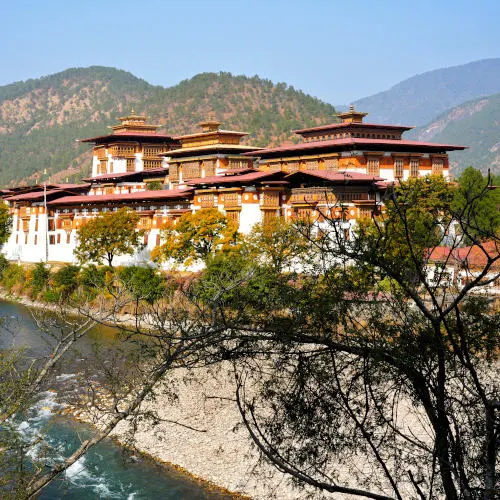
Punakha Dzong sits at the confluence of the Pho Chhu and Mo Chhu rivers. We crossed the Bazam Bridge, a wooden structure that frames the dzong beautifully against the river and surrounding mountains. Even before entering, the dzong’s quiet presence and elegant architecture left a lasting first impression.

Exploring the Courtyards of Punakha Dzong

The Outer Courtyard
The outer courtyard serves as the administrative center. Here, we saw a large white Victory Chorten and a bodhi tree. In one corner, there is a shrine dedicated to Tsochen, the queen of the naga (snake spirits). The open space felt peaceful, giving us a moment to pause before exploring further.
The Middle Courtyard
The middle courtyard is reserved for the monks and contains the main temple and their living quarters. Inside, golden statues of the Buddha and Guru Rinpoche create a spiritual atmosphere. This area remains very much alive with daily monastic life.
The Inner Courtyard
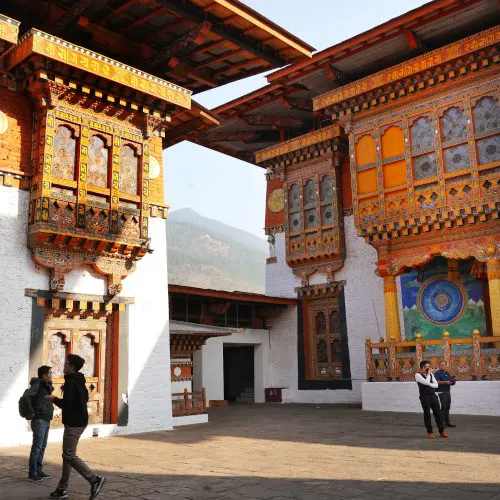
The inner courtyard is the most sacred part of the dzong. It houses the sacred remains of Zhabdrung Ngawang Namgyal and the terton Pema Lingpa. At the south end stands the Kunrey, a large assembly hall supported by 54 pillars. The courtyard is filled with intricate carvings in gold, red, and black, reflecting the incredible craftsmanship of Bhutanese builders.


Art, Murals, and the Central Tower
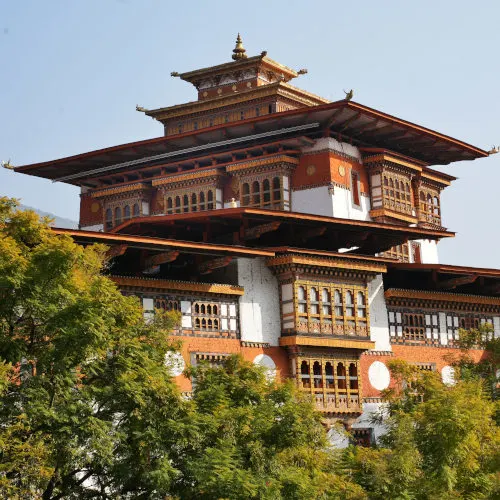
At the heart of the dzong is the six-story Utse tower. From the towering structure down to the smallest details, the dzong showcases the skill of Bhutanese artists. The walls feature carvings and murals depicting Bhutanese history, folklore, and stories from the life of Guru Rinpoche. Walking through these spaces feels like reading history through vivid images.


History of Punakha Dzong
Built from 1637–1638 by Zhabdrung Ngawang Namgyal, the leader who united Bhutan, Punakha Dzong served as the administrative center of the Punakha District. In the 19th century, it became the winter residence of the Dratshang, Bhutan’s monastic body. Today, Punakha is still considered the winter capital, with the head of the clergy residing here during colder months.
In 2011, the dzong hosted the royal wedding of King Jigme Khesar Namgyel Wangchuck and Jetsun Pema. It has also been the site of Bhutan’s first National Assembly. Despite its age, Punakha Dzong remains a living center of administration and religious life.


Notes and Background
- Pema Lingpa (1450–1521) was a famous terton, a Buddhist treasure finder, revered for discovering termas left by Guru Rinpoche.
- Zhabdrung Ngawang Namgyal (1594–1651) is considered Bhutan’s founding father. His remains are preserved in the Machey Lhakhang, accessible only to the king, Je Khenpo, and two guardian lamas.
- The oldest dzong in Bhutan is Rinpung Dzong, and the largest is Trongsa Dzong.
- Punakha served as Bhutan’s capital from the 17th century until the mid-19th century.

Tips for Visiting Punakha Dzong
- Wear comfortable shoes; there are wooden stairways and courtyards to navigate.
- Photography is generally allowed in the courtyards, but not inside the temples.
- Combine the visit with the nearby Chimi Lhakhang for a full-day trip.
- Stop at Dochula Pass on the way for breathtaking views and photo opportunities.
Our Experience at Punakha Dzong
Punakha Dzong is more than just a building; it is a living testament to Bhutanese culture, religion, and craftsmanship. Walking through its three courtyards, admiring the murals, and observing monastic life gives you a profound sense of Bhutan’s history and spirituality.
For those exploring Bhutan, Punakha Dzong is a must-visit site on a day trip from Thimphu. For the full itinerary, including Tiger’s Nest, Dochula Pass, and Thimphu highlights, check out our Bhutan itinerary for a six-day tour.

Watch our video shot during our trip to Punakha Dzong. 👇👇
If you have read this blog post this far, don't miss out on the video shot during our trip to Punakha Dzong. Click the image below to watch on YouTube (shot in high definition!).