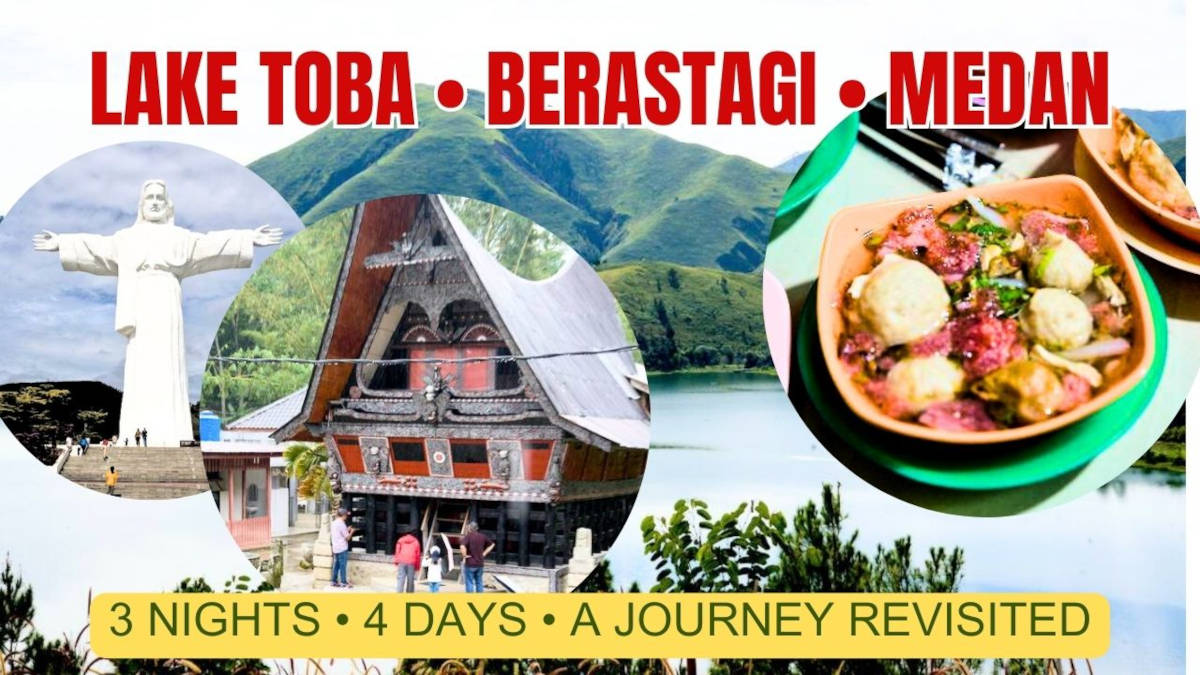
Lake Toba Berastagi Medan Itinerary: 3-Night, 4-Day Adventure
Lake Toba was our very first overseas trip together. Thirty-five years later, as we flipped through old photographs, a thought struck us: why not revisit this journey and see how much has changed? Could we rediscover the magic of Lake Toba, Berastagi, and Medan, and notice what still feels familiar after all these years?
The idea quickly turned into plans. We booked a three-night, four-day trip, eager to explore again and find out how time has reshaped both the place and ourselves.
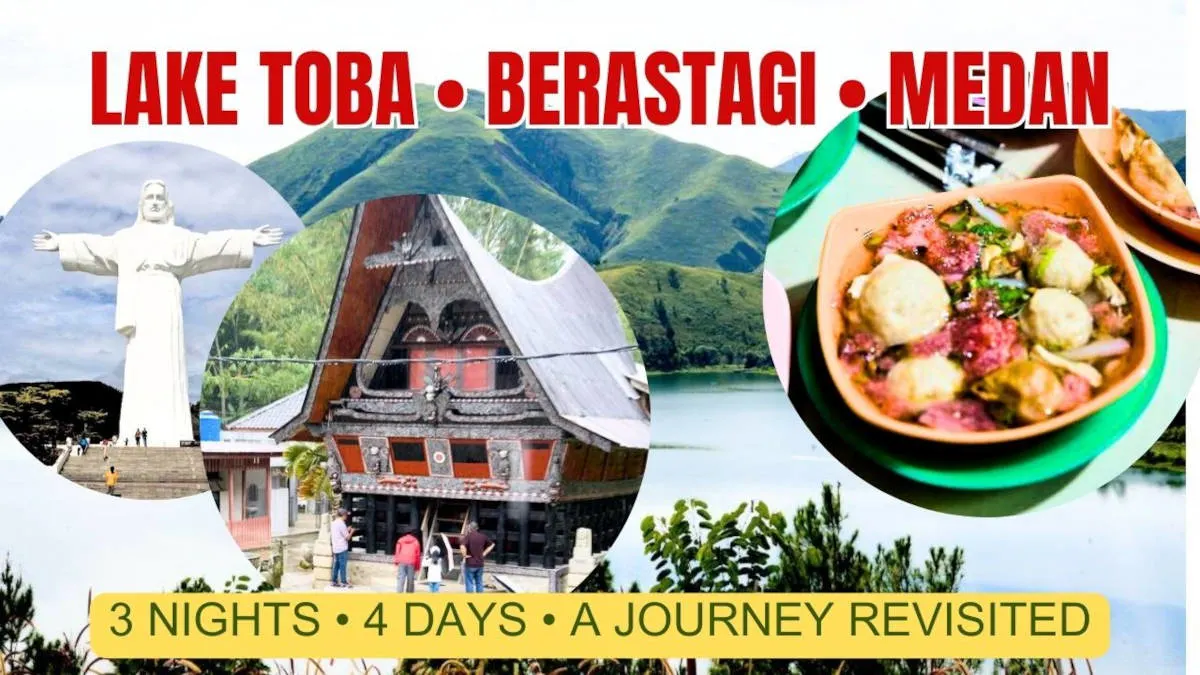
Below is the itinerary we followed for our three nights and four days visit to Lake Toba, Samosir Island, Berastagi, and Medan, highlighting what remains timeless and what has transformed beyond recognition.
Day1: Lake Toba & Samosir Island
We landed at the modern and spacious Kualanamu International Airport, a far cry from the old Polonia Airport we had used 35 years ago.
From Kualanamu Airport to Lake Toba
The new airport is spacious, modern, and well-organized. I immediately feel how much this place has evolved over the decades.
We were greeted by our guide, who also served as our driver, and we proceeded straight toward Lake Toba.
Sibaganding Monkey Park
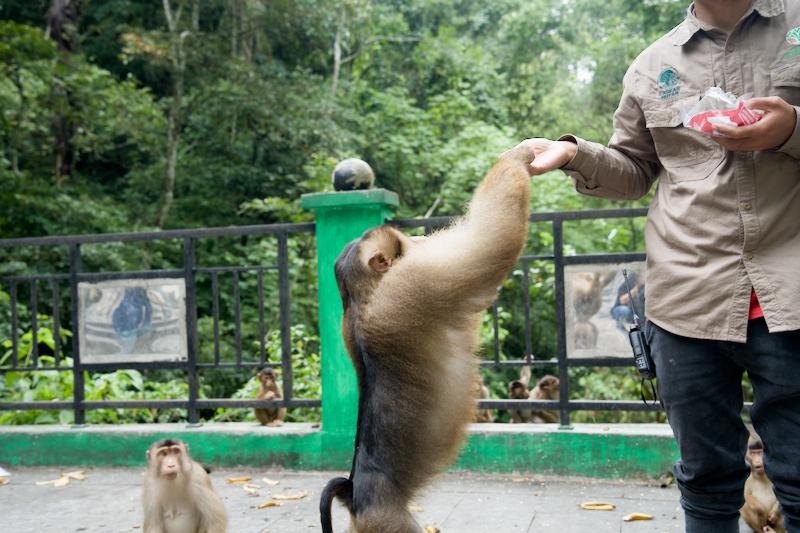
Before arriving at Lake Toba, we made a quick stop at Sibaganding Monkey Park, a small roadside spot that is home to plenty of monkeys.
Our tour coach pulled over at a simple entrance, and we began walking up a cemented path that climbed gently uphill. The walkway, still damp from recent rain, was dotted with moss, making each step cautious.
A man named Umar began a unique bond with the monkeys. He had his own way of communicating with them. Whenever he blew a horn made from real buffalo horn, the monkeys would appear and gather around him for food. Over time, this became his daily routine, and today the tradition continues through his son.
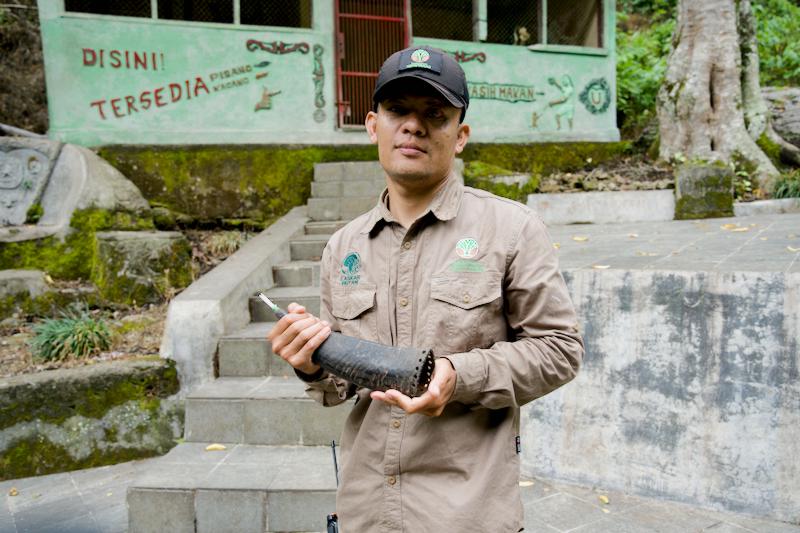
When his son blew the horn, monkeys began leaping out from the surrounding trees, making their way toward a small platform at the top of the path. He placed peanuts on his palm, and the monkeys came forward to take them. Surprisingly, they were rather orderly and rarely fought among themselves.
I decided to give it a try, and it was honestly quite fun. Their claws were not as sharp as I had imagined, and the experience was more delightful than intimidating.
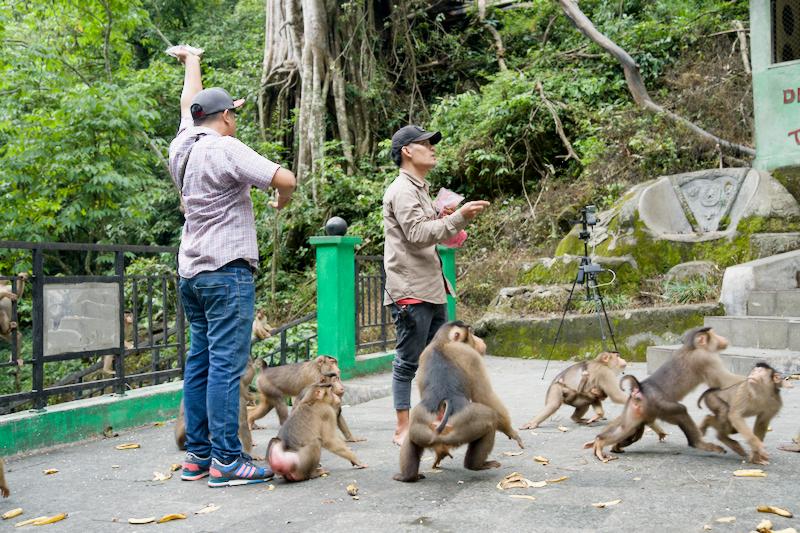
After thanking Umar’s son, we continued our journey and headed toward Samosir Island.
Tomok Village & Batak Heritage
Tomok Village is one of the most visited spots on Samosir Island near Lake Toba. The people living in Tomok are mainly from the Batak Toba tribe, and their traditions and culture are still very much reflected in the village today.
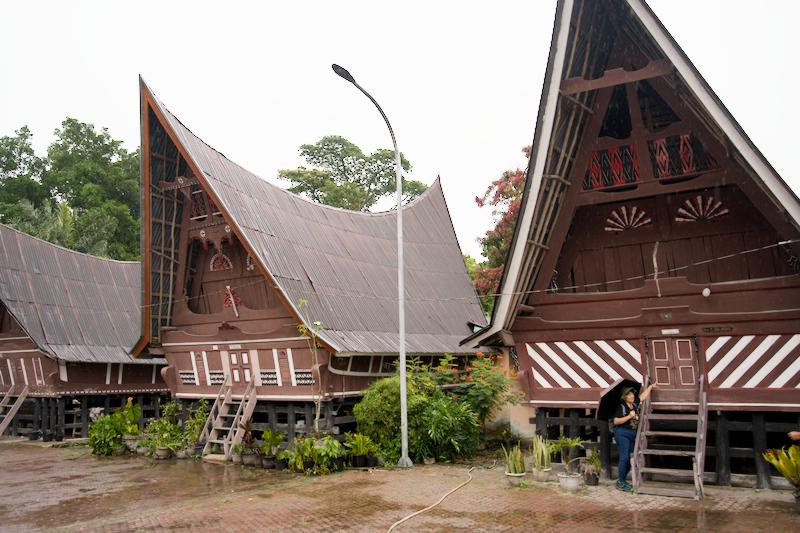
Close to the parking area, there are several traditional Batak houses on display. These wooden houses showcase the traditional Batajk design. Their steep, curved roofs and bold red, black, and white patterns make them stand out.
Pasar Tomok
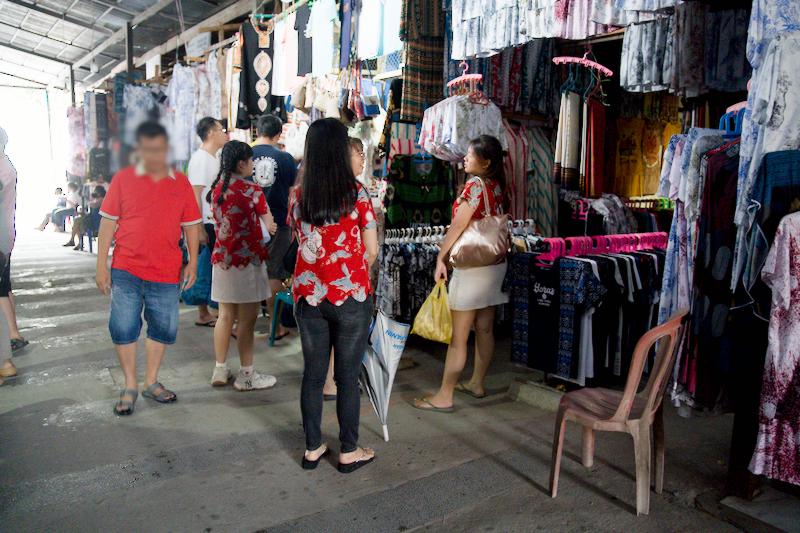
We then enter the Pasar Tomok, a simple souvenir street that caters mainly to tourists. Unfortunately, there was an electrical issue that day, so the area felt rather dim and unusually quiet, with only a handful of visitors strolling through. Even so, we took our time browsing and picked up a few fridge magnets as small keepsakes before heading to the Batak Museum.
Batak Museum
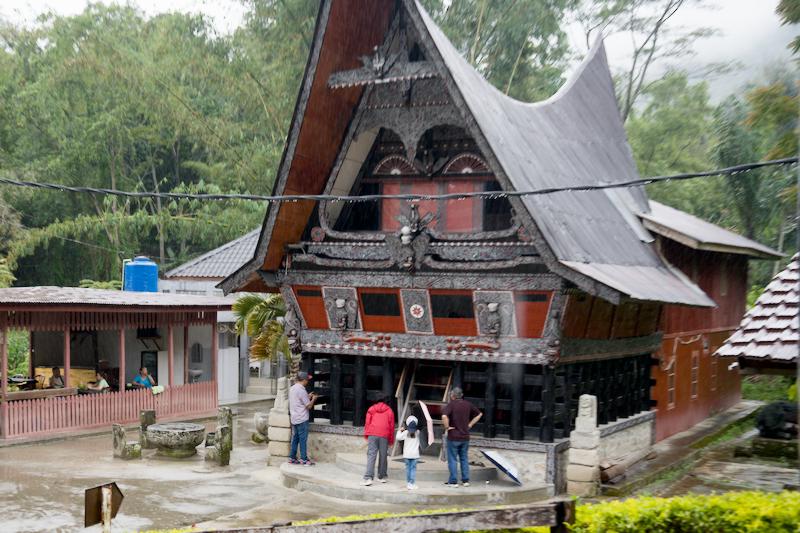
Batak Museum is carefully maintained and thoughtfully arranged to showcase the history and traditions of the Batak Toba people. The building itself is a traditional wooden house painted in striking red, black, and white.
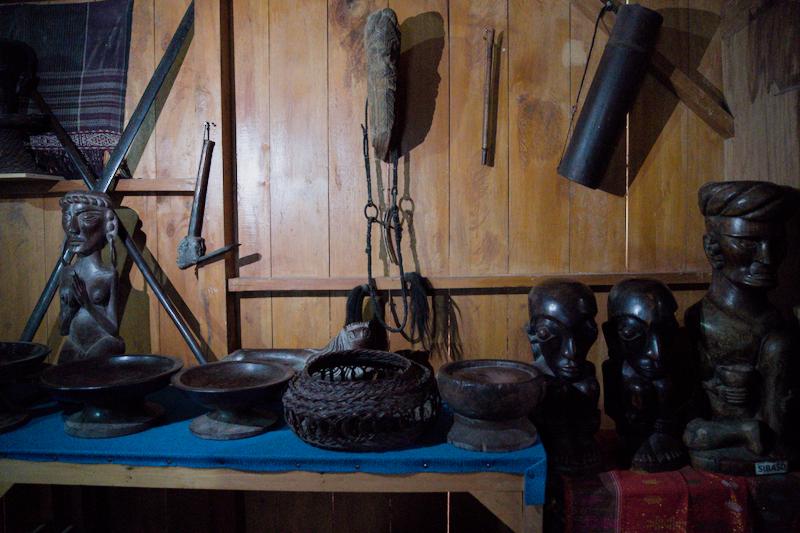
Inside, there are artifacts such as traditional tools, weapons, ceremonial objects, and everyday kitchen items that offer a glimpse into how people once lived.
Makam Raja Sidabutar
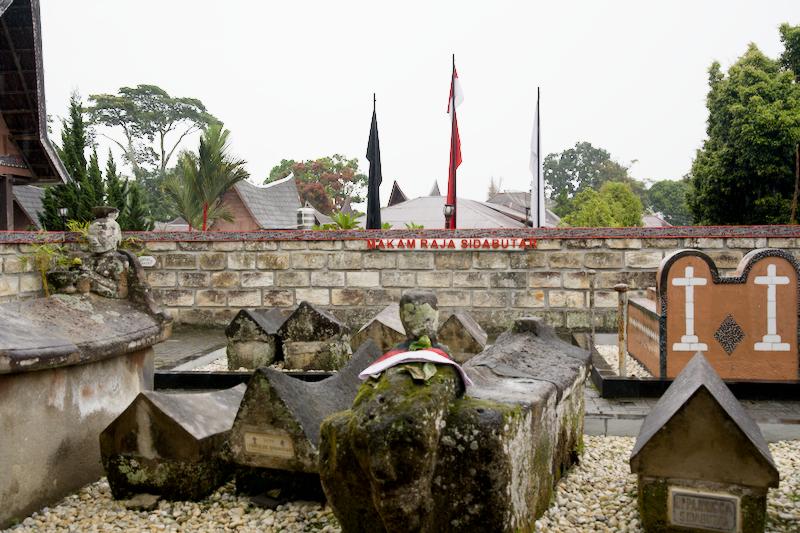
After visiting the museum, we walked over to Makam Raja Sidabutar, also known as the Tomb of King Sidabutar, which is just a short walk away. Our guide shared a brief history of the site and explained that the stone tombs belong to the kings and members of the royal family of this area. The tombs are carved from large stone blocks set firmly into the ground and decorated in the traditional red, black, and white colors. It was also interesting to learn that some of the later generations eventually converted to Christianity, reflecting how the community evolved over time.
Huta Siallagan
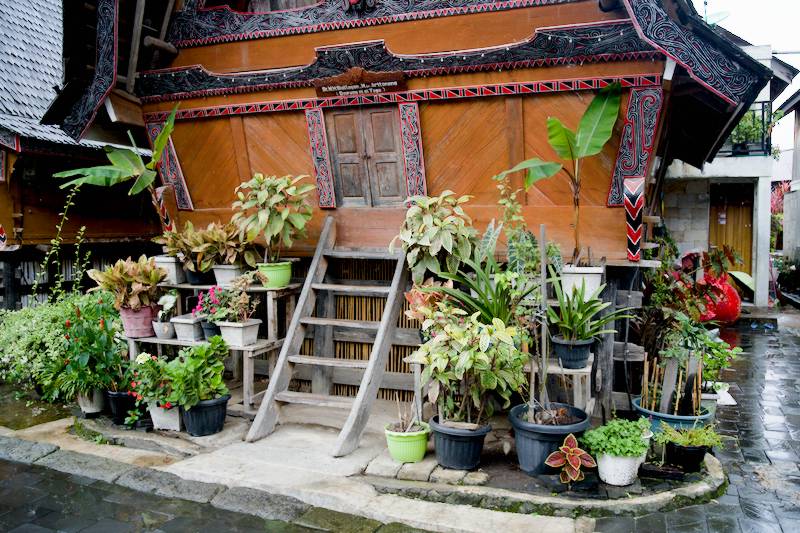
Next, we visited Huta Siallagan, another Batak Toba village on Samosir Island.
As we entered, there are by several large traditional wooden houses known as Rumah Bolon. These houses look grand from the outside, but the interior is surprisingly simple. There are no individual rooms. The entire space is one large open area where the family sleeps, cooks, and carries out daily life together. Everything happens within this shared space.
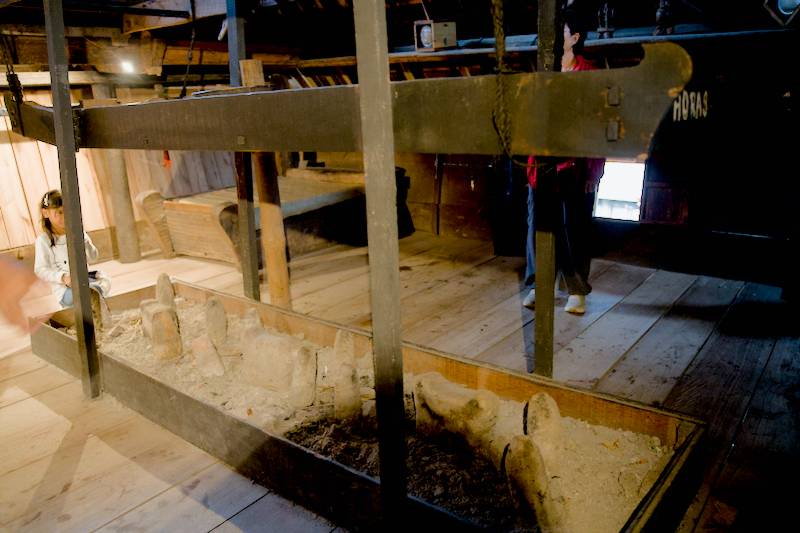
Right in the center, there is a hearth used for cooking. Nearby, you will usually find a bed that is reserved for the elderly members of the family, while everyone else sleeps on the wooden floor.
The house is built on stilts, and the lower level was used to keep livestock. The family lives on the upper level, safely above the animals.
In front of them, there is a set of ancient stone chairs and a stone table in an open space. According to local history, these stone seats were used by village leaders and elders for meetings and court trials. Serious offenders would be brought before the council. If found guilty and sentenced to death, they would later be taken to a nearby execution site.
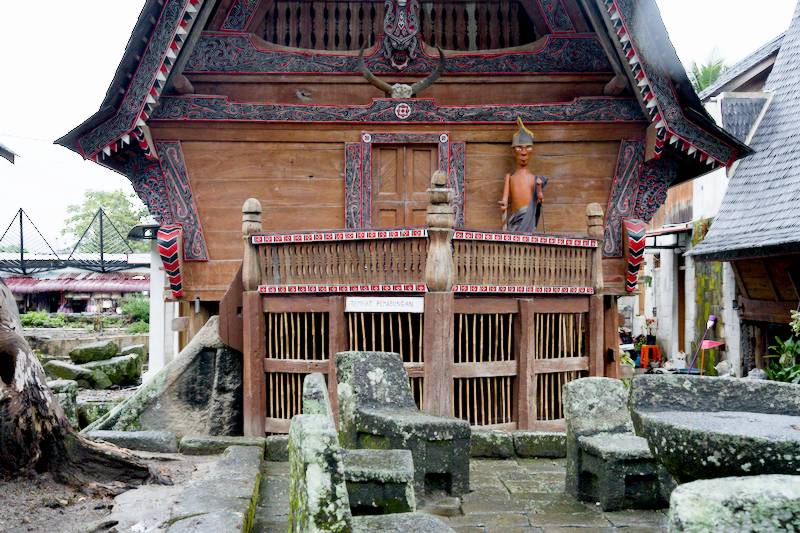
Before the execution, prisoners were confined in a dungeon like chamber within the village. A mannequin has been placed inside to illustrate how the prisoners were once held.
Day 2: Samosir Island & Waterfalls
Aek Tano Ponggol Bridge
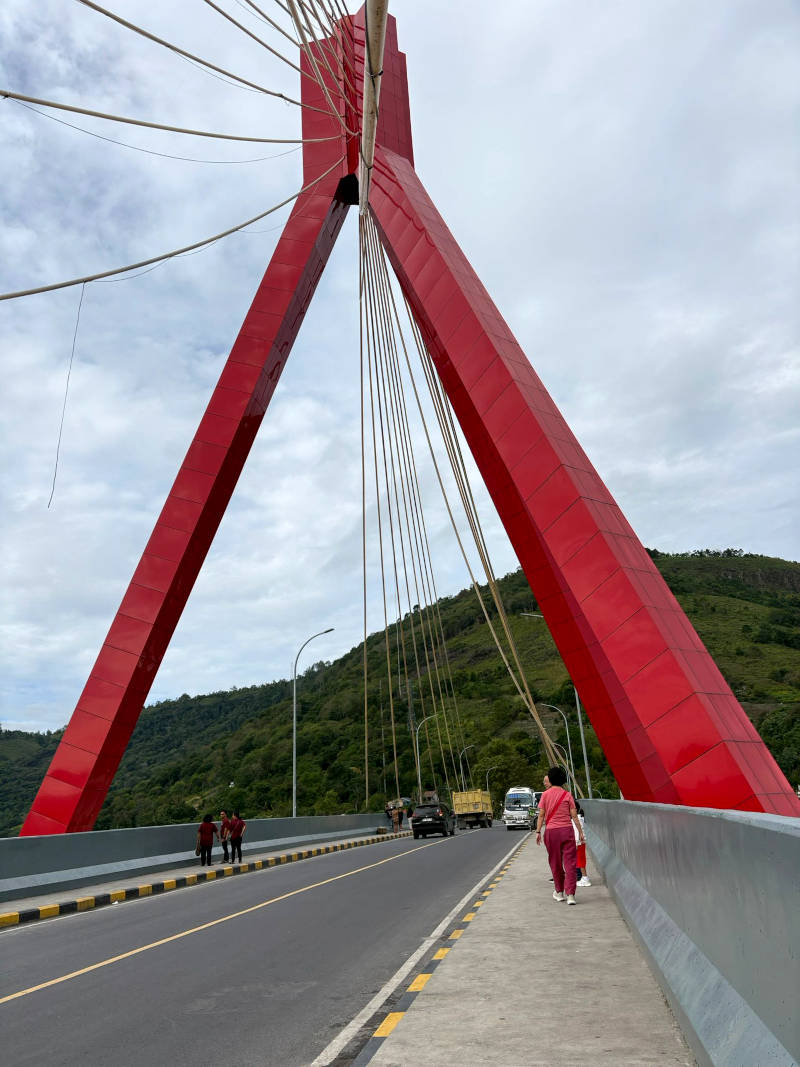
In 2023, a new bridge called the Aek Tano Ponggol Bridge, or Jembatan Tano Ponggol, was built and has quickly become an iconic landmark of Lake Toba. The bridge connects the mainland of Sumatra with Samosir Island, making travel much easier.
We crossed the bridge and stopped to take some photos. Our guide explained that before the bridge was built, people had to rely on ferries to cross, and public transport could not reach this side of the island by road. The bridge has clearly changed the way people move around the area, opening up easier access for both locals and visitors.
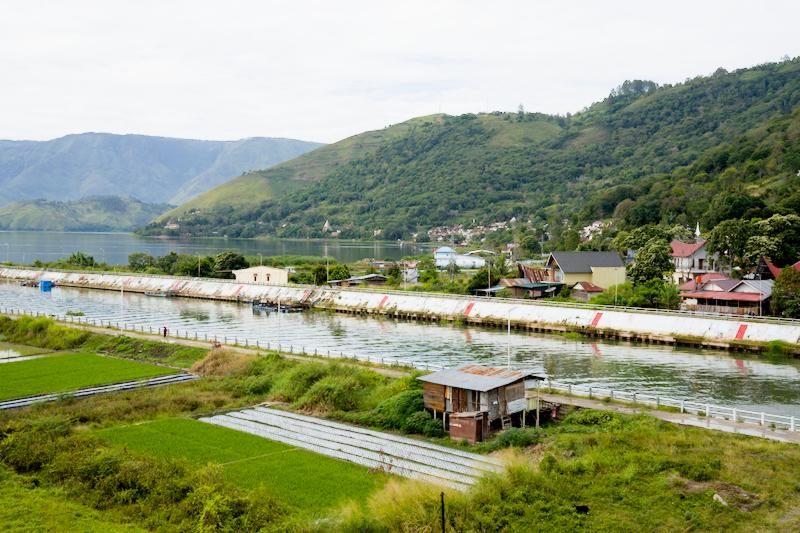
Jesus Christ the Savior Statue
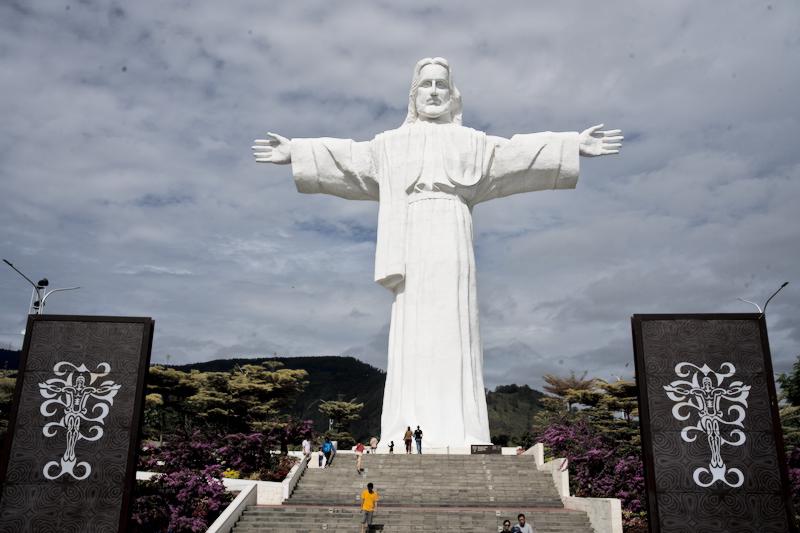
One of the most remarkable new additions to the Lake Toba area is the Jesus Christ the Savior statue on Sibeabea Hill. It was inaugurated in 2024 and stands 61 meters tall, making it the tallest statue of Jesus in the world.
The statue is entirely white, with Jesus’ arms wide open, overlooking the stunning expanse of Lake Toba. It has quickly become the most striking landmark in the area and now attracts more tourists than any other site. The statue was also blessed by Pope Francis during his visit to Indonesia.
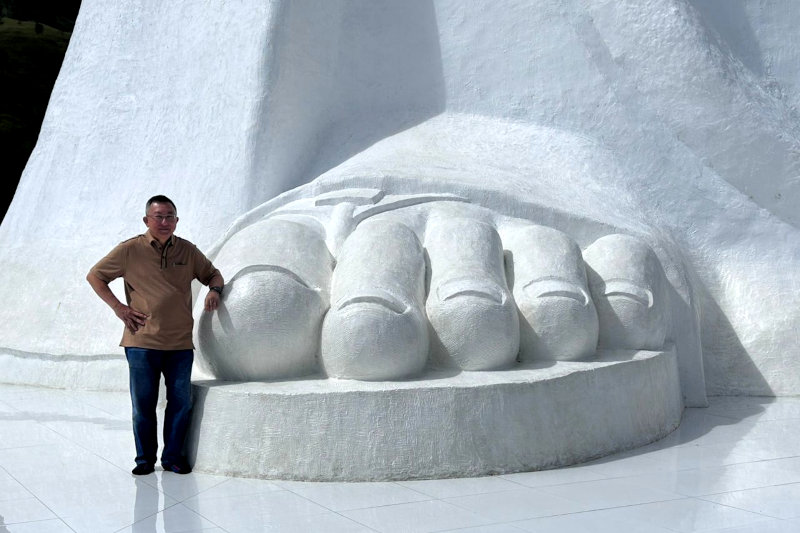
We are required to remove our shoes before stepping on the platform of the base of the statue. From here, you can enjoy 360-degree views of Lake Toba and the surrounding hills, making it one of the best vantage points on the island.
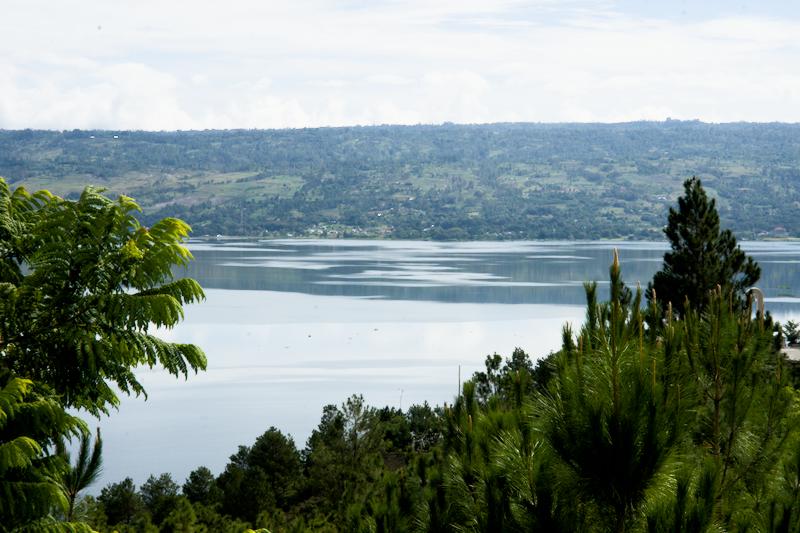
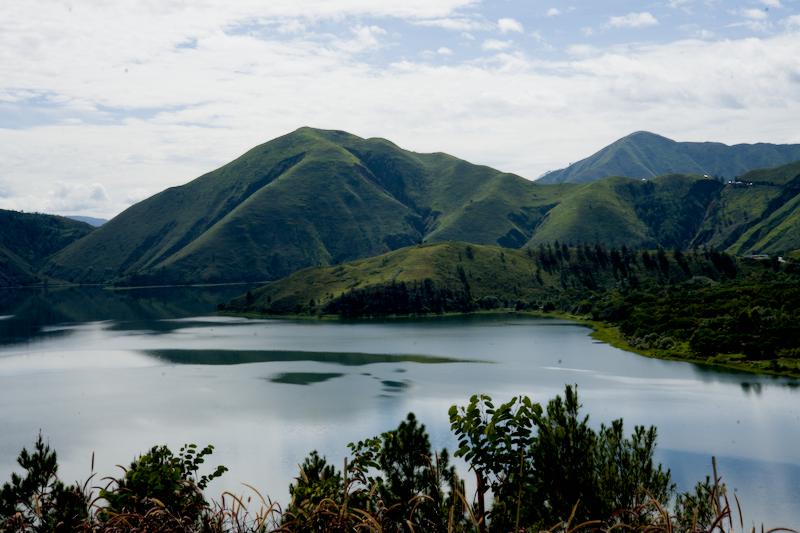
The parking area is slightly over 100 meters downhill, which means a steep walk up to reach the statue. Fortunately, there is a shuttle available if you prefer not to climb.
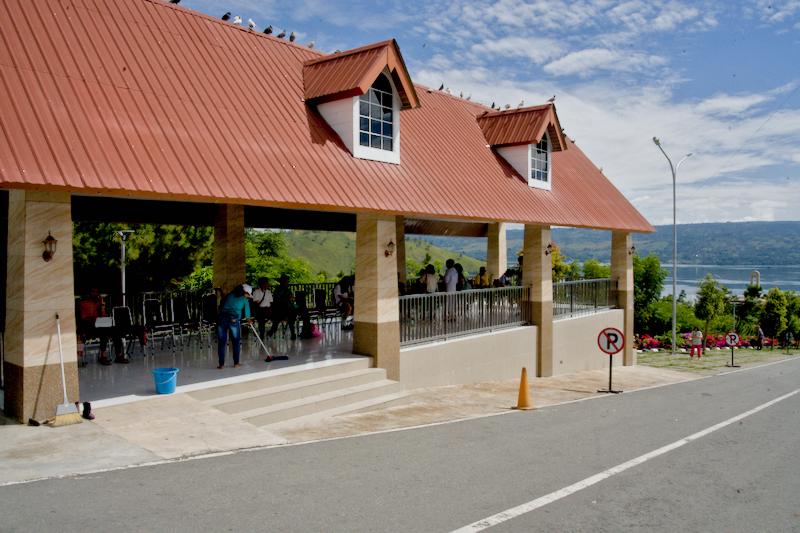
As our coach left the Jesus Christ statue, we made a stop at a small Halte / Dock to take some photographs.
Efrata & Sipiso Piso Waterfalls
Efrata Waterfal
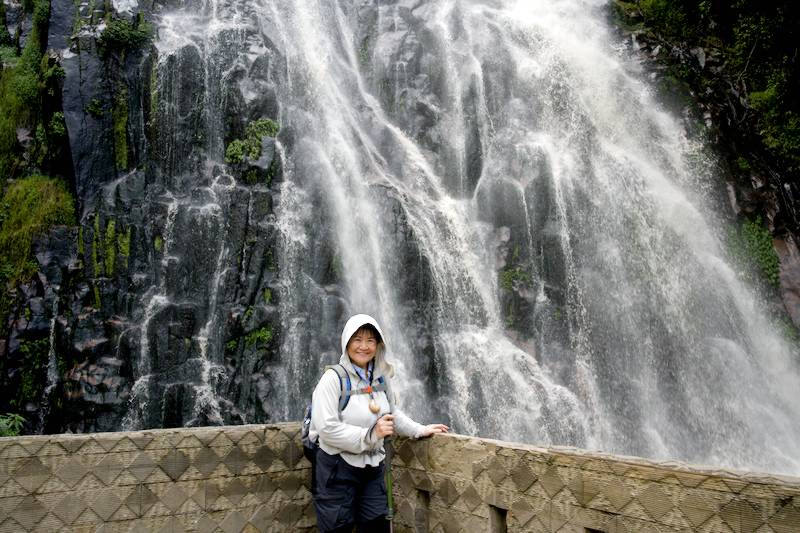
Efrata Waterfall is a natural spot located on Samosir Island. We parked our car and walked to a viewpoint close to the base of the waterfall. The walk was easy along a cemented pathway, though we needed to be careful in some areas because the ground was slippery.
The waterfall cascades about 25 meters into a pool below. It is both refreshing to look at and a perfect spot for photography, capturing the beauty of the water and the surrounding nature.
Sipiso Piso waterfall
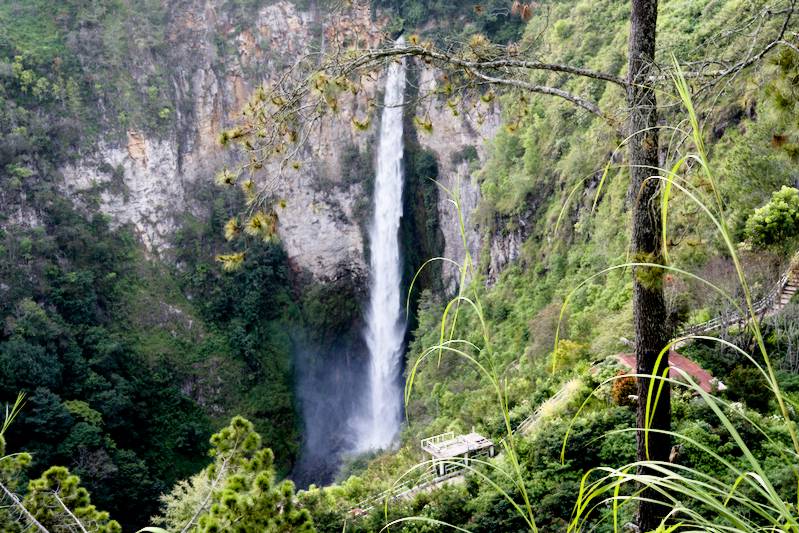
Sipiso Piso waterfall stands about 120 meters tall in a single vertical drop. It is often celebrated as one of the tallest and most scenic waterfalls in the country. From where we were standing, it almost seemed as if the water was pouring out from nowhere, as though it were emerging from beneath the ground. In reality, it is the end of a river whose upper section is hidden by dense trees, creating the illusion that the water is flowing straight out of a hole in the hillside.
It was already late in the afternoon when we arrived. Otherwise, we could have taken the stairway that leads all the way down to the base of the waterfall, which takes about thirty minutes to descend.
Day 3: Berastagi & Bukit Gundaling
Next, we were on our way to Berastagi Highland. Along the route, we passed endless stretches of rubber and palm oil plantations, a scene that reminded me of what we had seen many years ago.
Bukit Gundaling (Gundaling Hill)
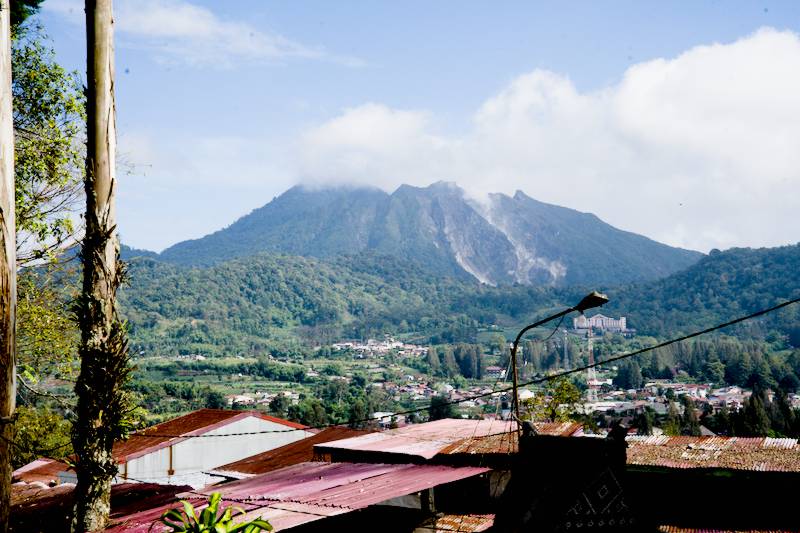
The viewpoint at Bukit Gundaling in Berastagi is one of the best places to view the two volcanoes at once, Mount Sinabung and Mount Sibayak.
Mount Sinabung, located in the Karo Highlands, is an active volcano. After lying dormant for about four hundred years, it became active again in 2010 and remains closely monitored. From Gundaling, we could appreciate its dramatic presence from a safe and comfortable distance.
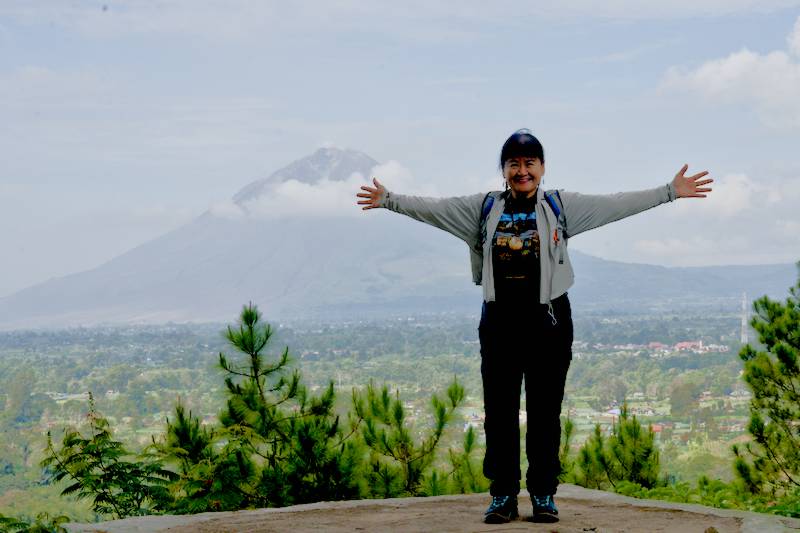
Mount Sibayak, in contrast, is considered dormant, though it still shows signs of geothermal activity. It is also one of the most popular mountains to climb in the area, known for its relatively easy trek.
Masjid Muhammad Cheng Ho
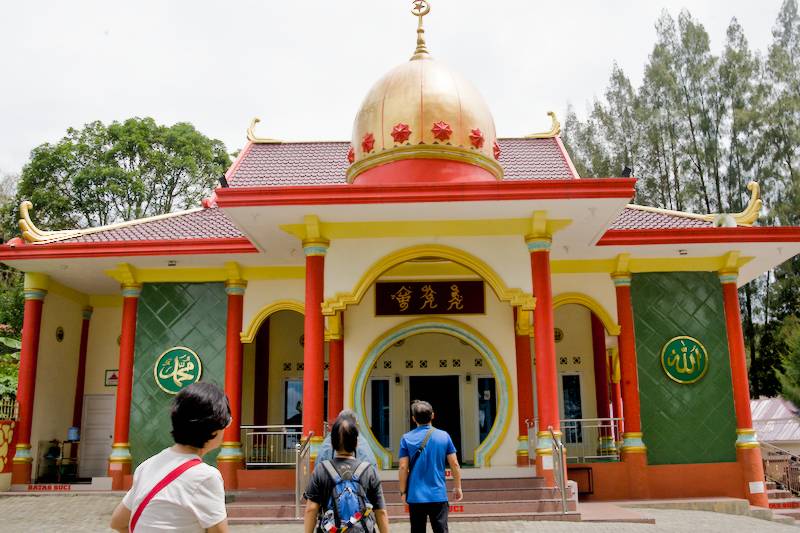
The architecture of Masjid Muhammad Cheng Ho is a blend of Chinese and Islamic elements, making it quite different from any typical mosque. Right at the main entrance, there are three distinctive characters displayed prominently in the center. The person in charge explained that these characters are the Arabic calligraphy of the name Muhammad Cheng Ho.
Zheng He, also known as Cheng Hoo, was a devoted Muslim from the Hui ethnic group of China. He served as an admiral during the Ming Dynasty and led a series of remarkable maritime expeditions in the fifteenth century.]
The mosque built in his name was established by the local Chinese Muslim community to commemorate his historic voyages.
Bukit Indah Simarjarunjung
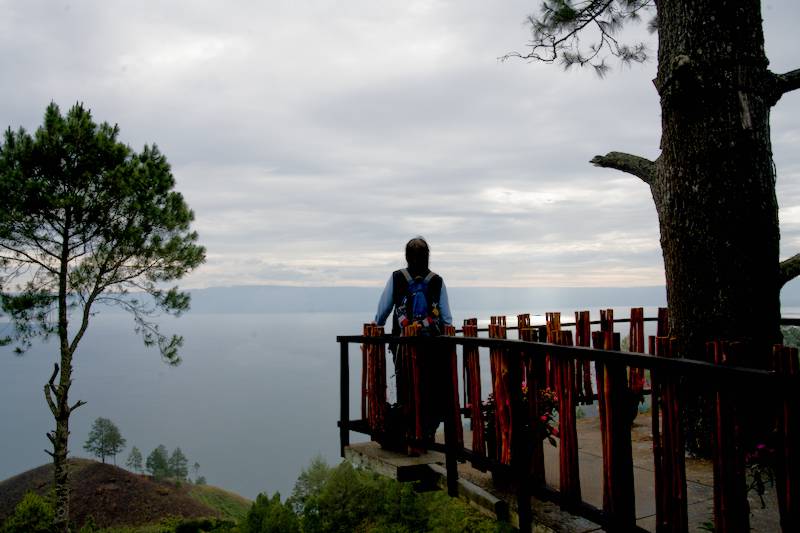
After that, we left Berastagi and began our journey back to Medan. About halfway through the drive, we stopped at Bukit Indah Simarjarunjung, a well known hillside viewpoint overlooking Lake Toba and Samosir Island.
There are several coffee houses along the hillside, and we chose Carabel Cafe for a coffee break. It was the perfect place to pause, enjoy a drink, take in the scenery, use the restroom, and continue our road trip back to Medan.
Taman Alam Lumbini
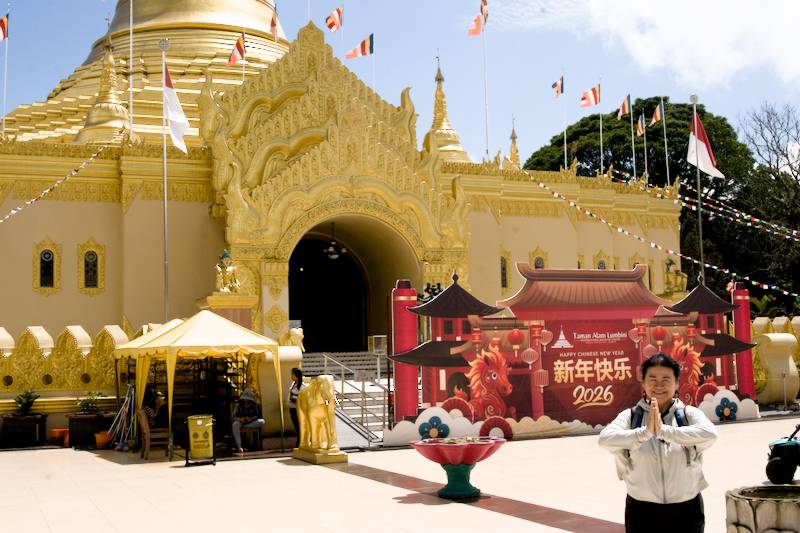
Taman Lumbini is not a garden, as the name suggests, but a Buddhist temple. It is located in the Karo Highlands, about 50 kilometers from Medan. It is best known for its magnificent golden pagoda, which is a replica of the famous Shwedagon Pagoda in Myanmar.
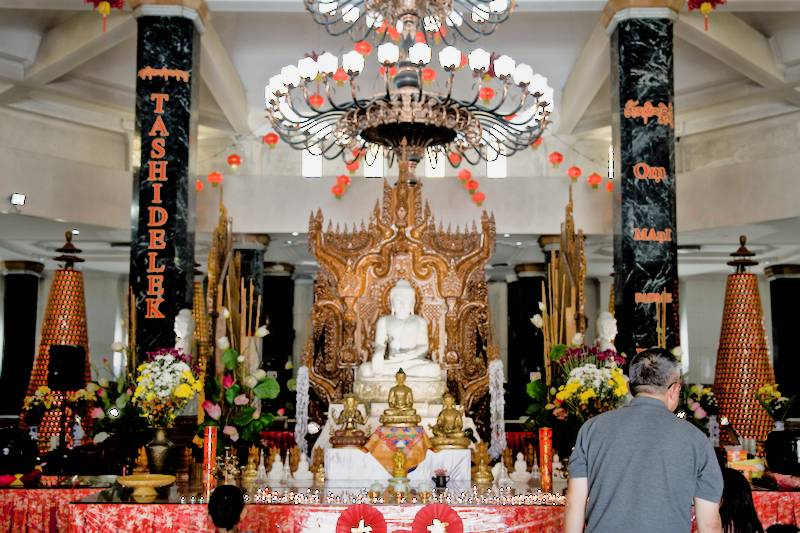
Inside the main shrine stands a large Buddha statue at the center, surrounded by four smaller statues positioned at each side. Outside the main shrine is a landscaped garden. Scattered throughout the grounds are various Buddha statues.
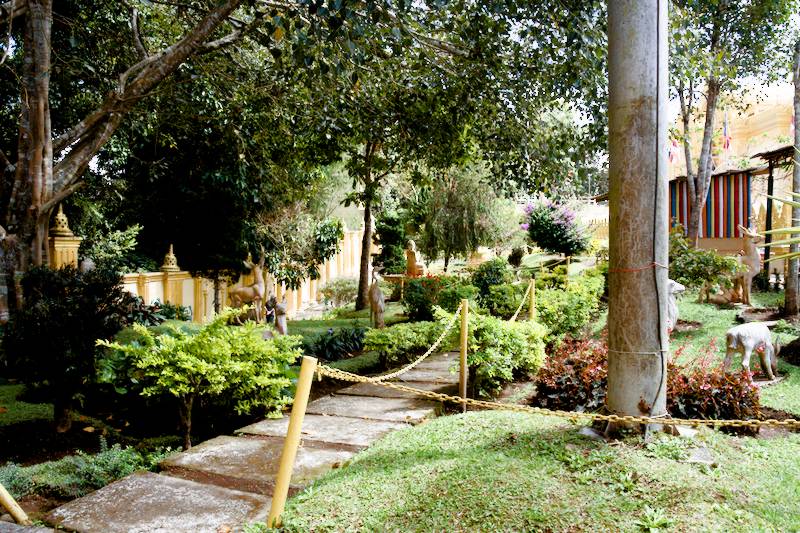
Besides the strong Burmese influence, we also noticed elements of Thai design, such as elephant sculptures at the entrance. There are also Chinese inscriptions in certain areas, along with a statue of the Goddess of Mercy, reflecting a blend of cultural influences within the temple grounds.
We visited Lumbini in Nepal two years ago. You can read more about our trip here.
Berastagi Fruit Market
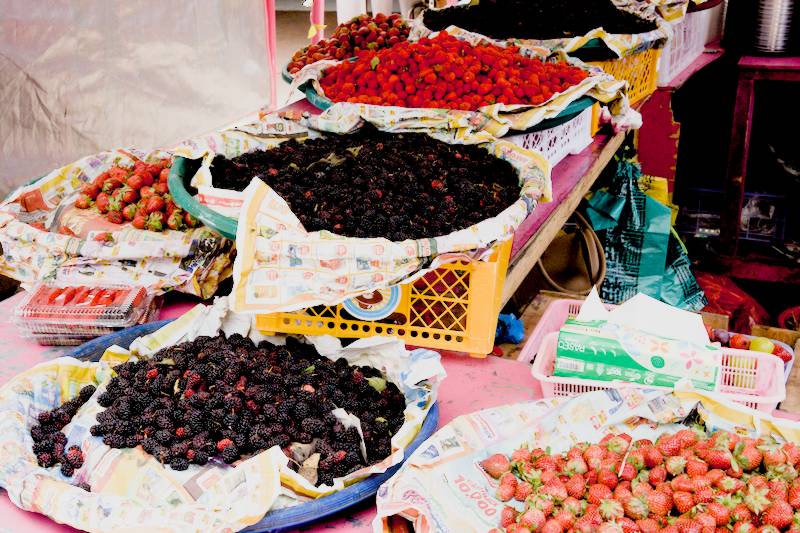
The fruit market in Berastagi town is a vibrant hub of agricultural trade that dates back to the Dutch colonial era. During this season, mulberries and strawberries were especially abundant. Alongside them were passion fruit, oranges, avocados, and many other tropical fruits.
The market is also a one-stop shopping area, selling North Sumatra souvenirs such as batik fabrics, traditional wood carvings, rattan items, and other handicrafts. Scattered among the shops are small cafes and local restaurants.
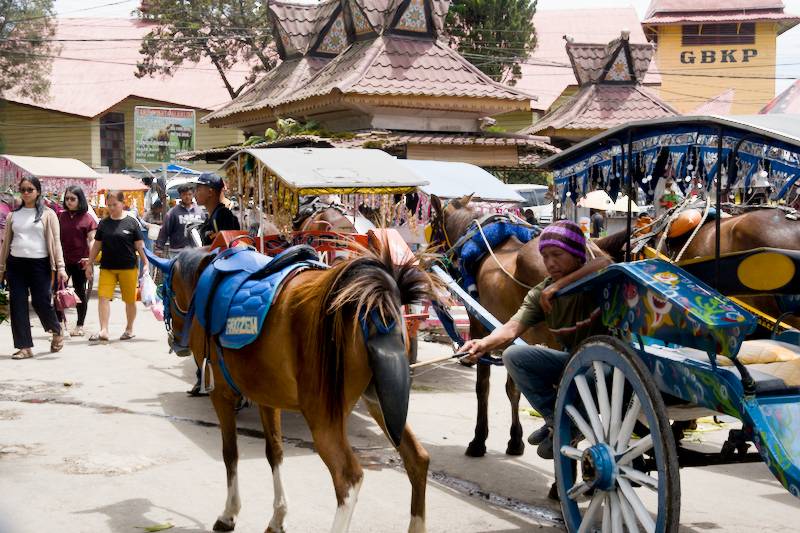
One unique feature here is the horse carriage rides waiting near the market. For a small fee, the drivers took you on a short ride around the area, about ten minutes. It is a lively market that is well worth a visit, although it can feel a little touristy to me.
Day 4: Medan – Graha Maria & Maimun Palace
We had our Medan city tour before we leave to the airport today.
Graha Maria Annai Velangkanni
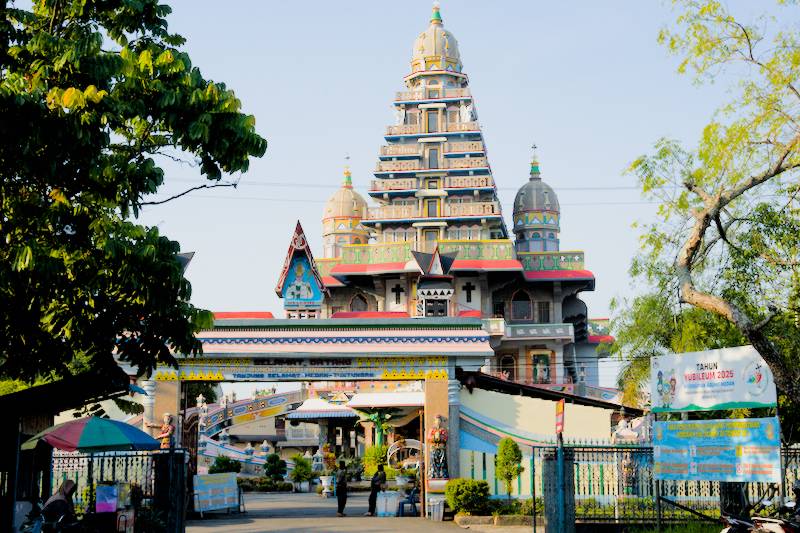
Graha Maria Annai Velangkanni is a Catholic shrine in Medan. While it is a Catholic church where Mass is held, it is called Graha (meaning "House" or "Home" in Sanskrit) to signify it as a sacred residence and a "Shrine" for pilgrims of all faiths.
At first glance, we identified it as an Indian temple. Only after looking more closely did we realize it is a Catholic church. The design stands out because of its distinctive Indo Mughal architectural style. Opened in 2005, it is dedicated to Our Lady of Good Health.
The architecture incorporates elements from Catholic tradition to Hindu and Islamic design, symbolizing unity and welcoming people of all backgrounds. The grand structure features a seven story towers and three domes that resemble both Hindu temples and mosques.
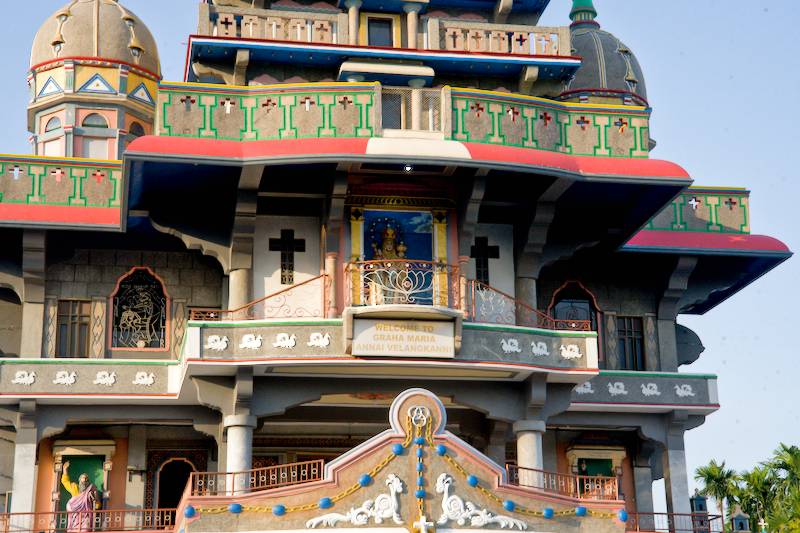
We spoke with a person in charge, who explained that the lack of obvious Catholic symbols on the exterior was a deliberate decision by the founder, Father James Bharataputra. His intention was to create an inclusive spirit that embraces people of all religions.
I must say, this is one of the most unique Catholic churches I have ever seen.
Istana Maimoen
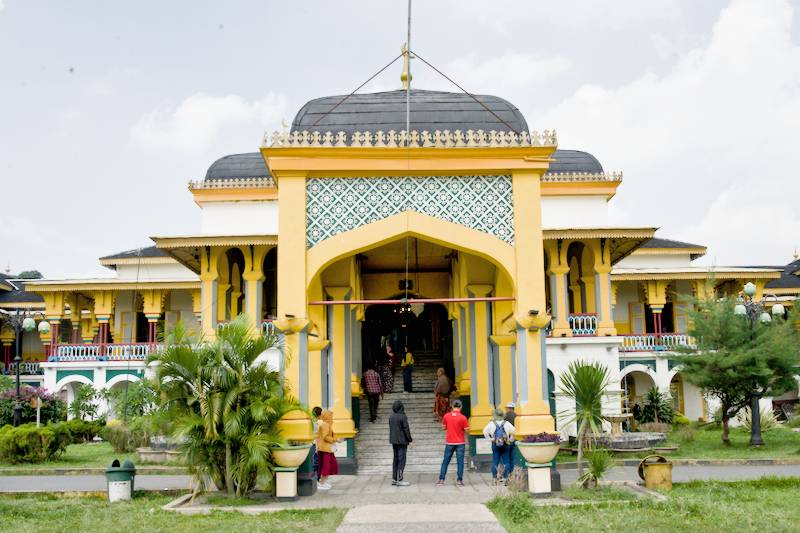
Maimun Palace (also spelled as Maimoon, Maimoen) was built between 1887 and 1891 by Sultan Ma’mun Al Rashid Perkasa Alamyah of the Deli Sultanate. Since then, there have been fourteen Sultans of Deli.
Architecturally, it is a fascinating fusion of Malay, Islamic, Indian, Spanish, and Italian influences. Its signature bright yellow facade represents the majesty and royalty of Malay culture.
Only the central section is open to the public as a museum, while members of the royal family still reside in other parts of the palace. Inside, there are intricate wood carvings, beautiful Islamic calligraphy, and Dutch-style windows and doors that highlight its multicultural design.
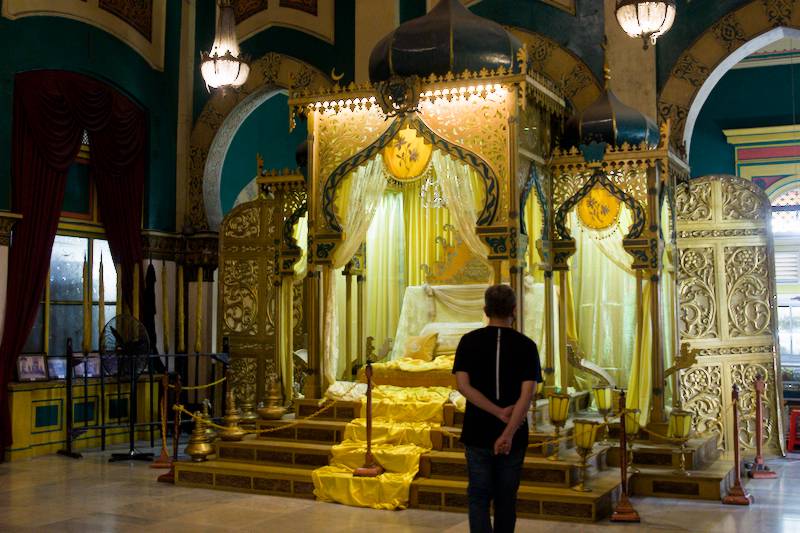
The main hall houses the throne room, which is the heart of the palace. It features a magnificent royal throne where the Sultan once held court.
Food You Must Try on Your Lake Toba Berastagi Medan Itinerary
While food was not the main purpose of this trip, we still made it a point to try some local specialties. We did come across a few dishes that are unique and worth trying at the local restaurant and stores.
Minang food
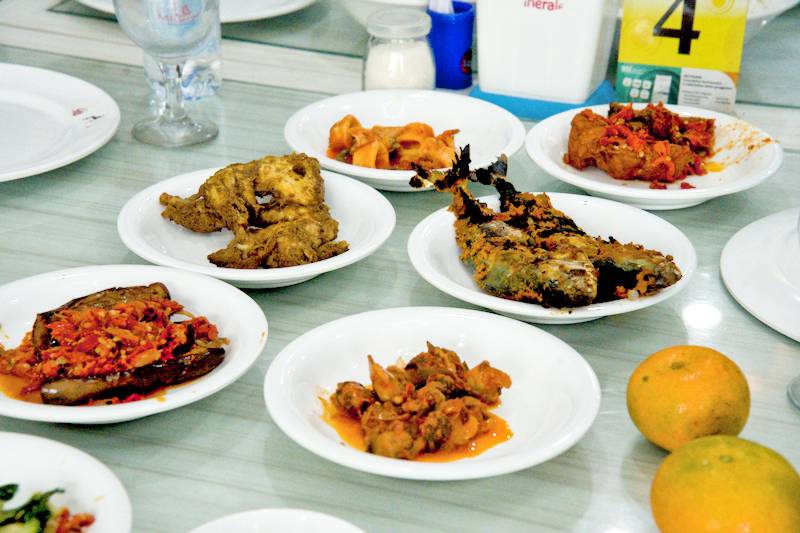
The dishes are usually pre-cooked and displayed in a wide variety, so you can simply pick what you would like to eat. Most of the selections are rich and spicy, typically served with rice. There are also milder options, such as fried vegetables and soups, for those who prefer less heat.
It was a good experience to sample the Minang food at the place of its origin, Sumatra.
Local Snacks at Paten
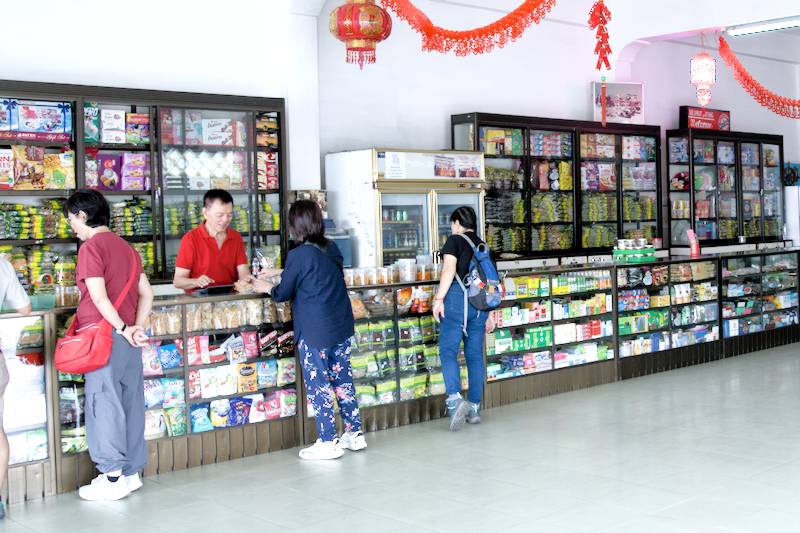
While traveling from Medan to Lake Toba, we stopped at a famous shop called Paten in Permatang Siantar. This place is well known for its peanut sweets, which are both crunchy and fresh.
One of the fun things about this shop is that many of the products have playful rhyming names like Tong, Ting, and Tang. For example, Teng-Teng is a classic peanut candy that is slightly brittle and sweet. The shop itself has a traditional Chinese feel, and the staff were very helpful in letting us sample the snacks before buying.
Babi Panggang Karo (BPK)
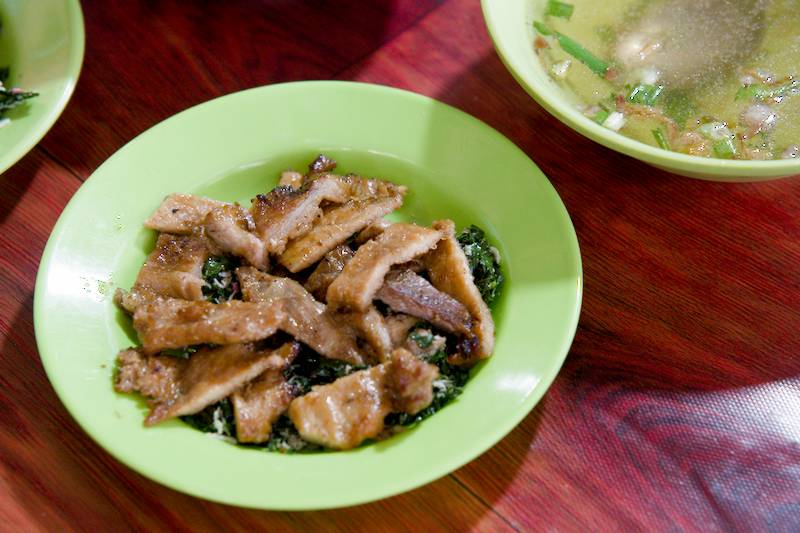
One classic dish that non halal eaters may want to try is Babi Panggang Karo, often abbreviated as BPK. It is grilled pork seasoned with local spices, and it is a specialty of the Karo region. It is served with daun ubi tumbuk (mashed cassava leaves) and a special sauce.
While traveling along the roads in the highlands, we noticed many eateries displaying the sign B2, which indicates that they serve Babi Panggang Karo. On the other hand, if a shop displays B1, it refers to dog meat, which may be unfamiliar or uncomfortable for some visitors.
Note:
The terms B1 and B2 are commonly used as “codes” for different types of meat. B1 comes from the Batak word for dog, Biang. Since “Biang” starts with B and has one syllable in this shorthand context, it became B1. B2 comes from the word for pig, Babi, which starts with B and has two syllables, so it became B2.
These codes helped restaurants communicate discreetly with the local community without being offensive to the Muslim majority in Indonesia, for whom these meats are haram (forbidden).
Try the food that local eats
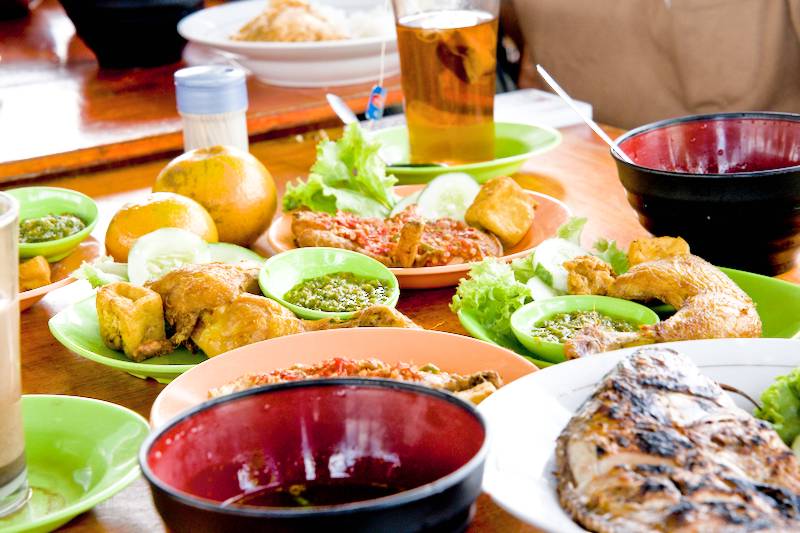
One of our lunches was at a small roadside eatery popular with the locals. We chose to stop there out of curiosity, wanting to experience how the locals normally eat rather than dining in a more polished restaurant.
Most of the dishes on the menu were fried items. We ordered fried fish, fried chicken with chili, and fried tofu. They also served a non-spicy clear soup, along with a plate of fried rice that was actually quite good.
There was nothing fancy about the food. It was a simple, everyday meal, and that’s exactly what I enjoy while traveling, getting a glimpse of the kind of home-style cooking that locals eat regularly.
Bakso
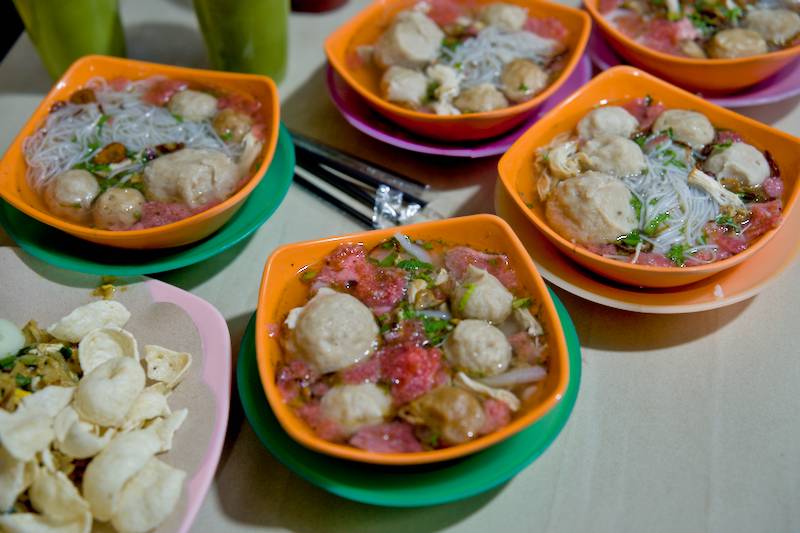
Bakso is very popular in Sumatra, so of course, we had to give it a try.
I have always been a fan of bakso, so this was something I truly looked forward to. Watching the meatballs being handled and served fresh made the experience even more enjoyable. The bowl that arrived at our table was comforting and satisfying, exactly what I had hoped for. It felt like an authentic taste of Sumatra, simple, hearty, and full of local character.
Carabel Cafe at Simarjarunjung
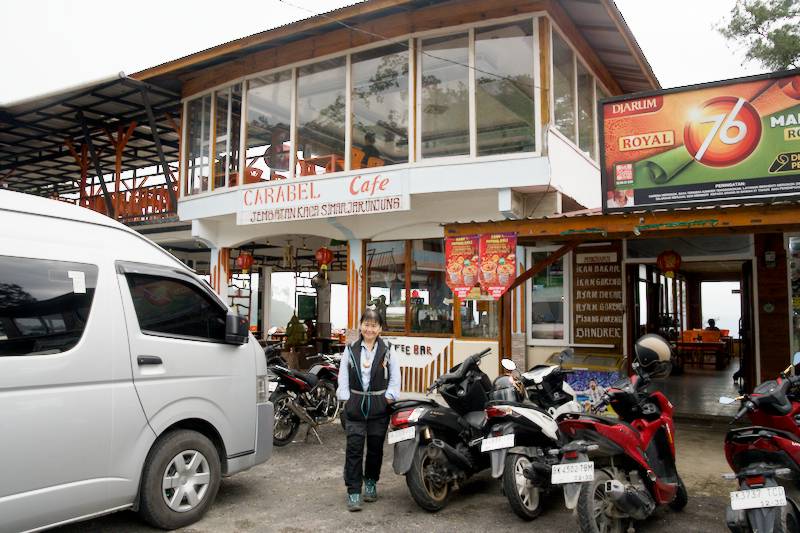
Bukit Indah Simarjarunjung is a beautiful vantage point overlooking Lake Toba. It is a popular place to simply soak in the sweeping lake views from above.
We enjoy a cup of local coffee while taking in the scenery. Sitting there with a warm drink in hand, surrounded by nature, was what truly made the moment special.
Teh Halia
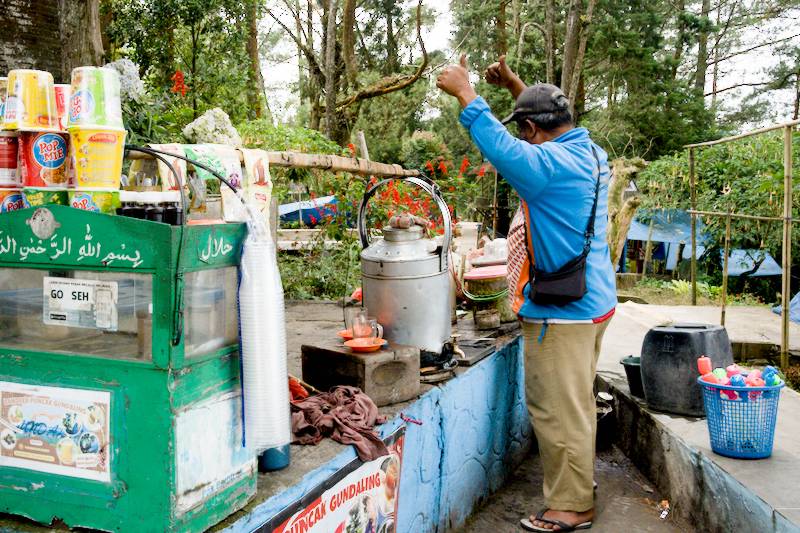
Ginger tea is very popular in this region, and we had a memorable experience trying it at Bukit Gundaling. An elderly gentleman had a small stall at the viewpoint selling traditional ginger tea brewed over charcoal. We tried, and the flavor the ginger flavor was bold, strong, and incredibly invigorating.
As we chatted with him, he revealed that the tea also includes a secret blend of spices, including star anise, cinnamon, cloves, and black pepper. It’s this combination that gives the tea its unique depth and spicy kick.
Local ice cream, milk, and yogurt at Gundaling Farmstead, Berastagi
If you want to taste fresh daily products in Berastagi, a visit to Gundaling Farm is a must. This farm offers fresh pasteurized milk, creamy yogurt, and ice cream in a variety of flavors, including strawberry and passion fruit.
Try the local Durian Kampong
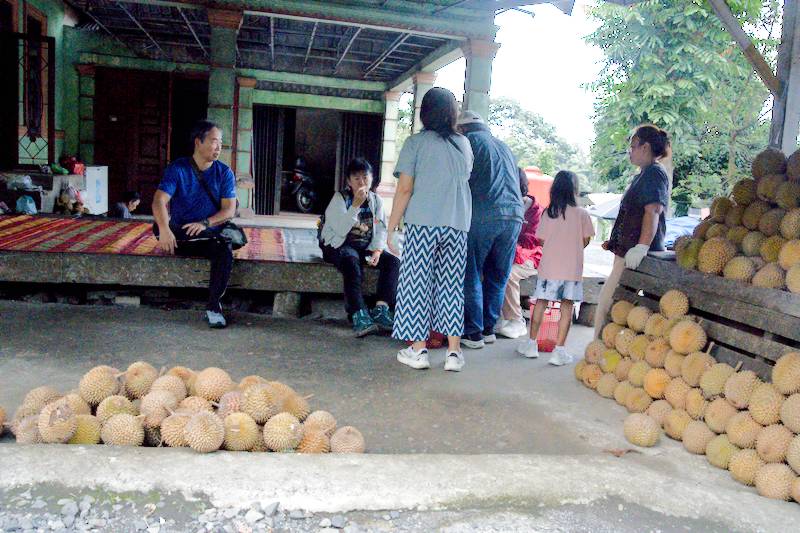
If you enjoy durian, stop by along the main road between major cities like Berastagi and Medan to try the local varieties sold. These durians are different from the Musang King or Black Thorn varieties we know in Malaysia.
Here, the farmers harvest the fruit before it naturally falls from the tree, so the taste is different. It’s an experience to try these local durians, especially since we want to compare the flavors with what we used to back in Malaysia.
Kopi Pasir
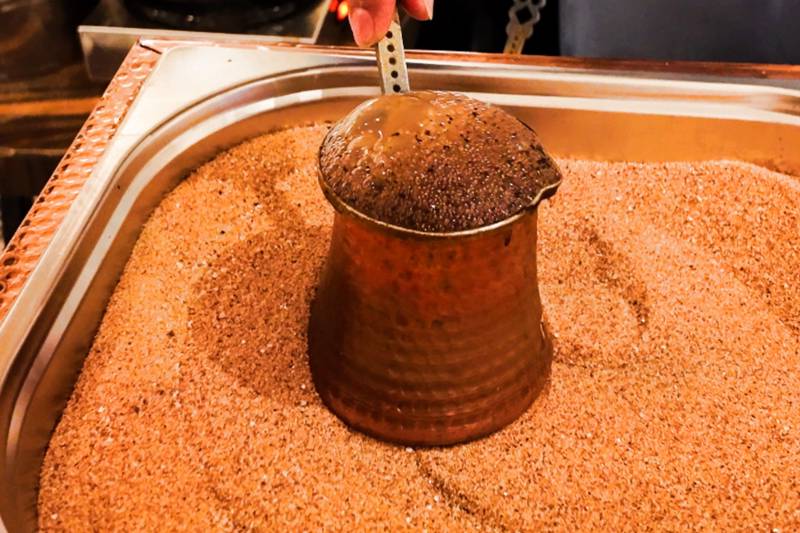
I want to mention Kopi Pasir, which literally translates as sand coffee. But don't worry, there is no sand in the coffee. It is heated over a bit of sand to keep it warm. This is sand from the beach.
Many stores are serving this kind of coffee, but we tried it at our hotel during dinner. It was good. Maybe not dramatically different from others, but it is definitely a fun experience to watch how it is made, and it is enjoyable to try.
Kuih Lapis
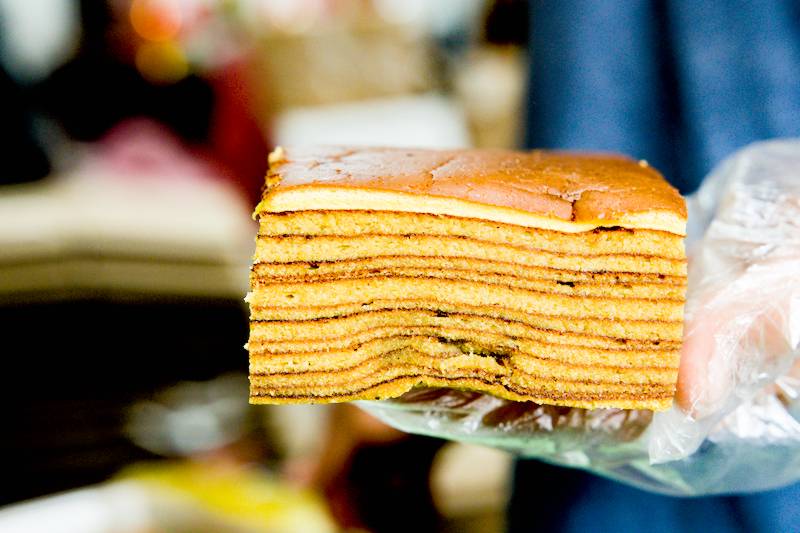
Don't miss out the layer cake that is kuih lapis. We went to a bakery called Bika Ambon & Lapis Legit. It's cheap, and it's really good. The layers are very distinctive, and the cake is buttery and soft. If you want to bring it home, it keeps well in the refrigerator for a few days, so you can enjoy it later.
Where We Stayed in Lake Toba, Berastagi, and Medan
While the places we visited and the local food are highlights of the trip, choosing where to stay is a very personal experience. There are hundreds of options in each area, so here’s our take on the hotels we stayed at.
Samosir Cottage, Lake Toba
Samosie Cottage has a stunning view overlooking Lake Toba. The rooms are simple but clean, though ours was located near the restaurant where live music played late into the evening. There were a few minor maintenance issues, like a leaking faucet, but nothing that ruined the stay. The buffet breakfast in the morning was very good, and overall, it was a pleasant experience with a memorable lakeside view.
Sibayak Hotel, Berastagi
Our experience here was less than ideal. We checked in around 8 PM, and they were unable to provide towels until nearly 11 PM for us to shower. The hotel itself is quite old, which gives it a certain nostalgic charm. I was a little surprised to see the old radio panels with multiple music channels between the beds, a throwback to the hotel style we stayed in over 30 years ago.
Le Polonia, Medan
This was by far the best hotel of the trip. It feels like a proper four-star property, with well-maintained rooms, excellent service, and attentive staff. The restaurant was busy, yet the manager went out of his way to arrange three tables close together so our group could dine close to each other. The food was very good, and we enjoyed trying a variety of local dishes, including Kopi Pasir. We wished we had more time to stay here, but we had to check out early to continue our journey.
Essential Tips for Planning Your Lake Toba Berastagi Medan Trip
Before you set off, here is a summary of the essentials to help you navigate North Sumatra. These are the personal insights we gathered during our journey to ensure your experience is as smooth and enjoyable as ours.
Transportation 🚗
- Arrival: Fly into Kualanamu International Airport (KNO) in Medan for the best international connections. It is a direct flight from Kuala Lumpur that takes less than an hour.
- Formalities: Ensure your Visa is ready and your Arrival Card is completed.
Pro Tip: For our Malaysian travelers, you can conveniently handle these requirements through the Touch 'n Go eWallet app. - The Drive: While roads from Medan to Lake Toba and Berastagi are generally well-maintained, rural stretches can be narrow or bumpy. If you aren't used to long coach travel, be prepared for winding roads. Actionable Tip: Keep motion sickness pills handy!
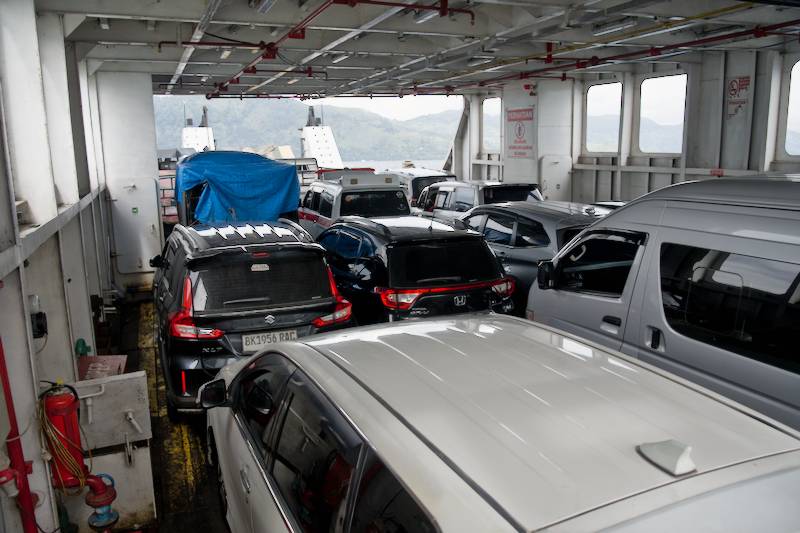
- Island Access: While the Aek Tano Ponggol Bridge now offers direct road access to Samosir Island, the ferry ride remains a classic experience. Watching our coach reverse onto the ferry was a highlight in itself!
Best Time to Visit 🌤️
- Dry Season (May–September): The best window for outdoor trekking and clear-sky sightseeing.
- Rainy Season (October–April): A beautiful time to see the waterfalls at their most powerful and the landscape at its lushest green.
Food & Dining 🍲
- Spice Level: Sumatran food can be fiery! Don't be afraid to ask for "tidak pedas" (not spicy) if you prefer milder flavors.
- Must-Tries:
- Babi Panggang Karo (BPK): A legendary smoky pork dish for non-halal diners.
- Bakso & Local Snacks: Look for the famous snacks from Paten and sample the local durian varieties.
- Authenticity: For the most genuine taste of Sumatra, skip the hotel dining and head to the local roadside stalls (Warung).
Cultural Etiquette 🙏
- Temples & Mosques: Always remove your shoes before entering. Dress modestly by ensuring your shoulders and knees are covered.
- Christian Shrines: At sites like Graha Maria Annai Velangkanni, be mindful of ongoing prayer services and check for designated photography zones.
- Village Life: When visiting traditional Batak villages, always ask for permission before taking photos of residents.
Suggested Duration ⏱️
- Lake Toba & Samosir Island (2–3 Days): Plenty of time to explore the ancient villages and majestic waterfalls.
- Berastagi (1 Day): Perfect for visiting the volcanic viewpoints, fruit markets, and the Golden Pagoda.
- Medan (1 Day): Ideal for a culinary tour and visits to Maimun Palace and Graha Maria Annai Velangkanni.
How Lake Toba and Samosir Island Were Formed
Lake Toba is the largest volcanic lake in the world, was formed around 74,000 years ago following one of the most massive volcanic eruptions in Earth’s history. The eruption created a huge caldera, which over time filled with water to become the Lake Toba we see today. In the middle of the lake sits Samosir Island, the largest island within a lake, formed from land that rose as the volcanic caldera settled.
🎥 Watch our video at Lake Toba!
Following this Lake Toba Berastagi Medan itinerary, we enjoyed waterfalls, traditional villages, volcano viewpoints, and delicious local cuisine; it is a trip we’ll remember for a lifetime.
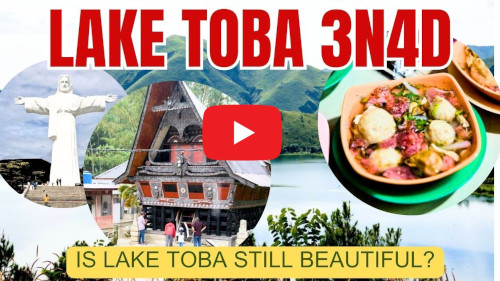
We’ve put together a video from this trip, which you can watch on YouTube by clicking the image below. Until then, we’ll continue exploring new places and sharing our experiences with you on our next adventure.